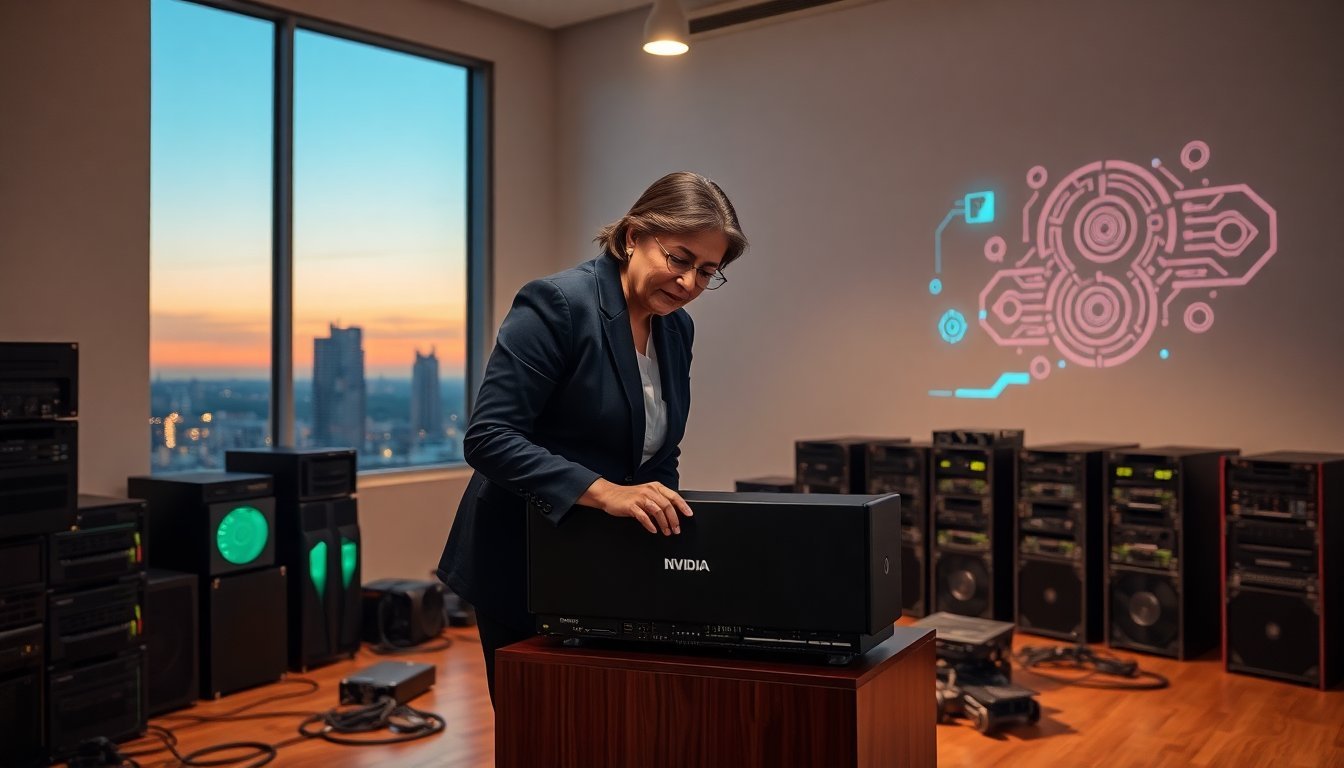
HP Bets Big on OpenAI: Genius or Trap?
HP Inc. partners with OpenAI to embed AI across its operations and products. The deal gives HP early access but risks vendor lock-in as competitors pursue multi-model strategies.
Google's new AI image verification for Gemini isn't the content police everyone expects. The real story is about creating a new layer of digital provenance that changes how we trust information, not just flagging what's fake.
Read Full Article →
HP Inc. partners with OpenAI to embed AI across its operations and products. The deal gives HP early access but risks vendor lock-in as competitors pursue multi-model strategies.

China's 'AI for All' offensive, built on open-source models and efficient algorithm design, is rendering US chip export controls obsolete. This article explains what changed, who benefits, and what developers and enterprises should do next.

Google DeepMind's Gemini 3.6 Flash, 3.5 Flash-Lite, and 3.5 Flash Cyber split the Flash family into three distinct tiers: high-throughput general inference, ultra-low-cost edge deployment, and hardened security for regulated environments. Developers now face explicit tradeoffs between latency, budget, and compliance.

Z.AI's all-Chinese data center is a symbolic victory for China's chip independence, but the real test is whether domestic chips can train frontier models efficiently. This analysis examines the evidence, the winners and losers, and what comes next.

Moonshot AI's Kimi K3 matches U.S. frontier models on reasoning benchmarks at a fraction of the cost. This analysis examines what the evidence actually shows, who wins and loses, and what it means for the AI market.

Cortex's DRIVE framework aims to operationalize AI-accelerated engineering with five key metrics. But without proof of cost savings and developer productivity, it risks becoming another theoretical model.

AgentGlass is a real-time Mission-Control dashboard for AI coding agents, unifying visibility across providers and projects. It promises to solve agent observability, but faces adoption hurdles around trust and data privacy.

Current AI is racing to build a free, culturally inclusive AI accessible on any device. This analysis examines the evidence behind their progress and what it means for the future of AI competition.

Inspector aims to be the visual editor that Claude Code lacks, but the real test is whether it can handle complex, production-grade UI without breaking the AI's code generation loop.

Moonshot's Kimi model demonstrates that Chinese AI can compete on efficiency and application, not just scale. This challenges US assumptions of permanent leadership and forces a re-evaluation of the global AI race.

ChikitAI's agentic AI for healthcare triage and care automation threatens to disrupt telehealth incumbents. The product claims to reduce clinician workload by autonomously handling initial patient assessments, but faces significant regulatory and trust hurdles.

Stack Overflow faces a critical juncture: adapt to the AI era or risk becoming a digital ghost town. This analysis examines the evidence behind its decline and whether its new AI features can reverse the trend.
Append the next batch without leaving this page.