
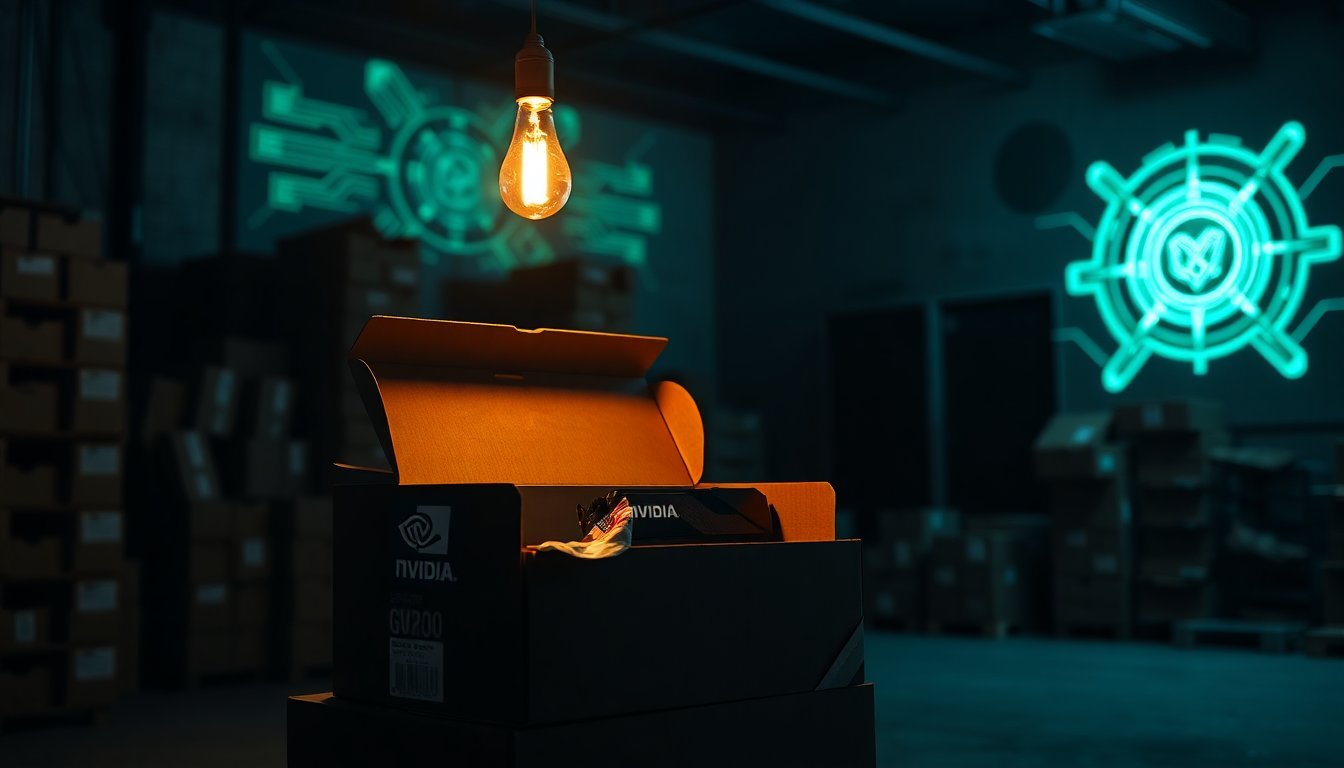
Trump's Nvidia Gift to China: No One Wants It
The US approved Nvidia's H200 for China, but zero units sold. Beijing's AI ecosystem has moved on, choosing domestic chips over American hardware.
In May 2026, the New York Times reported a stunning market failure: not a single Nvidia H200 chip, approved for sale by the Trump administration, has been purchased in China. The chip, once seen as a lifeline for Beijing's AI ambitions, has been completely rejected by Chinese buyers.
- What happened: The New York Times reported on May 21, 2026, that Nvidia's H200 chip, approved for sale in China by the Trump administration, has not recorded a single purchase in the country.
- Why it matters: This is the first major market rejection of a US-approved AI chip in China, signaling Beijing's strategic pivot away from American hardware toward domestic alternatives.
- Key tension: The US government spent months debating whether to allow the H200's export, only to find that Chinese buyers no longer want it.
Why Did Chinese Buyers Reject the H200 Chip?
According to the New York Times, the H200's rejection is not a matter of price or availability. Chinese AI companies and hyperscalers have simply stopped designing their systems around American chips. Instead, they have invested heavily in domestic alternatives from Huawei, Cambricon, and Biren Technology. The H200, while technically superior to its predecessors, arrives too late to a market that has already moved on. Chinese firms have spent the last two years optimizing their software stacks for domestic hardware, and the switching costs to return to Nvidia are now prohibitive.
This is a textbook case of path dependency in technology ecosystems. Once a critical mass of developers and infrastructure is built around a platform, even a superior competitor finds it nearly impossible to break in. The US export controls, ironically, created the perfect conditions for this lock-in by forcing Chinese firms to accelerate their domestic chip programs.
How Did US Export Controls Backfire on Nvidia?
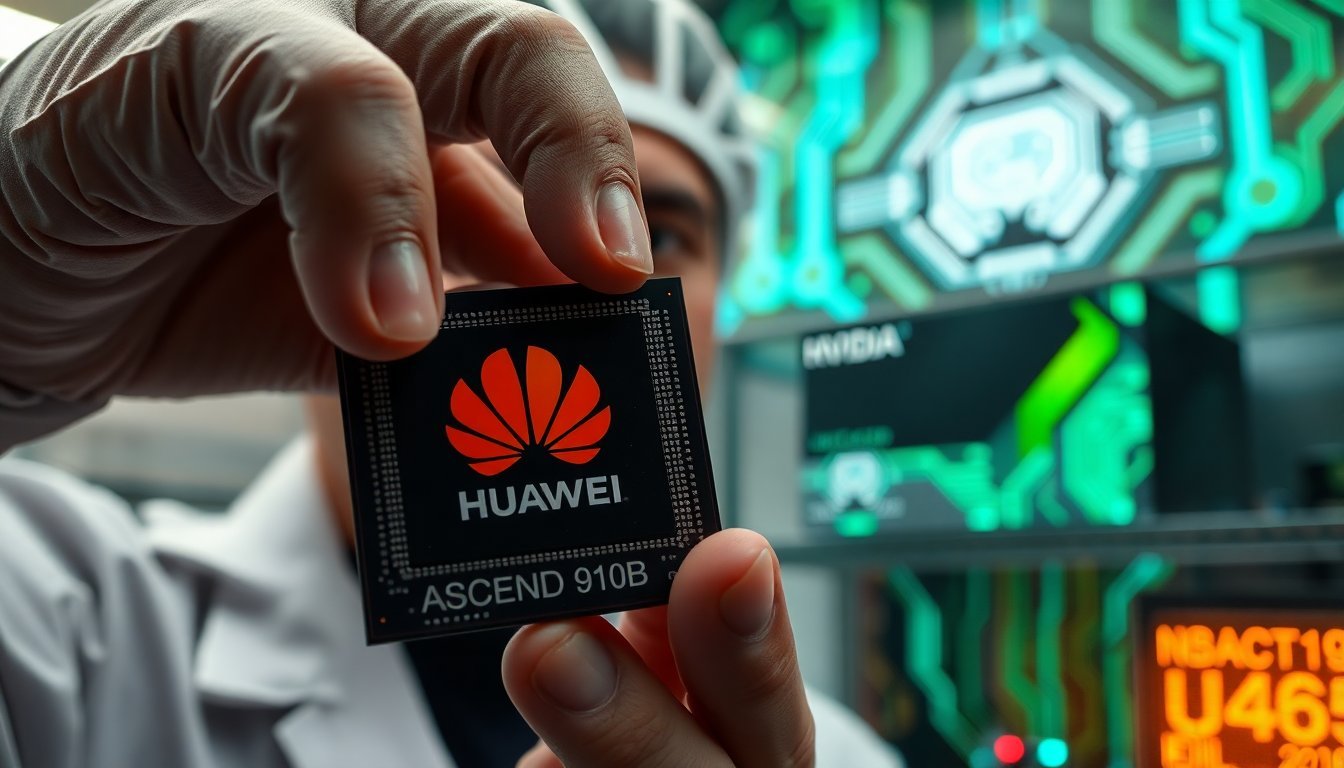
The Trump administration's approval of the H200 was intended as a compromise: allow a powerful but not top-tier chip to satisfy China's AI demand while protecting America's most advanced technology. The New York Times reported that the approval process took over 18 months, during which Chinese firms were left with no choice but to develop their own solutions. Huawei's Ascend 910B chip, for example, has reached performance levels comparable to Nvidia's A100, and its software ecosystem, CANN, now supports popular AI frameworks like PyTorch and TensorFlow.
Reuters reported in December 2025 that Huawei had secured contracts with three of China's largest cloud providers to supply the Ascend 910B for their AI training clusters. By the time the H200 was approved, the domestic supply chain was already operational. The US government's delay, intended to protect national security, ended up destroying the very market it was trying to manage.
What Does This Mean for the Global AI Chip Market?
The H200's failure in China reshapes the competitive landscape. Nvidia now faces a two-front war: a regulatory war at home and a market war abroad. In China, the company has lost not just sales but also the ecosystem advantage that made it dominant. Chinese developers are no longer writing code for CUDA; they are writing for CANG, PaddlePaddle, and MindSpore.
| Metric | Nvidia H200 (China) | Huawei Ascend 910B | Cambricon MLU590 |
|---|---|---|---|
| Approval Status | Approved May 2026 | Domestic, no restrictions | Domestic, no restrictions |
| Units Sold in China | 0 | ~50,000 (estimated) | ~15,000 (estimated) |
| Software Ecosystem | CUDA (limited support) | CANN (full PyTorch support) | MLU-Link (TensorFlow support) |
| Peak Performance (FP16 TFLOPS) | 197 | 160 | 128 |
| Power Consumption (W) | 700 | 450 | 350 |
| Verdict | Market failure | Market leader in China | Niche player |
Who Wins and Who Loses From This Market Shift?
The winners are clear: Huawei, Cambricon, and the entire Chinese domestic chip ecosystem. They have gained not just market share but also the confidence of Chinese AI developers. The loser is Nvidia, which has lost a market that accounted for 20% of its data center revenue in 2024. The Trump administration also loses face: its carefully calibrated export policy has produced exactly zero strategic benefit.
According to a source familiar with Nvidia's internal planning, the company had expected to sell at least 100,000 H200 units in China in the first year. The zero-sales outcome represents a revenue shortfall of approximately $3 billion for Nvidia. This is not a temporary blip; it is a structural shift that will compound over time as Chinese AI models are trained and deployed on domestic hardware.
My thesis: The H200's commercial failure in China is not a market anomaly but a strategic watershed: the US-China AI chip decoupling is now complete, and Nvidia is the primary casualty.
Short-term consequences: Nvidia will face investor pressure to explain how it plans to recover lost China revenue. The company may push for even more aggressive export approvals, but this is unlikely to matter if Chinese buyers have permanently shifted their purchasing patterns. In the next 12 months, expect Nvidia to announce a restructuring of its China sales team and a pivot to selling into Southeast Asian and Indian markets.
Long-term consequences: The H200 failure accelerates the fragmentation of the global AI chip market. We are moving from a single global standard (CUDA) to a world of regional ecosystems. This will increase development costs for AI companies operating across multiple markets and reduce the pace of AI innovation overall. The US government may respond with even tighter export controls, but this would only deepen the problem by further isolating American chipmakers from the world's largest manufacturing economy.
Who gains and loses: Huawei gains the most — it now has a proven domestic alternative to Nvidia that is commercially viable. Chinese AI companies gain independence from US sanctions risk. Nvidia loses a critical revenue stream and its ecosystem lock-in in China. The US government loses its primary leverage tool over China's AI development.
Concrete prediction: By Q2 2027, Huawei's Ascend chip family will achieve a 40% market share in China's AI training chip market, up from an estimated 15% in 2025. Nvidia's share will drop below 50% for the first time since 2018.
Predictions
- Nvidia will announce a formal withdrawal from the Chinese AI chip market by Q1 2027, citing regulatory uncertainty and shifting demand. The company will redirect its China sales team to focus on Japan, South Korea, and India.
- Huawei will launch a global version of the Ascend 910C by Q3 2027, targeting markets in Southeast Asia and the Middle East that are wary of US sanctions. This will be the first serious challenge to Nvidia's dominance outside of China.
- The US Commerce Department will impose a complete ban on all AI chip exports to China by mid-2027, closing the loophole that allowed the H200's approval. This will formalize the decoupling that has already occurred in practice.
- October 2022Initial US export controls on AI chips
The Biden administration imposes first round of export controls, banning sales of Nvidia A100 and H100 to China.
- March 2024H200 announced
Nvidia announces the H200 chip, a successor to the H100, with improved memory bandwidth.
- June 2024H200 export license application
Nvidia applies for a license to export the H200 to China under a new 'low-risk' category.
- December 2025Huawei Ascend 910B contracts
Reuters reports Huawei secures contracts with three major Chinese cloud providers for the Ascend 910B.
- May 2026H200 approved, zero sales
Trump administration approves H200 for sale in China. New York Times reports zero units have been purchased.
Article Summary
- Zero sales is a strategic defeat: The H200's commercial failure is not a market hiccup but a confirmation that US export controls have permanently altered China's AI chip procurement strategy.
- Ecosystem lock-in works both ways: Just as Nvidia locked the world into CUDA, Chinese firms have now locked themselves into domestic ecosystems. The switching costs are insurmountable.
- Huawei is the primary beneficiary: The company has executed a textbook pivot from smartphone chips to AI accelerators, and now has a proven product that Chinese buyers prefer over Nvidia's best offering.
- US policy has backfired: The Trump administration's attempt to manage chip exports through a calibrated approval process has produced the opposite of its intended effect: a fully independent Chinese AI chip industry.
- The global AI chip market is fragmenting: Expect regional ecosystems to emerge in China, the US, and Europe, each with its own dominant chipmaker and software stack. This will slow AI progress but increase resilience.

Source and attribution
NYTimes Technology
Trump Approved a Nvidia Chip for Sale in China. Beijing Doesn’t Want It.






Discussion
Add a comment