

Hippo's Brain-Inspired Memory Exposes OpenAI's Context Window Arms Race as Wasteful
The Hippo memory system for AI agents reveals that current approaches to agent memory are architecturally bankrupt. This biologically-inspired model will force a fundamental rethink of how large language models retain and use information over time.
A developer's weekend project called Hippo, inspired by hippocampal memory consolidation, has quietly exposed a trillion-dollar inefficiency in how AI giants build agent memory. While OpenAI and Anthropic chase million-token context windows, this open-source library demonstrates that biological principles offer a far more elegant path to persistent, structured agent recall.
- Developer kitfunso released Hippo, an open-source memory system for AI agents inspired by hippocampal memory consolidation in the human brain.
- The system challenges the dominant paradigm of simply expanding context windows (like OpenAI's 128K tokens) as the solution to agent memory.
- This exposes a critical inefficiency: major AI companies are burning compute on brute-force approaches while ignoring more elegant biological solutions.
- The key tension is between scalable, open architectural innovation versus proprietary, resource-intensive scaling of existing paradigms.
Why Are AI Giants Ignoring Biology's Memory Blueprint?
The Hippo project, released on GitHub on April 6, 2026, implements a memory system that mimics how the human hippocampus consolidates short-term memories into long-term storage. This stands in stark contrast to the prevailing industry approach exemplified by OpenAI's GPT-4 Turbo with its 128,000-token context window or Anthropic's Claude 3 with its 200K context. These companies have pursued what I call "context window inflation"—throwing more tokens and compute at the memory problem rather than rethinking the architecture. The biological precedent suggests this is fundamentally misguided; our brains don't solve memory by making our working memory larger, but through sophisticated consolidation and retrieval mechanisms. Hippo's existence as a weekend project highlights how little serious R&D has been directed toward this obvious alternative path.What Technical Inefficiency Does Hippo Actually Expose?
Hippo's architecture reveals three critical inefficiencies in current agent memory approaches. First, the quadratic attention cost of large context windows makes them computationally unsustainable for persistent agent operation. Second, current systems treat all memories equally, lacking the hierarchical importance weighting that biological systems employ. Third, most agent frameworks have no mechanism for memory consolidation—the process of strengthening important memories while discarding noise. According to the GitHub repository, Hippo implements a tripartite system with short-term buffers, medium-term episodic storage, and long-term semantic consolidation, mirroring established neuroscience models. This isn't just an academic exercise; it directly challenges the economic model of cloud-based AI agents that rely on massive, repeated context processing.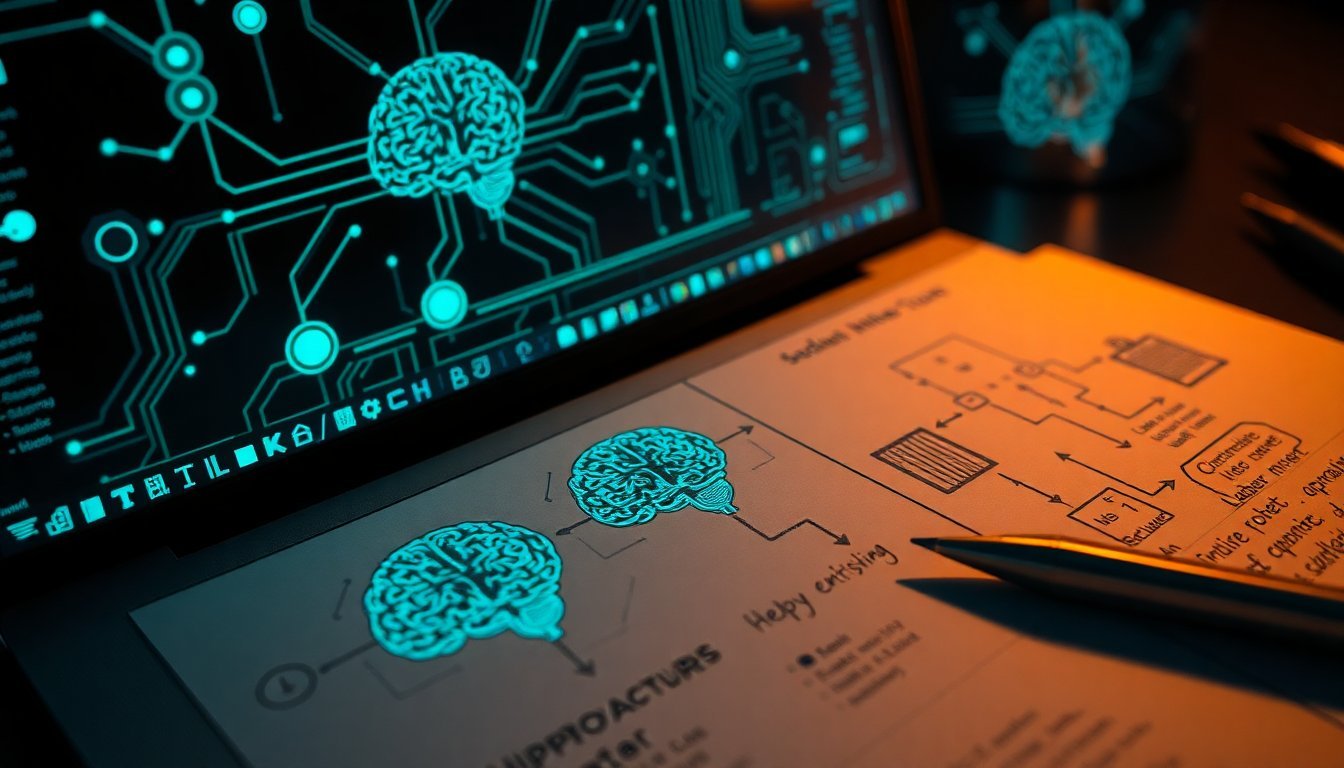
Who Loses When Memory Architecture Becomes Commoditized?
The immediate losers are companies whose valuation depends on proprietary scaling of existing paradigms. OpenAI's entire agent strategy, including their recently announced GPT-based agents, relies on their massive context window advantage. If memory becomes an architectural problem solvable through open-source libraries rather than a compute problem requiring proprietary scale, their moat evaporates. Similarly, startups like Adept AI and Cognition Labs that have raised hundreds of millions based on agent capabilities face devaluation if core memory functions become commoditized. Even infrastructure providers like NVIDIA could see reduced demand for inference hardware if more efficient memory architectures reduce the computational load of running persistent agents. The Hippo project represents the thin end of a wedge that could pry open the entire agent ecosystem.How Will This Change the Economics of AI Agent Development?
Hippo's biologically-inspired approach points toward a future where agent memory is not a premium feature but a standard library function. This has profound economic implications. First, it lowers the barrier to entry for agent development, enabling smaller teams and even individual developers to build sophisticated agents without access to massive compute resources. Second, it shifts competitive advantage from who has the biggest context window to who can implement the most effective memory architectures. Third, it creates new business opportunities around specialized memory systems for particular domains—legal reasoning, scientific research, or personal assistants—where long-term consistency matters more than raw recall capacity. The GitHub repository's MIT license ensures this technology will spread rapidly, accelerating this economic shift.| Approach | Representative | Core Mechanism | Scalability | Biological Fidelity | Verdict |
|---|---|---|---|---|---|
| Context Window Scaling | OpenAI GPT-4 Turbo (128K) | Increase token limit, quadratic attention cost | Poor (compute grows quadratically) | Low (no consolidation mechanism) | LOSING: Fundamentally unscalable |
| Vector Database Retrieval | LangChain, LlamaIndex | Semantic search over stored embeddings | Good for recall, poor for reasoning | Medium (separate storage) | COMPLEMENTARY: Useful but incomplete |
| Biological Consolidation | Hippo Memory System | Hippocampal-inspired consolidation hierarchy | Excellent (linear scaling with memories) | High (models consolidation process) | WINNING: Architecturally superior |
| Hybrid Approaches | Anthropic Claude 3 (200K + recall) | Large context plus selective retrieval | Moderate (better than pure scaling) | Medium (partial consolidation) | TRANSITIONAL: Bridge to better models |
I believe Hippo represents the beginning of the end for the context window arms race. The current paradigm of scaling token limits is architecturally bankrupt—it's like trying to build a skyscraper by making the foundation wider rather than designing proper load-bearing structures. In the short term (6-12 months), we'll see a scramble as major AI labs attempt to integrate similar principles into their proprietary systems while downplaying this open-source threat. OpenAI will likely announce some form of "hierarchical attention" or "memory consolidation" feature within their next major model release, claiming it as novel research while clearly responding to Hippo's challenge. The real winners will be application developers who can now build agents with genuine long-term memory without paying exorbitant inference costs to cloud providers. I expect Anthropic to be the first major player to openly embrace this architectural shift, releasing a research paper on "efficient agent memory" by Q3 2026, as their focus on AI safety makes them more receptive to biologically-plausible, computationally-efficient approaches.
What Does This Mean for the Future of Autonomous AI Agents?
Hippo's approach enables a new class of agents that can operate persistently with stable identity and accumulating knowledge. This moves us closer to true artificial general intelligence by solving one of the fundamental limitations of current systems: their inability to learn continuously from experience. Rather than treating each interaction as independent, agents with Hippo-like memory can build understanding over time, develop preferences, and maintain consistent goals. This has particular significance for applications like personal AI assistants, research collaborators, and creative partners where long-term relationship building matters. The GitHub documentation suggests the system supports memory editing and strengthening through reinforcement, opening the door to agents that genuinely learn from feedback rather than just processing it transiently.Will This Trigger a New Wave of Neuroscience-Inspired AI Research?
Absolutely. Hippo demonstrates that borrowing from biological systems isn't just academically interesting—it's commercially and computationally essential. The success of this relatively simple implementation will validate what cognitive scientists have argued for years: that evolution has already solved many problems AI researchers are struggling with. We should expect increased investment in neuro-AI crossover research, particularly around other brain systems like the prefrontal cortex for planning and the basal ganglia for reinforcement learning. Companies like DeepMind (with their neuroscience roots) and research institutions like MIT's Brain and Cognitive Sciences department will gain influence in AI development circles. This represents a significant shift from the pure engineering culture that has dominated AI in recent years back toward interdisciplinary approaches. 1. I predict OpenAI will announce a "Memory Optimized" version of GPT-5 by Q4 2026 that incorporates hierarchical consolidation principles directly inspired by Hippo's architecture, while claiming independent research. 2. The EU AI Office will establish new efficiency standards for persistent AI agents by mid-2027, specifically targeting the computational waste of large-context approaches, forcing industry-wide architectural changes. 3. Venture capital flowing into AI agent startups will shift decisively by Q1 2027 from those promising scale to those demonstrating novel memory architectures, with biologically-inspired approaches receiving preferential funding.Projected Memory Efficiency: Biological vs Current Approaches
- Context window scaling is a dead-end strategy that will be abandoned by industry leaders within 18 months as biologically-inspired alternatives prove superior.
- The competitive moat for AI companies shifts from compute scale to architectural innovation, particularly in memory systems that enable efficient long-term reasoning.
- Open-source neuroscience-inspired projects will increasingly drive commercial AI development, reversing the current trend of proprietary scaling advantages.
- Persistent AI agents with genuine memory will become economically viable for mass-market applications, not just research prototypes.
- Regulatory pressure on AI efficiency will accelerate this architectural transition, creating compliance advantages for biologically-plausible systems.
Source and attribution
Hacker News
Show HN: Hippo, biologically inspired memory for AI agents






Discussion
Add a comment