
Trump Dialed Nvidia Onstage. Safety Just Lost the Room.
Trump's onstage call to Jensen Huang reframes AI safety as a political liability rather than a technical necessity. This analysis argues Nvidia gains a regulatory shield while safety-focused labs and the EU lose leverage.
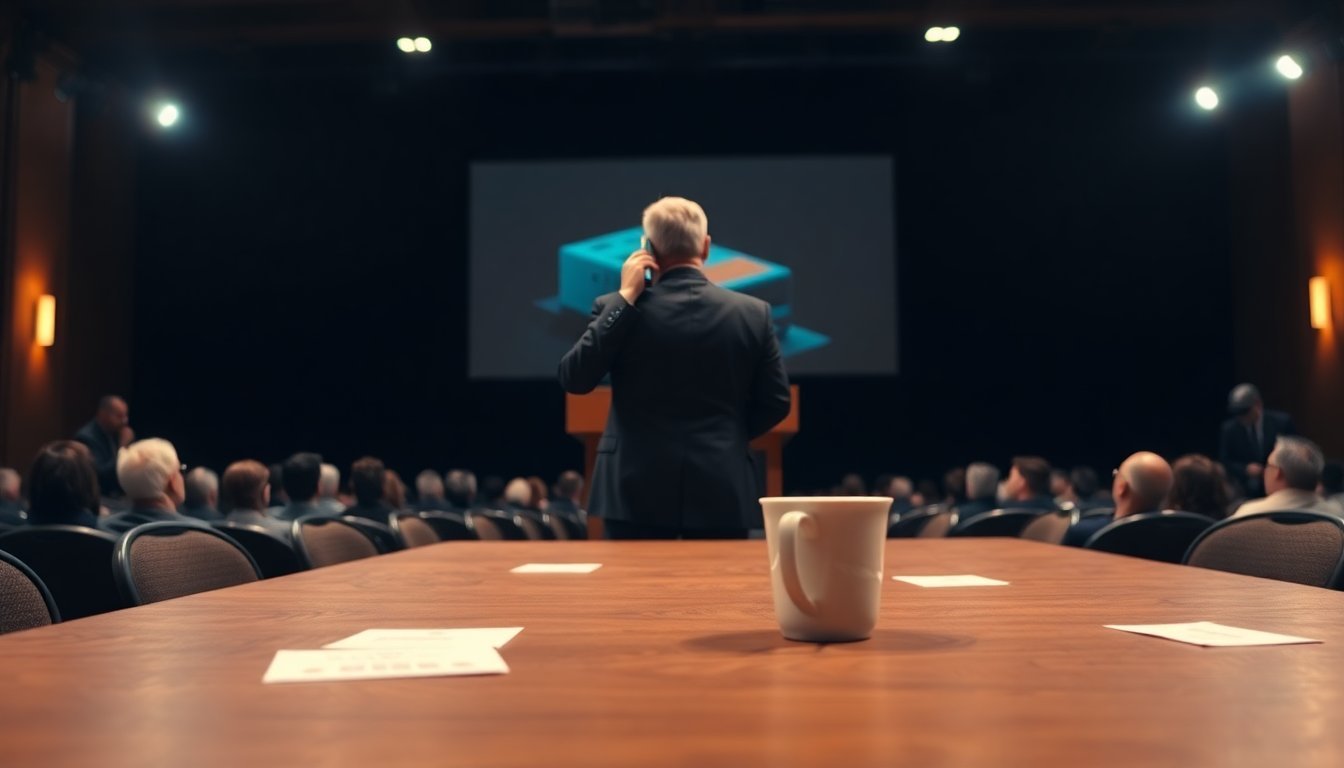
On September 14, 2026, President Trump called Jensen Huang while Nvidia's chief executive was onstage in Los Angeles and used the moment to attack calls for slowing down or regulating AI. The call wasn't a scheduling accident — it was a public blessing of the accelerationist camp, delivered directly into the industry's most important keynote.
- What happened: President Trump called Jensen Huang onstage in Los Angeles on September 14, 2026, and criticized calls to slow down or regulate AI, according to NYTimes Technology.
- Why it matters: The sitting president used Nvidia's keynote to publicly delegitimize the AI safety camp, converting a hardware company into a political instrument.
- The tension: Nvidia wants to sell compute to everyone; safety labs want to slow deployment; the White House just picked a side — and it wasn't the safety side.
What Exactly Happened in Los Angeles?
According to NYTimes Technology, President Trump called Jensen Huang, Nvidia's chief executive, while Huang was onstage in Los Angeles on September 14, 2026, and criticized calls to slow down and regulate AI. The report does not specify the venue, the length of the call, or whether Huang knew it was coming — but the timing and staging are the story. A presidential call routed into a live keynote is not improvisation; it is choreography. The message was aimed at two audiences simultaneously: the AI industry (you have permission to build) and regulators (you have no mandate to stop them).Why Is Nvidia the Right Stage for This Message?
Nvidia is the single most important chokepoint in AI compute. Whoever controls GPU supply controls the pace of frontier model training, and Huang has spent the past three years positioning Nvidia as the neutral arms dealer to every lab — OpenAI, Anthropic, Google DeepMind, Meta, xAI. Trump calling into that stage effectively deputizes Nvidia as the accelerationist standard-bearer. The company didn't ask for this, but it can't refuse it either. Nvidia's stock is now partially priced on deregulatory expectations, which means any future safety rule becomes a direct hit to its multiple.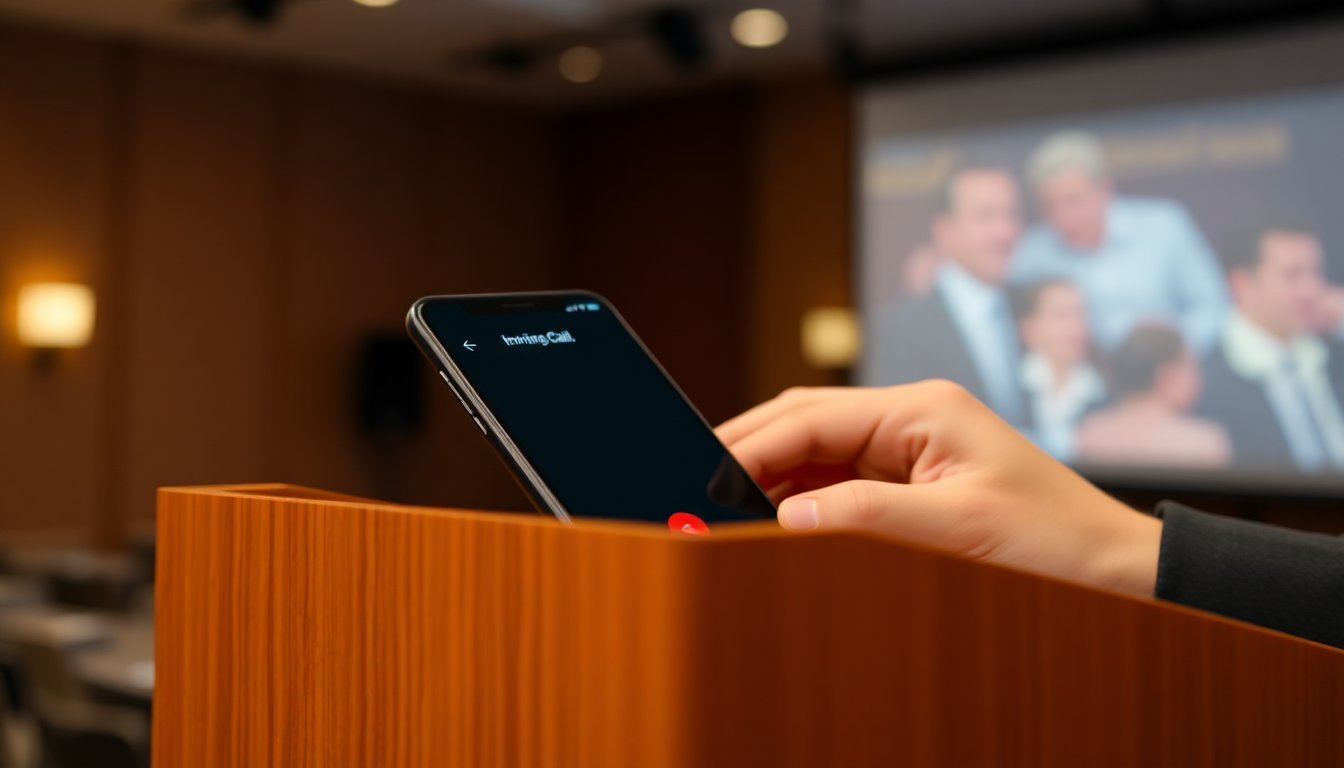
Who Actually Benefits From the President's Framing?
Nvidia benefits most in the short term. A deregulatory White House reduces the risk of pre-deployment compute thresholds, licensing regimes, or training-run reporting requirements that would slow GPU demand. Elon Musk's xAI benefits next: Musk has publicly aligned with the anti-slowdown position, and Trump's call validates that stance without Musk having to spend political capital. The losers are Anthropic and, to a lesser degree, OpenAI — both have built public identities around safety commitments, and the president just framed those commitments as an obstacle to American competitiveness. The EU loses structurally. Brussels has been the most aggressive regulator of frontier AI, and a US president publicly mocking safety concerns weakens the EU's leverage to export its AI Act standards through trade pressure.Is This a Turning Point or a One-Off Stunt?
It's a turning point, but not because of the call itself. The call matters because it confirms a pattern: the White House has decided that AI safety is a domestic political liability, not a national security priority. That reframes every upcoming regulatory fight — the FTC's posture on model licensing, NIST's AI Safety Institute budget, and any congressional effort to attach safety riders to defense authorization bills.| Actor | Position on AI slowdown | What the call changes |
|---|---|---|
| Nvidia | Neutral publicly, accelerationist in practice | Gains political cover; deregulation becomes a stock catalyst |
| Anthropic | Explicit safety commitments | Now framed as anti-competitive by association |
| OpenAI | Safety rhetoric, aggressive deployment | Can quietly align with Trump without losing face |
| xAI | Openly anti-slowdown | Validated without spending political capital |
| EU AI Office | Aggressive enforcement | Loses moral leverage against US labs |
| Verdict | Nvidia wins the framing war; safety labs lose the benefit of the doubt. | |
What Does the Safety Camp Do Now?
Anthropic and OpenAI have three options: publicly push back and risk being labeled anti-American-competitiveness, stay silent and cede the narrative, or reframe safety as a national security issue rather than a slowdown. The third path is the only one with political legs. Expect both labs to pivot their Washington messaging toward "secure AI leadership" language within the next two quarters. That's not a prediction of substance — it's a prediction of vocabulary.
Thesis: Trump's call to Huang was a deliberate deregulatory signal that converts Nvidia's compute monopoly into a political shield, and the safety camp has no counter-move that doesn't sound like surrender.
In the short term, this accelerates deployment. Labs will read the call as permission to ship faster, and Nvidia will read it as permission to prioritize volume over allocation caution. In the long term, the real cost lands on US credibility in international AI governance — the EU will now treat American safety commitments as performative, and that will harden Brussels' enforcement posture rather than soften it.
Concrete prediction: By Q2 2027, the EU AI Office will issue at least one formal non-compliance finding against a US-based frontier lab, explicitly citing the absence of US federal safety guardrails as justification for stricter enforcement. Anthropic is the most likely target because its safety branding makes the political contrast sharpest.
Predictions
1. Nvidia will announce a US-based AI infrastructure initiative with White House participation before Q1 2027, framing domestic compute buildout as national security. 2. The EU AI Office will open a formal non-compliance inquiry into a US frontier lab by Q2 2027, citing the US deregulatory posture as context. 3. Anthropic will publicly reframe its safety messaging around "secure AI leadership" within two quarters, avoiding direct confrontation with the White House.- September 2026Trump calls Huang onstage
President Trump calls Jensen Huang during a live event in Los Angeles and criticizes AI slowdown and regulation calls.
- Q4 2026Expected industry response
AI labs and trade groups reposition messaging around deregulation and national competitiveness.
- Q2 2027EU enforcement window
EU AI Office expected to issue formal non-compliance findings against US-based frontier labs.
Perceived regulatory risk by AI lab, post-call (estimated)
Article Summary
- Trump's onstage call to Huang was choreographed, not accidental — it publicly delegitimized AI safety as a political position.
- Nvidia gains a regulatory shield it didn't ask for but can't refuse, tying its valuation to deregulatory expectations.
- Anthropic and OpenAI face a lose-lose messaging environment; the only viable pivot is reframing safety as national security.
- The EU loses moral leverage to export its AI Act standards, likely hardening enforcement rather than softening it.
- The real story isn't the call — it's that the White House has picked a side in the AI slowdown debate, and it isn't the safety side.

Source and attribution
NYTimes Technology
Nvidia’s Jensen Huang Gets Onstage Call From Trump, Who Dismissed A.I. Safety Concerns






Discussion
Add a comment