
TokenPowerBench vs. Traditional Benchmarks: Why Measuring AI's Energy Cost Matters More Than Speed
As AI queries surge into the billions daily, a hidden crisis emerges: inference now consumes over 90% of an LLM's total power. While existing benchmarks obsess over speed and accuracy, a new tool finally measures the true environmental cost of every AI response.
Every time you ask an AI a question, you’re triggering a hidden energy surge in a distant data center. While the industry has been fixated on speed, the real cost of that instant answer is measured in watts, not milliseconds.
A new benchmark is shifting the focus from how fast AI thinks to how much power it consumes. Why does this invisible energy crisis matter for the future of sustainable technology?
A new benchmark is shifting the focus from how fast AI thinks to how much power it consumes. Why does this invisible energy crisis matter for the future of sustainable technology?
The Invisible Energy Crisis Behind Every AI Query
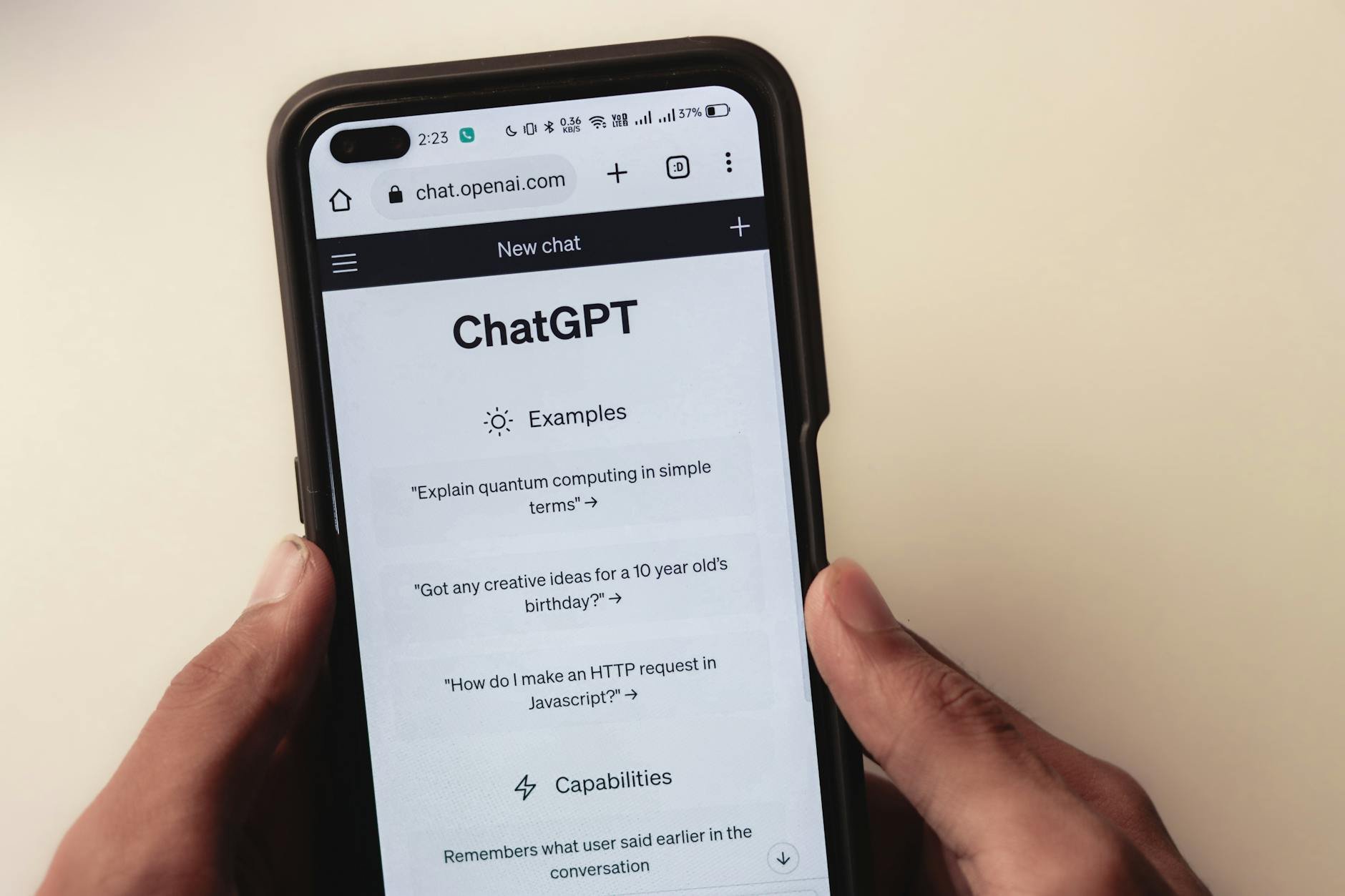
You ask ChatGPT a question, and in seconds, you get an answer. What you don't see is the energy required to generate it—the computational power surging through data centers, translating directly into electricity consumption and carbon emissions. According to industry analyses, this phase—known as inference—now accounts for a staggering more than 90% of the total power consumption of large language models (LLMs). Training gets the headlines, but inference is the silent, persistent drain. Yet, until now, we've had shockingly few tools to measure it properly.
Enter TokenPowerBench, introduced in a new arXiv paper. It's not another benchmark touting tokens-per-second or accuracy scores. Instead, it's the first lightweight, extensible framework built specifically to answer one critical question: How much power does your AI model actually consume when it's working for you? This shift in focus from pure performance to performance-per-watt represents a fundamental change in how we must evaluate the AI tools shaping our future.
Why Existing Benchmarks Are Missing the Point
The AI benchmarking landscape is crowded with tools like HELM, MMLU, and various inference speed tests. They excel at telling us which model is smarter or faster. But they share a critical blind spot: energy efficiency. They treat the data center as a black box, reporting outputs while ignoring the electrical inputs required.
"We've been optimizing for the wrong metrics," the research implies. A model that delivers answers 10% faster might do so by consuming 50% more power per token—a terrible trade-off for the environment and operational costs at planetary scale. Traditional benchmarks ask, "Can it do the task?" TokenPowerBench asks, "At what energy cost?" This is the comparison that matters for a sustainable AI future.
The Core Comparison: Performance vs. Power Profile
Imagine comparing two car engines. Benchmark A tells you their top speed and 0-60 mph time. Benchmark B (TokenPowerBench) also tells you their miles-per-gallon at different speeds, under different loads, and while idling. For daily use, which data is more valuable?
- Traditional Benchmarks: Measure task accuracy, latency, throughput (tokens/sec). Focus is on capability.
- TokenPowerBench: Measures joules per token, power draw during prompt processing vs. token generation, and idle power. Focus is on efficiency and cost.
This allows for nuanced comparisons. For instance, a model might be moderately slower but dramatically more power-efficient, making it the better choice for high-volume, real-world applications. Without TokenPowerBench's metrics, this advantage remains invisible.
How TokenPowerBench Works: Peering Into the Black Box
So, how does it actually measure the unmeasured? TokenPowerBench is designed as a lightweight software wrapper that integrates with common LLM serving frameworks like vLLM and Hugging Face's Transformers. Its key innovation is synchronized telemetry.
As a model processes a prompt and generates tokens, the benchmark simultaneously collects fine-grained power data from the hardware—typically using tools like Intel's RAPL (Running Average Power Limit) or NVIDIA's NVML for GPUs. It then correlates this power draw directly with inference events: the initial computational "ramp-up," the steady state of token generation, and the post-completion idle state.
The output isn't just a single number. It's a detailed power profile that reveals inefficiencies. For example, it can show if a model's architecture leads to high idle power consumption between requests, or if certain types of queries (long context vs. short) have disproportionately high energy costs. This level of detail is what makes it "extensible"—researchers and engineers can use it to diagnose specific power bottlenecks in their AI systems.
The Real-World Impact: From Lab to Global Scale
The implications of widespread power benchmarking are profound. Consider that major AI providers now field billions of inference requests per day. A difference of a few joules per token, multiplied by that scale, translates to gigawatt-hours of electricity and thousands of tons of CO2 annually.
With TokenPowerBench, stakeholders can make informed decisions:
- Cloud Providers & AI Companies: Can optimize hardware selection and model deployment for cost and sustainability. Should they use many smaller, efficient models or a few powerful ones? The power data guides the answer.
- Model Developers: Can use power efficiency as a key optimization target during training and architecture design, alongside accuracy.
- Policymakers & Regulators: Gain the metrics needed to potentially craft sensible environmental standards for AI services, moving beyond vague pledges to measurable accountability.
- Enterprise Customers: Can choose AI APIs not just on price and performance, but on their "green" credentials backed by hard data.
A Call for Transparent Reporting
The next logical step is for power metrics to become a standard part of model cards and API documentation. Imagine seeing "Joules per 1k Tokens" listed alongside context length and supported languages. TokenPowerBench provides the methodology to make this possible, fostering a new era of transparency where the environmental impact of AI is no longer an afterthought.
The Bottom Line: Efficiency Is the New Performance
The introduction of TokenPowerBench marks a pivotal moment. It moves the conversation from "How smart is our AI?" to "How smartly does our AI use resources?" In a world facing climate challenges and soaring computational demands, this is not a niche concern—it is central to the responsible and scalable future of the technology.
The comparison is no longer just GPT-4 versus Claude on a trivia test. It's GPT-4 versus Claude on a trivia test per kilowatt-hour. This new dimension of evaluation will drive innovation toward leaner, cleaner, and ultimately more sustainable artificial intelligence. The race for supremacy is now also a race for efficiency, and we finally have a stopwatch that can time it.
Source and attribution
arXiv
TokenPowerBench: Benchmarking the Power Consumption of LLM Inference






Discussion
Add a comment