

Tokenmaxxing: How AI Insiders Are Leaving Everyone Behind
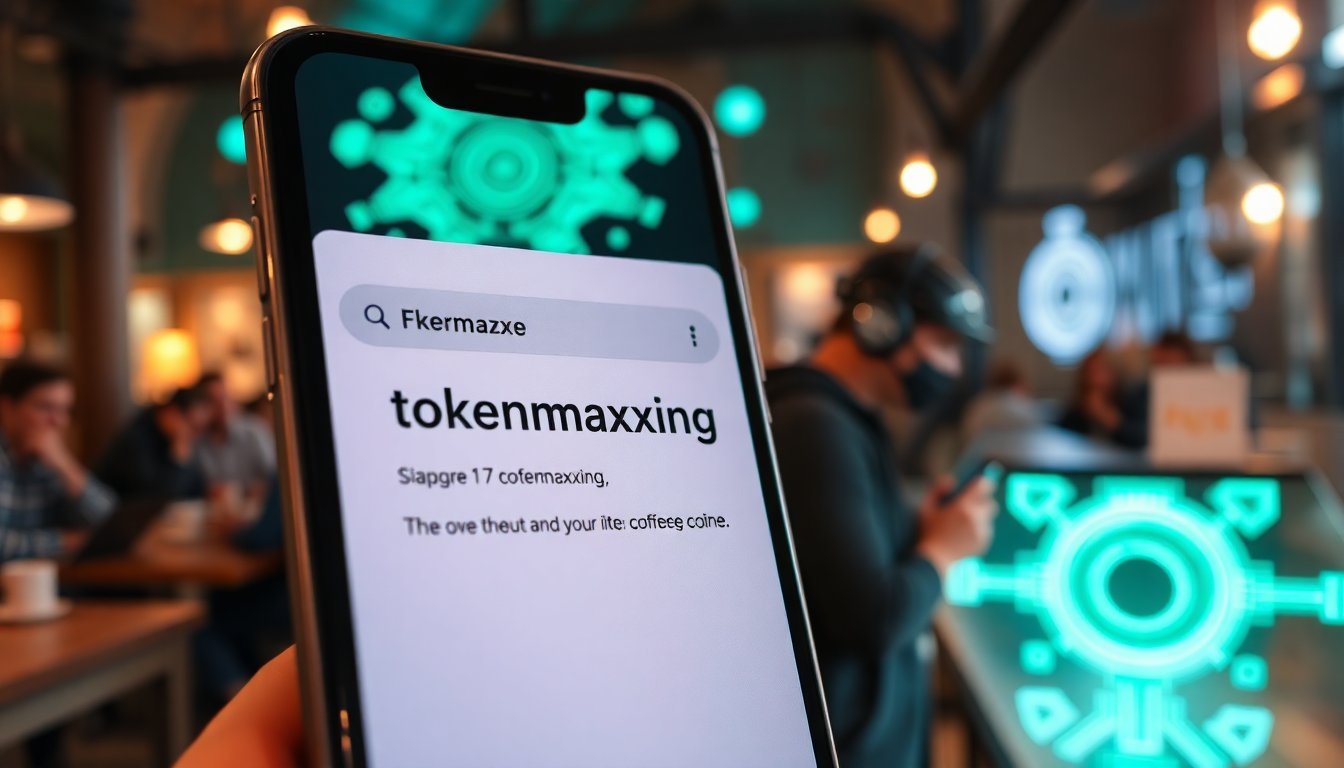
The gap between AI insiders and everyone else is widening, and the spending, suspicion, and even new vocabulary are starting to show it. This article dissects the 'tokenmaxxing' phenomenon and its implications for the industry.
OpenAI is buying finance apps and talk shows. A shoe company just rebranded as an AI infrastructure play. Anthropic claims its latest model is too powerful to release. Welcome to the AI Anxiety Gap, where the vocabulary is new, the spending is insane, and the public is more confused than ever.
- OpenAI is on a shopping spree, acquiring everything from finance apps to talk shows, signaling a land-grab for data and distribution.
- Anthropic released a model it claims is too powerful to release publicly, but not too powerful to talk about—a classic marketing move that deepens the anxiety gap.
- A major shoe company (Allbirds) rebranded as an AI infrastructure play, highlighting the desperation of non-AI companies to stay relevant.
- The 'tokenmaxxing' vocabulary—maximizing token usage in LLMs—is a new insider shibboleth that excludes the general public.
Why Is OpenAI Buying Everything from Finance Apps to Talk Shows?
OpenAI's acquisition strategy is not random. By buying a finance app (likely for financial data and user base) and a talk show (for cultural cachet and conversational data), OpenAI is building a moat that goes beyond model quality. According to the TechCrunch podcast, these moves are about securing vertical-specific data and distribution channels that competitors can't easily replicate. I see this as a clear admission that raw compute is no longer the only differentiator—data and user trust are now the battleground.
What Does Anthropic Gain by Claiming a Model Is 'Too Powerful to Release'?
Anthropic's announcement that it has a model too powerful to release publicly is a masterstroke of marketing and risk management. By framing the model as dangerous, Anthropic signals to regulators and enterprise clients that it is the responsible actor—unlike OpenAI. But the model is apparently not too powerful to demonstrate or to use internally. This creates a perception of superior capability without the liability of a public launch. I predict this will backfire: by mid-2026, Anthropic will be forced to release some version of this model under pressure from investors who want returns.
Why Did a Shoe Company Rebrand as an AI Infrastructure Play?
Allbirds, the sustainable footwear company, rebranding as an AI infrastructure play is the most absurd yet telling sign of the AI hype cycle. According to the source, this is not a pivot but a desperate attempt to capture investor attention. The 'AI Anxiety Gap' is so wide that non-tech companies are willing to abandon their core identity to be part of the narrative. This will not end well for Allbirds, which will likely face shareholder lawsuits within 18 months when its AI revenue fails to materialize.
| Dimension | OpenAI | Anthropic | Verdict |
|---|---|---|---|
| Strategy | Acquisition spree for data & distribution | Secrecy & safety narrative | OpenAI's approach is more scalable |
| Public Trust | Eroding due to hype | High, but fragile | Anthropic wins short-term trust |
| Model Release | Rapid, iterative | Conservative, selective | OpenAI captures more market share |
| Vocabulary | Creates new terms (tokenmaxxing) | Uses existing safety lexicon | OpenAI shapes the narrative |
| Risk of Backlash | High | Moderate | Anthropic better positioned for regulation |
| Verdict | OpenAI will win the market, but Anthropic will win the regulatory game. | Draw – different winners for different games. | |
My thesis: The AI Anxiety Gap is not a bug—it's a feature of the current market. Insiders benefit from confusion because it allows them to move faster without public scrutiny. Short-term, this means OpenAI and Anthropic will continue to capture value. Long-term, the gap will trigger a populist backlash that could lead to heavy-handed regulation. The biggest loser is the mid-market enterprise that is paralyzed by indecision. I predict that by Q1 2027, the EU AI Office will mandate 'vocabulary transparency'—requiring companies to define terms like tokenmaxxing in plain language—as a condition for market access. This will disproportionately hurt OpenAI, which relies on jargon to maintain its insider advantage.
- OpenAI will acquire at least one major media company (e.g., a podcast network) by December 2026 to secure exclusive conversational data.
- Anthropic will be forced by its investors to release a public version of its 'too powerful' model by September 2026, citing competitive pressure from open-source alternatives.
- The term 'tokenmaxxing' will enter the general business lexicon by mid-2027, but will be widely misunderstood, further widening the anxiety gap.
- April 2026OpenAI acquires finance app and talk show
OpenAI begins buying vertical-specific assets beyond core AI.
- April 2026Allbirds rebrands as AI infrastructure play
Shoe company attempts to pivot to AI, signaling desperation in non-tech sectors.
- April 2026Anthropic claims model too powerful to release
Anthropic announces a model it says is dangerous for public release, but demonstrates it internally.
- OpenAI's acquisition spree is a defensive move against commoditization of base models.
- Anthropic's secrecy is a calculated risk that may alienate developers who want access.
- The Allbirds rebrand is a canary in the coal mine for non-AI companies chasing hype.
- The anxiety gap is a market opportunity for startups that can translate AI into plain language.
- Regulators will eventually step in, but only after a high-profile failure caused by insider jargon.
Source and attribution
TechCrunch AI
Tokenmaxxing, OpenAI’s shopping spree, and the AI Anxiety Gap






Discussion
Add a comment