

Sam Altman Attack: AI Safety's Darkest Hour
A 20-year-old man attacked Sam Altman's home with a bomb, targeting AI leaders. This signals a dangerous shift from online debate to physical violence, forcing the AI industry to confront its own security vulnerabilities and the weaponization of its critics.
On April 13, 2026, a 20-year-old Texas man threw a homemade bomb at Sam Altman's gate. The authorities found a list of other AI leaders in his possession, along with extensive writings on the threat of AI. This is not a lone wolf — it's the first shot in a new, violent phase of the AI backlash.
- A 20-year-old Texas man threw a homemade bomb at Sam Altman's gate; authorities found he had a list of other AI executives and had written extensively about the threat of AI.
- This marks the first major act of physical violence targeting AI leadership, escalating from online harassment to real-world attacks.
- The key tension: the AI safety movement, which has long warned about existential risks, now faces being tainted by association with this extremist act.
Why Did the Attacker Target AI Leaders Specifically?
According to the NYT report, the 20-year-old suspect had written at length about the threat of AI and compiled a list of top AI executives. This is not a random act of misogyny or political extremism — it is an ideologically motivated attack rooted in the belief that AI poses an existential danger. The suspect explicitly connected his action to the AI threat narrative, which has been amplified by prominent figures like Eliezer Yudkowsky and organizations like the Center for AI Safety. The attacker's list likely included names like Demis Hassabis (DeepMind), Dario Amodei (Anthropic), and Sam Altman himself. This is the logical endpoint of a discourse that has framed AI leaders as irresponsible demigods playing with fire.
Who Are the Real Winners and Losers From This Attack?
The immediate winners are security firms and private intelligence contractors. OpenAI, Anthropic, and DeepMind will now spend millions on physical security for their C-suites. The losers are the AI safety community — groups like MIRI and the Center for AI Safety will now face intense scrutiny. Their warnings about AI risk will be conflated with this attack, undermining their credibility. The real loser is the public discourse: any legitimate criticism of AI development will now be met with accusations of extremism.
How Will This Change Security at AI Companies?
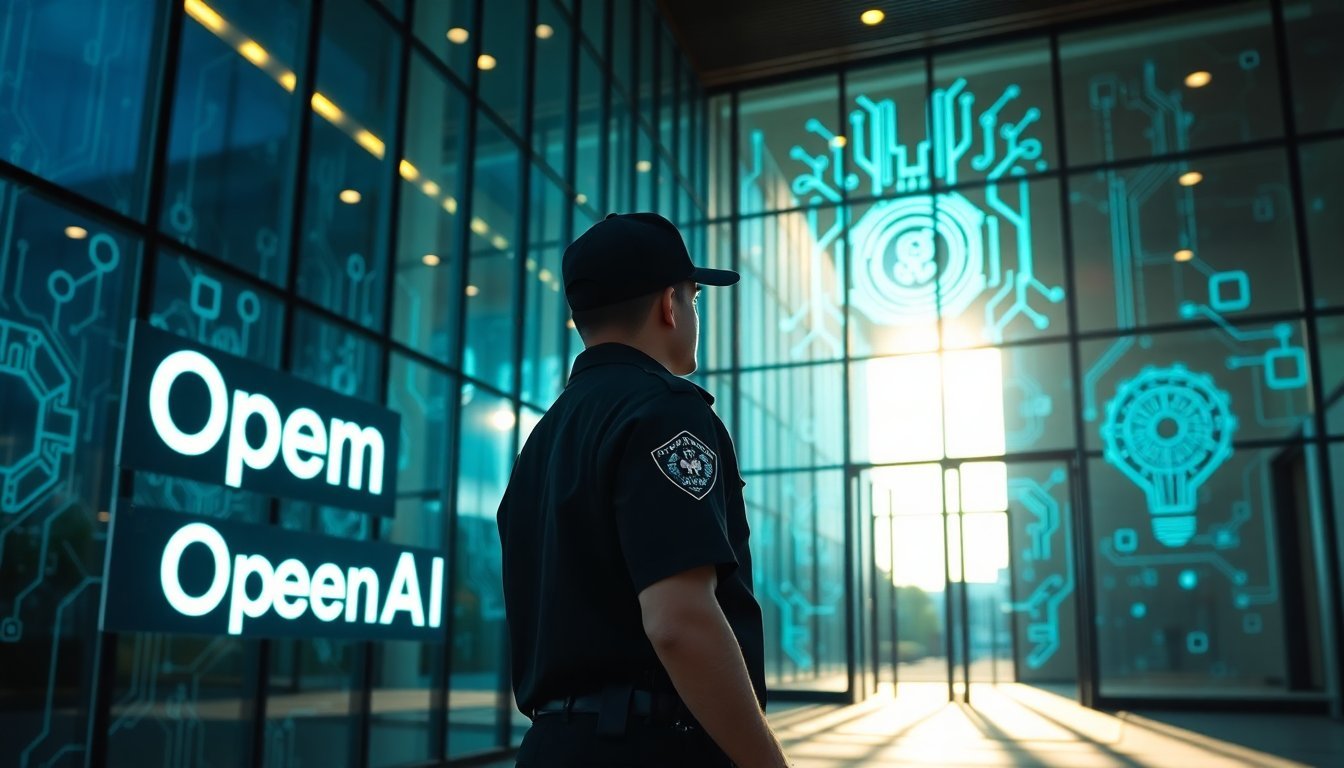
Expect a massive increase in executive protection budgets. OpenAI will likely hire former Secret Service agents and implement military-grade perimeter security at Altman's home and office. This will create a moat between AI leaders and the public, reducing transparency. The suspect's list means every major AI CEO is now a target. Security will become a competitive advantage: companies that protect their leaders better will retain talent. Expect a new industry of AI-specific threat assessment firms. The cost of this security will be passed on to consumers and investors, further entrenching the power of incumbent AI giants.
Does This Attack Signal the End of the AI Safety Movement?
Yes and no. The movement's public face — the open letters, the doomsday predictions — will be forced to pivot. Many safety advocates will distance themselves from any rhetoric that could be weaponized. But the attack also validates their core thesis: AI is powerful and dangerous, and people are scared. The difference is that now the danger is not a hypothetical AGI, but real-world violence inspired by that fear. The movement will split: one faction will go underground, focusing on technical research; another will become more cautious, emphasizing responsible deployment. The net effect is a chilling of public debate. I expect organizations like the Future of Life Institute to issue statements condemning violence but reaffirming their concerns, but their impact will be muted.
What Does This Mean for the Broader AI Regulatory Landscape?
Regulators will see this as a clear signal that the AI backlash is real and violent. The EU AI Act, already in effect, will likely add provisions for physical security of AI executives. In the US, the White House will accelerate its AI executive order, potentially creating a new federal task force for AI-related threats. This plays into the hands of AI companies that favor regulation: they can now argue that unchecked AI development leads to social unrest, justifying their own preferred regulatory frameworks. Smaller AI startups without security budgets will be at a disadvantage, as key talent will flock to larger firms with better protection. Expect a consolidation wave.
| Dimension | Before Attack | After Attack |
|---|---|---|
| AI CEO Security | Minimal, often no dedicated protection | Military-grade, 24/7 protection for top 10 CEOs |
| Public Discourse on AI Risk | Open debate, many voices | Chilled; critics face suspicion |
| AI Safety Movement Influence | Growing, with open letters | Declining, tainted by association |
| Regulatory Momentum | Moderate, focused on safety | Accelerated, includes security |
| Startup Talent Retention | High, competitive | Low, talent flees to secure giants |
| Verdict | Optimistic, messy | Securitized, consolidated |
My thesis: This attack is a tragic but predictable outcome of the AI industry's failure to manage public fear, and it will backfire on the safety movement it claims to represent. In the short term, we will see a security lockdown across AI companies, with leaders retreating behind walls. This will reduce public engagement and increase paranoia. In the long term, this attack will be used by AI companies to justify more opaque development, arguing that transparency invites violence. The winners are security firms and large incumbents. The losers are small startups, the safety movement, and the public's right to know. I expect OpenAI to announce a new 'Security and Trust' division by Q3 2026, led by a former intelligence official, and to use this incident to lobby for federal AI security funding. The attacker's list will be leaked, causing a panic among other AI executives. The real tragedy is that this attack will set back legitimate AI safety research by years, as researchers will be afraid to speak publicly.
- By Q3 2026, OpenAI will establish a dedicated 'Security and Trust' division with a budget exceeding $50 million, led by a former DHS official.
- The EU AI Office will mandate physical security assessments for all companies developing frontier AI models by Q1 2027.
- At least two AI safety organizations will rebrand or dissolve by end of 2026 to avoid association with the attack.
- Insight 1: The attack is a direct result of the AI safety discourse, not a rejection of it; the movement's own rhetoric was weaponized.
- Insight 2: The securitization of AI leadership will create a new class of 'AI oligarchs' insulated from public scrutiny.
- Insight 3: The attack will accelerate regulatory capture by large AI companies, who will write security rules that crush smaller competitors.
- Insight 4: The real loser is the concept of open AI research; expect more closed-source models and secretive development.
- Insight 5: The attacker's list will become a blueprint for copycats, forcing AI leaders to become reclusive.

Source and attribution
NYTimes Technology
Man Held in Attack on OpenAI Chief’s Home Had List of A.I. Leaders, Officials Say






Discussion
Add a comment