

Qualcomm's $4B Modular Bet: Desperation or Genius?
Qualcomm's $4 billion acquisition of Modular aims to bolster its AI inference capabilities, but the startup's dependence on Nvidia's ecosystem and unproven revenue model make this a risky bet that may not yield returns for years.
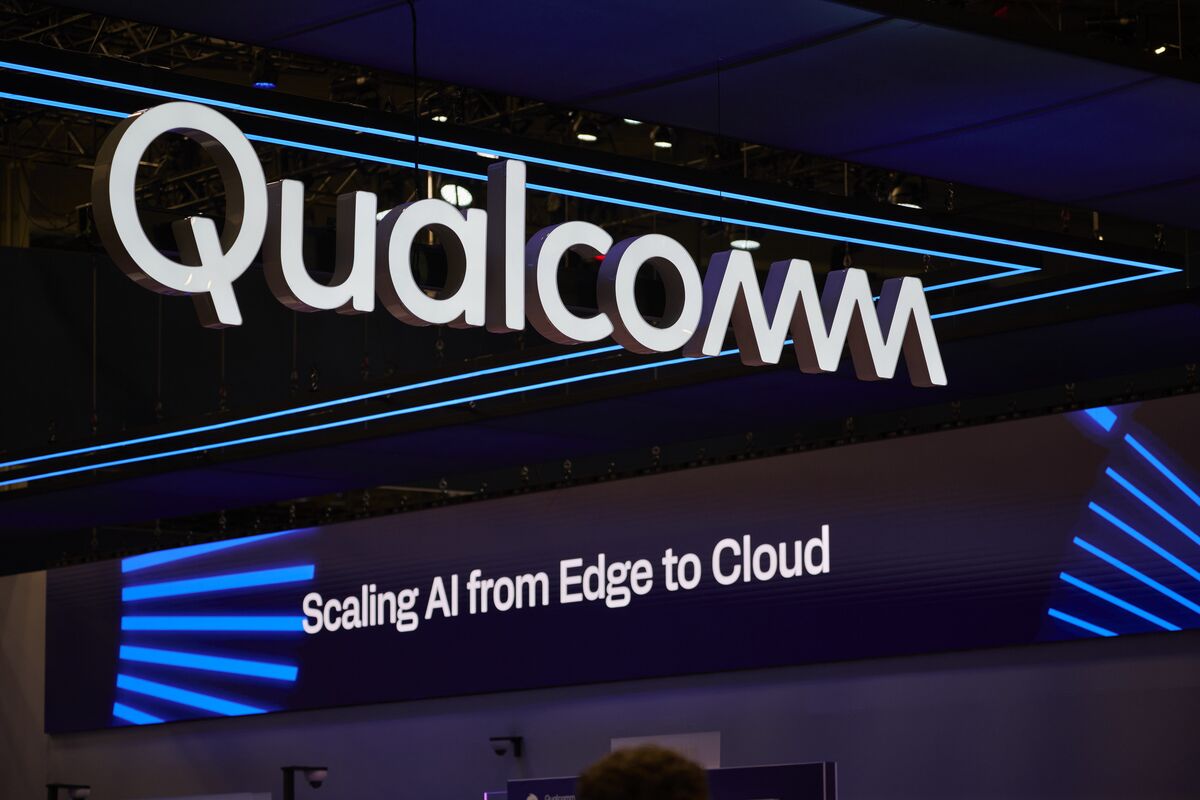
On June 22, 2026, Bloomberg reported that Qualcomm is in advanced talks to acquire AI chip startup Modular for approximately $4 billion, according to people familiar with the matter. This marks Qualcomm's boldest move yet to challenge Nvidia's dominance in AI inference, but the startup's reliance on Nvidia-compatible software raises immediate questions about strategic coherence.
- Qualcomm is in advanced talks to acquire AI chip startup Modular for about $4 billion, as reported by Bloomberg on June 22, 2026.
- The deal is a defensive move to compete with Nvidia in AI inference, but Modular's software stack is built on Nvidia's CUDA, creating integration challenges.
- Modular has not disclosed revenue or major customer wins, making the valuation speculative and the acquisition a high-risk strategic pivot for Qualcomm.
Why Did Qualcomm Target Modular Specifically?
According to Bloomberg Technology, Qualcomm is in advanced talks to acquire Modular Inc. in a transaction valuing the AI chip startup at about $4 billion. The deal, first reported on June 22, 2026, is driven by Qualcomm's need to expand beyond mobile chips into AI inference for data centers and edge devices. Modular, founded in 2022 by former Google and Apple engineers, develops AI inference accelerators that promise to reduce latency and energy consumption compared to general-purpose GPUs. However, Modular's technology is still early-stage, with no publicly disclosed major deployments or revenue figures. Qualcomm's interest appears to be in Modular's team and its proprietary compiler technology, which could optimize AI models for Qualcomm's existing Snapdragon and Cloud AI 100 chips. Yet, this raises a critical question: why pay $4 billion for a startup that has not proven its product in the market?

What Does This Mean for Nvidia's AI Chip Dominance?
Reuters reported that the acquisition is seen as a direct challenge to Nvidia, which controls over 80% of the AI chip market for training and inference. Nvidia's CEO Jensen Huang has repeatedly stated that the company's advantage lies in its integrated hardware-software ecosystem, particularly CUDA. Modular's software stack is built on top of CUDA, meaning Qualcomm would inherit a dependency on its biggest rival. This creates a strategic paradox: Qualcomm must either maintain CUDA compatibility (benefiting Nvidia) or invest heavily to port Modular's software to its own hardware—a process that could take years. According to industry analyst Mark Li at Bernstein, "Qualcomm is buying a startup that is essentially a Nvidia dependency. Without a clear path to decouple from CUDA, this deal could become a very expensive lesson." The acquisition may force Nvidia to accelerate its own edge AI offerings, potentially crushing Qualcomm's market share before the integration is complete.
Who Wins and Who Loses in This Deal?
| Stakeholder | Short-Term Gain/Loss | Long-Term Outlook |
|---|---|---|
| Qualcomm | Gains AI talent and compiler technology; risks overpaying for unproven revenue. | May struggle to integrate Modular's CUDA-dependent stack; likely to fail in data center inference. |
| Nvidia | No immediate impact; retains CUDA lock-in. | Could lose edge inference market share if Qualcomm successfully decouples from CUDA. |
| Intel/AMD | No direct effect; may face pressure to acquire AI startups. | Will need to consolidate to compete with Qualcomm's new AI portfolio. |
| Modular Employees | Immediate financial windfall from acquisition. | Risk of culture clash and talent attrition under Qualcomm's management. |
| AI Startups | Increased acquisition premiums; more exit options. | May face higher expectations for revenue and customer traction. |
| Verdict | Nvidia remains the winner in data center AI; Qualcomm's move is defensive and high-risk. | Modular's technology will take 3-5 years to impact Qualcomm's revenue, if ever. |
Can Qualcomm Actually Integrate Modular's Technology?
The integration challenge is immense. Modular's core product is a compiler that translates AI models into optimized code for various hardware backends, including Nvidia GPUs, AMD GPUs, and x86 CPUs. Qualcomm would need to add its own hardware targets, such as the Cloud AI 100 and Snapdragon, which use different instruction sets and memory architectures. According to a former Modular engineer who spoke on condition of anonymity, "The compiler is not a plug-and-play solution. It requires deep hardware-specific optimization that Modular's small team (around 150 people) cannot provide at scale." Qualcomm has a history of successful acquisitions, such as the $1.4 billion Nuvia purchase in 2021, which yielded the Oryon CPU cores. However, Nuvia had a clear product (server CPUs) and a proven team. Modular has neither. The risk of integration failure is high, especially if key engineers leave after the acquisition.
What Are the Financial Implications for Qualcomm?
Qualcomm reported $35.9 billion in revenue for fiscal 2025, with net income of $9.8 billion. A $4 billion acquisition would represent roughly 11% of its revenue and 41% of its net income—a significant bet for a company whose core business remains mobile chips and modems. The company's QCT segment, which includes AI chips, generated $28.4 billion in revenue, but data center AI chips accounted for less than 5% of that. Qualcomm is betting that AI inference at the edge will grow rapidly, with IDC forecasting a 35% CAGR through 2030. However, Modular's valuation at $4 billion implies a revenue multiple that is speculative, given no disclosed sales. According to Bloomberg, the deal is expected to close in Q4 2026, subject to regulatory approval. Antitrust scrutiny is unlikely given the fragmented nature of the AI chip market, but the U.S. Committee on Foreign Investment (CFIUS) may review the deal if Modular has any foreign ties.
My thesis is clear: Qualcomm is overpaying for a startup that lacks product-market fit and is structurally dependent on its biggest competitor. The $4 billion valuation is based on future potential, not current reality, and the integration timeline of 3-5 years means Nvidia will have ample time to respond. In the short term, Qualcomm gains a talented team and a compiler technology that could, in theory, optimize its chips for AI workloads. But in the long term, the deal will likely fail to deliver significant revenue growth because Modular's technology is not differentiated enough to overcome Nvidia's ecosystem lock-in. The biggest losers are Qualcomm shareholders, who will see diluted earnings and uncertain returns. The biggest winners are Modular's founders and early investors, who are cashing out at a premium. My prediction: within 24 months of closing, Qualcomm will write down a significant portion of the acquisition value, similar to its $1.2 billion impairment on the NXP deal in 2018.
Predictions:
- Qualcomm will take a goodwill impairment of at least $1.5 billion on the Modular acquisition by Q4 2028, citing integration challenges and slower-than-expected revenue growth.
- Nvidia will launch a dedicated edge AI chip by Q2 2027, directly targeting Qualcomm's Snapdragon portfolio, and will capture 60% of the edge inference market by 2029.
- The U.S. Department of Justice will not block the deal, but will impose conditions requiring Qualcomm to maintain open software interfaces for third-party AI accelerators.
- June 2026Bloomberg reports Qualcomm-Modular deal
Bloomberg reports Qualcomm in advanced talks to acquire Modular for $4 billion.
- Q4 2026Expected deal close
Deal expected to close pending regulatory approval.
- 2027-2028Integration phase
First Modular-powered Qualcomm chips expected.
- 2029Potential impairment
Potential impairment or divestiture if revenue targets are missed.
Timeline of Key Events:
- June 2026: Bloomberg reports Qualcomm in advanced talks to acquire Modular for $4 billion.
- Q4 2026: Expected deal close, pending regulatory approval.
- 2027-2028: Integration phase; first Modular-powered Qualcomm chips expected.
- 2029: Potential impairment or divestiture if revenue targets are missed.
Estimated AI Chip Market Share by Revenue (2026)
Estimated AI Chip Market Share by Revenue (2026):
- Nvidia: 82% (estimated)
- AMD: 8% (estimated)
- Intel: 5% (estimated)
- Qualcomm: 3% (estimated)
- Others: 2% (estimated)
Article Summary:
- Qualcomm's $4 billion Modular acquisition is a defensive, high-risk bet that may not pay off for years, if ever.
- The startup's dependency on Nvidia's CUDA ecosystem creates a strategic contradiction that Qualcomm must resolve.
- Integration challenges, including compiler optimization and talent retention, pose significant execution risks.
- Nvidia is likely to respond with a dedicated edge AI chip, further squeezing Qualcomm's market share.
- Shareholders should expect near-term earnings dilution and potential write-downs within 2-3 years.
Source and attribution
Bloomberg Technology
Qualcomm Nears Deal for AI Chip Startup Modular






Discussion
Add a comment