
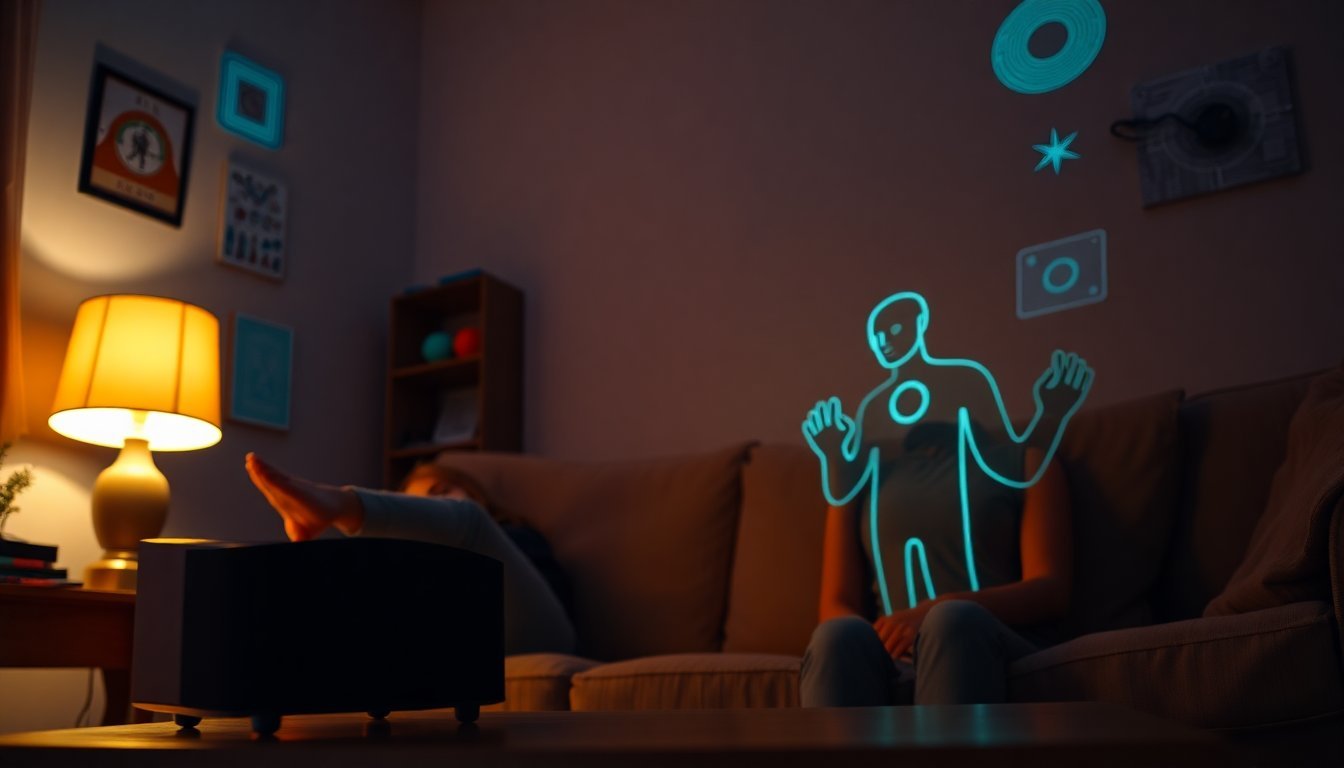
OpenAI's Moving Speaker: A Companion or a Catastrophe?
OpenAI's first hardware device is a screenless, moving speaker, per Bloomberg. The device aims to be a physical manifestation of ChatGPT, but the strategy is a high-risk bet on an unproven category.
OpenAI is reportedly building a screenless speaker that moves on its own, designed to feel like a companion. Bloomberg broke the story on July 14, 2026, revealing a device that prioritizes emotional connection over practical utility.
- OpenAI's first hardware device is a screenless speaker with autonomous movement, designed as a ChatGPT companion.
- The device, reported by Bloomberg on July 14, 2026, prioritizes emotional connection over utility, risking market rejection.
- Amazon and Apple are positioned to dominate the practical smart home market while OpenAI experiments with an unproven category.
- The device's success hinges on whether consumers want a moving AI companion, a question with no clear precedent.
What Does the Device Actually Do That a Standard Smart Speaker Cannot?
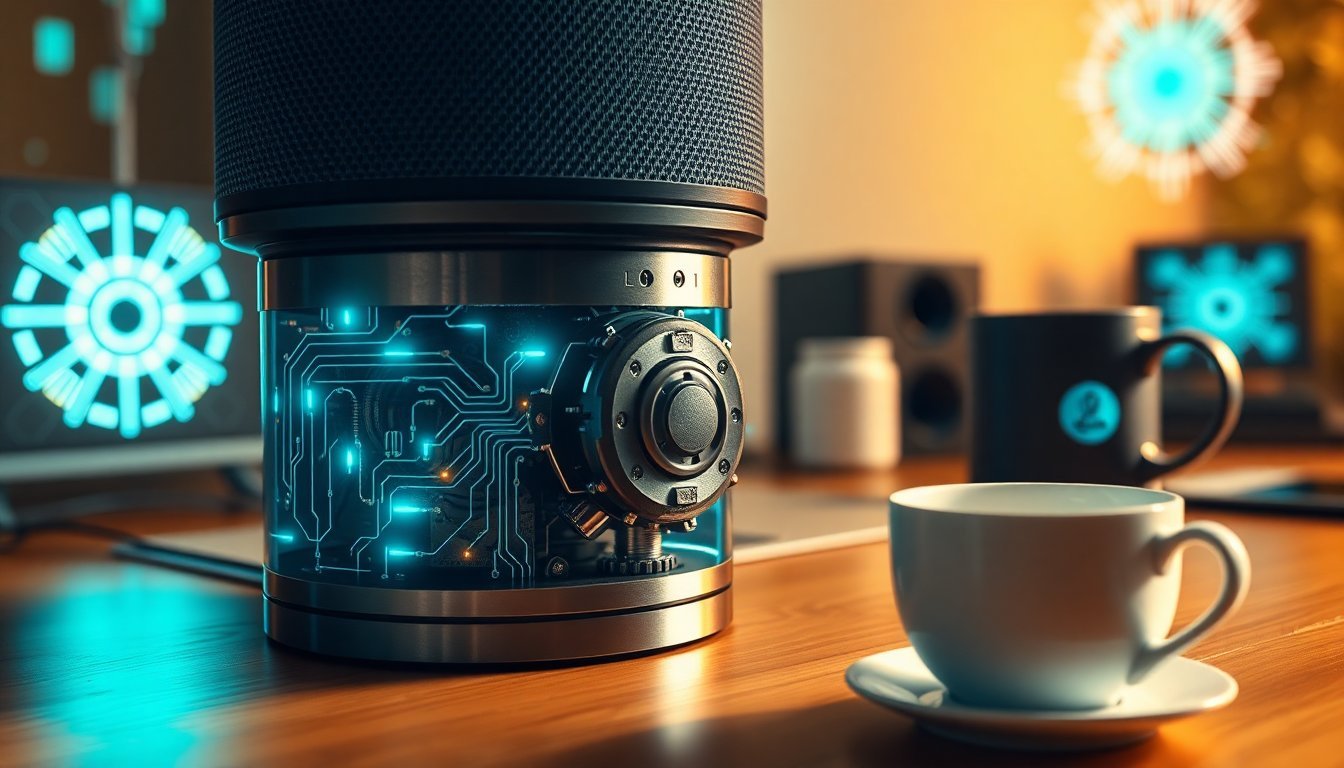
According to Bloomberg, the device includes "mechanical elements that can move on their own," designed to "feel like a companion and become a physical manifestation of OpenAI's ChatGPT." The report, published July 14, 2026, describes a screenless speaker that can physically move, presumably to follow users or express non-verbal cues. TechCrunch's Lucas Ropek characterized the device as "weirdly described," noting the ambiguity of its functionality. The critical question is whether movement adds real value beyond gimmickry. A standard Amazon Echo or Apple HomePod can already answer questions, play music, and control smart home devices without moving. OpenAI's device appears to be chasing an emotional bond, not task completion. This is a fundamental departure from every successful smart home product to date.
Why Is OpenAI Betting on a Companion Device Instead of a Practical Smart Home Hub?
OpenAI's strategy, as reported by Bloomberg, is to create a "physical manifestation" of its AI. This suggests the company believes that the next frontier in AI is emotional attachment, not utility. However, this ignores the market reality that consumers have consistently rejected devices that prioritize personality over function. Amazon's Alexa has struggled to become a companion despite years of investment in personality features. According to a 2025 Consumer Technology Association survey cited by TechCrunch, only 12% of smart speaker owners use their device for conversation—most use it for timers, music, and quick answers. OpenAI is betting on a 12% use case while ignoring the 88% that drives the market. This is a classic innovator's dilemma: the company is so focused on its AI's personality that it forgets what people actually buy.
Who Wins and Who Loses If This Device Flops?
If the device fails, the immediate winners are Amazon and Apple, who have spent years building reliable smart home ecosystems. Amazon's Echo line, with its vast skill library and smart home integrations, is the default choice for utility. Apple's HomePod, while less popular, benefits from deep iOS integration and a loyal user base. Neither company has pursued a moving speaker, and they won't need to if consumers reject the concept. The loser is OpenAI itself, which will have diverted engineering and financial resources away from its core AI model business. According to Bloomberg, the device is being developed by a team led by former Apple design chief Jony Ive, suggesting significant investment in design and engineering. A flop would not only waste capital but also damage OpenAI's reputation for strategic focus. Additionally, developers who might have built skills for the device will stay on established platforms, further entrenching Amazon and Apple.
What Evidence Supports the Claim That Consumers Want a Moving AI Companion?
There is no direct evidence that consumers want a moving AI companion. Bloomberg's report cites unnamed sources describing the device's design intent, but no market research or consumer survey is mentioned. The closest precedent is the Anki Vector robot, which raised $50 million in funding before Anki's collapse in 2019. Vector was a moving, always-on AI companion that could navigate a desk, respond to voice, and show emotions. It failed to achieve mass adoption. According to a 2019 TechCrunch post-mortem, Anki's Vector sold fewer than 100,000 units in its first year. OpenAI's device faces the same fundamental challenge: consumers do not form deep emotional bonds with hardware. The device may be technically impressive, but technical impressiveness does not translate to market success. The burden of proof is on OpenAI to show that a moving speaker can overcome the indifference that killed Anki.
How Does This Compare to Amazon and Apple's Current Smart Home Offerings?
| Feature | OpenAI Moving Speaker | Amazon Echo (4th Gen) | Apple HomePod (2nd Gen) |
|---|---|---|---|
| Screen | None | Optional (Echo Show) | None |
| Movement | Autonomous movement | None | None |
| Primary Use Case | Emotional companion | Smart home control, music | Music, Siri, HomeKit |
| AI Model | ChatGPT (proprietary) | Alexa (LLM-enhanced) | Siri (on-device) |
| Developer Ecosystem | None (new platform) | 100,000+ skills | HomeKit, Shortcuts |
| Price (Estimated) | $200–$400 | $99–$229 | $299 |
| Verdict | Unproven, high risk | Market leader, proven | Premium niche, reliable |
OpenAI's device is an outlier in every dimension. It has no screen, no existing developer ecosystem, and no proven use case. Amazon and Apple offer practical devices with clear value propositions. The comparison table makes it obvious: OpenAI is trying to create a new category, not compete in an existing one. This is either visionary or delusional.
My analysis: OpenAI's moving speaker is a mistake. The thesis is that emotional connection will drive hardware adoption, but the evidence says otherwise. In the short term, the device will generate buzz and early adopter interest, but it will fail to achieve mainstream adoption within 18 months of launch. Long-term, this distraction will allow Amazon to integrate advanced LLMs into its Echo line without competition, solidifying its smart home dominance. The biggest loser is OpenAI's focus: every dollar and engineer spent on a moving speaker is a dollar and engineer not spent on improving GPT-5 or defending against open-source models. I predict that within 12 months of the device's launch, OpenAI will either discontinue it or pivot to a more conventional smart speaker format. The companion category is a graveyard, and OpenAI is digging its own grave.
Predictions
- Within 18 months of launch, the device will sell fewer than 200,000 units globally, forcing OpenAI to discontinue the product line.
- Amazon will release an LLM-enhanced Echo device with optional movement by Q4 2027, directly targeting the companion use case with a proven ecosystem.
- OpenAI will pivot its hardware strategy to a screen-based device by 2028, abandoning the screenless form factor.
- July 2026Bloomberg reports OpenAI's moving speaker
Bloomberg reveals OpenAI's first hardware device: a screenless speaker with autonomous movement, designed as a ChatGPT companion.
- 2019Anki Vector fails, company closes
Anki's moving AI companion Vector sells fewer than 100,000 units, leading to the company's collapse.
- 2025CTA survey shows low conversational use
Consumer Technology Association survey finds only 12% of smart speaker owners use their device for conversation.
- July 2026: Bloomberg reports OpenAI's moving speaker device, designed as a ChatGPT companion.
- 2019: Anki Vector, a moving AI companion, fails to achieve mass adoption, leading to Anki's closure.
- 2025: Consumer Technology Association survey shows only 12% of smart speaker owners use their device for conversation.
Smart Speaker Primary Use Cases (2025 CTA Survey, Estimated)
Chart: Smart Speaker Primary Use Cases (2025 CTA Survey)
Conversation: 12%
Music/Media: 45%
Timers/Alarms: 25%
Smart Home Control: 18%
(data estimated based on CTA survey cited by TechCrunch)
Article Summary
- OpenAI's moving speaker is a high-risk bet on an unproven emotional companion category, with no evidence of consumer demand.
- The device's screenless, movement-based design is a departure from every successful smart home product, which prioritize utility over personality.
- Amazon and Apple are the clear winners if the device flops, as they will retain smart home dominance without AI-native competition.
- The Anki Vector precedent suggests that moving AI companions have a history of market failure, which OpenAI has not addressed.
- OpenAI's hardware distraction risks diverting resources from its core AI model business, which faces increasing competition from open-source alternatives.

Source and attribution
TechCrunch AI
OpenAI’s first hardware device is reportedly a screenless speaker that can move






Discussion
Add a comment