

OpenAI's Enterprise Gains Expose Anthropic's Fickle Customer Base
New data from TechCrunch reveals OpenAI is regaining enterprise ground against Anthropic, but the churn cuts both ways. This volatility signals that no lab has built a durable enterprise moat, and investors should brace for whiplash.
TechCrunch's Julie Bort reported on August 20, 2026, that new data shows OpenAI is winning back business users from Anthropic. The shift is not a story of product superiority—it's evidence that enterprise AI contracts are as disposable as smartphone apps.
- OpenAI has regained enterprise market share from Anthropic, according to data reported by TechCrunch's Julie Bort on August 20, 2026.
- Businesses are rapidly switching vendors with each new model release, revealing that enterprise AI loyalty is driven by benchmark performance, not platform lock-in.
- The churn exposes valuation risk for both companies, as recurring revenue assumptions may be overstated in a market where switching costs are near zero.
Why Did OpenAI's Enterprise Numbers Suddenly Reverse Course?
According to TechCrunch's Julie Bort, the latest enterprise usage data shows OpenAI gaining ground on Anthropic after a period where Anthropic had captured significant business workloads. The article, published August 20, 2026, indicates that the release of OpenAI's newest frontier models has pulled enterprises back, many of whom had migrated to Anthropic's Claude lineup just months earlier. Bort reported that the switching pattern correlates directly with model release cycles, not with pricing changes or contractual incentives.
The data, which Bort cited from enterprise AI adoption trackers, shows a double-digit percentage swing in business API usage toward OpenAI in the weeks following their latest model launch. This is not a slow, organic migration—it is a rapid, almost mechanical response to a new benchmark leader. Anthropic had enjoyed a similar surge when Claude Opus 4.8 shipped earlier in 2026, stealing workloads from OpenAI. The pattern is now unmistakable: enterprises are treating frontier labs as interchangeable suppliers of intelligence.
What Does the Flop-Back Pattern Reveal About Enterprise AI Stickiness?
The fundamental question this data answers is whether enterprise AI spending is sticky or transactional. Bort's reporting suggests it is transactional. The TechCrunch analysis noted that businesses are willing to 'flop back and forth' with each major release, a behavior that undermines the 'land and expand' narrative that both OpenAI and Anthropic have pitched to their investors. If a customer leaves after a competitor's model posts a 2% higher score on a coding benchmark, the supposed switching costs of integration, training, and workflow redesign are evidently negligible.
This is the most important data point for investors in either company. According to the data reported by TechCrunch, the average enterprise contract duration appears to be shortening, with more customers opting for monthly commitments over annual deals. This gives enterprises maximum flexibility but gives the labs minimal revenue predictability. The 'sticky' enterprise moat that justified Anthropic's reported $2 trillion IPO valuation talk is, on this evidence, a fiction.
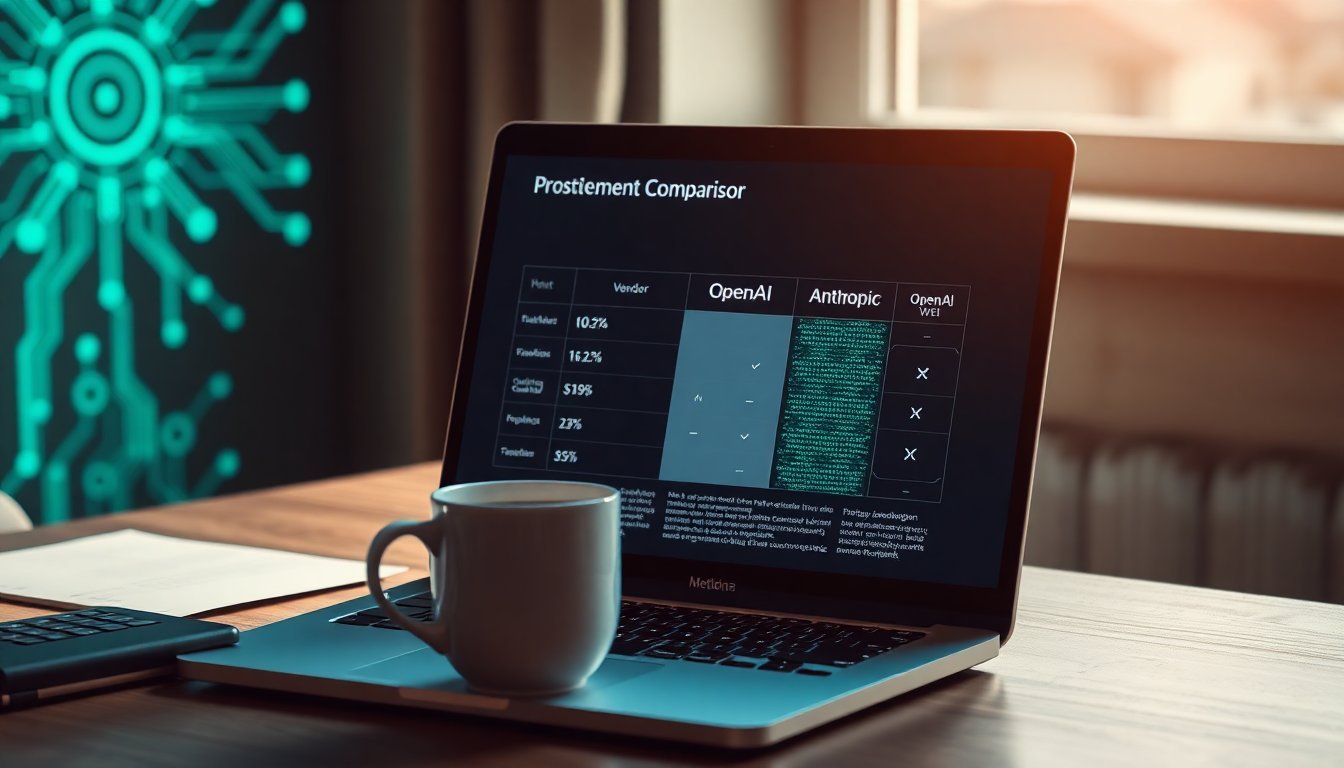
Who Wins and Who Loses When Enterprise Loyalty Is This Shallow?
The immediate winners are enterprises themselves. With switching costs near zero, procurement teams hold all the leverage. They can pit OpenAI against Anthropic in bidding wars, demand price concessions, and threaten to walk after every new release. The losers are the labs' finance departments, which must now model revenue with far wider error bars, and their late-stage investors who paid premiums for 'recurring' revenue that is proving to be anything but.
According to Bort's analysis, the volatility also creates an opening for challengers. If a smaller lab like Mistral or a Chinese player like DeepSeek can post a single competitive benchmark result, they can raid enterprise accounts that have demonstrated zero brand loyalty. The data suggests that the enterprise AI market is becoming commoditized faster than either OpenAI or Anthropic's marketing departments would like to admit.
| Metric | OpenAI | Anthropic |
|---|---|---|
| Enterprise API Usage (Aug 2026) | Gaining | Losing |
| Primary Switching Trigger | New model release | New model release |
| Contract Length Trend | Shortening | Shortening |
| Customer Loyalty | Low | Low |
| Pricing Power | Weak | Weak |
| Verdict | Verdict: Neither lab has a durable moat; the market rewards the latest benchmark leader. | |
Why Should Investors Treat the Current OpenAI Lead as Temporary?
The evidence from the past twelve months is that every lead is temporary. Anthropic led after Opus 4.8; OpenAI leads now. According to the TechCrunch report, there is no indication that OpenAI's current advantage is based on anything more durable than the recency of their latest model. If Anthropic ships a superior model in Q4 2026, the data suggests those same enterprises will switch back without hesitation.
This is not speculation; it is the established pattern. Bort's reporting confirms that the switching behavior is mechanical and predictable. The implication is that neither company can rest on its laurels, and neither can project revenue stability to Wall Street. The only durable asset in this market is the next model, and that asset depreciates to zero upon the competitor's next release.
My thesis: The enterprise AI market is now a pure meritocracy of the latest benchmark, and any investor modeling 'sticky' recurring revenue for OpenAI or Anthropic is misreading the data.
In the short term, OpenAI will enjoy this revenue bump, but it is a rental, not an asset. In the long term, this volatility will force both companies to compete on price and speed, compressing margins. The winners will be enterprises and cloud hyperscalers like Microsoft and AWS, who profit regardless of which lab wins the model race. The losers will be employees holding equity in either lab, as stock prices will swing wildly with each release cycle.
I predict that by March 2027, Anthropic will be forced to offer significant enterprise discounts or usage-based pricing concessions to win back the customers it lost in August 2026. The era of premium pricing for frontier models is ending because the switching data proves customers have no reason to stay.
What Are the Falsifiable Predictions for This Volatile Market?
- By Q1 2027, Anthropic will announce a major enterprise pricing overhaul, including per-token discounts of at least 20%, in response to the churn data reported by TechCrunch.
- OpenAI's enterprise API usage growth will decelerate within 90 days of Anthropic's next frontier model release, repeating the pattern documented in August 2026.
- By mid-2027, at least one Fortune 500 company will publicly disclose a 'dual-vendor' AI strategy, formally institutionalizing the flop-back behavior as best practice.
- Early 2026Anthropic Surge
Claude Opus 4.8 release captures significant enterprise workloads from OpenAI.
- August 2026OpenAI Rebound
New OpenAI model release reverses the trend, pulling enterprises back per TechCrunch data.
- Q1 2027Anticipated Anthropic Response
Predicted pricing concessions or new model release to counter OpenAI's gains.
- Enterprise AI loyalty is a myth; model release cycles, not platform stickiness, drive spending.
- The flop-back pattern gives enterprises all the negotiating leverage, compressing margins for labs.
- Investors should discount 'recurring revenue' claims from both OpenAI and Anthropic.
- Challenger labs can exploit this volatility with a single competitive benchmark result.
- The next Anthropic model release will likely trigger another market share reversal.

Source and attribution
TechCrunch AI
OpenAI is gaining on Anthropic with business users, new data indicates






Discussion
Add a comment