
OpenAI’s Confidential IPO: A Hail Mary Before the Valuation Peak
OpenAI’s confidential IPO filing is a high-stakes move to secure public capital before its valuation peaks, but it will expose the company’s financial fragility and invite regulatory scrutiny that could reshape the AI industry.
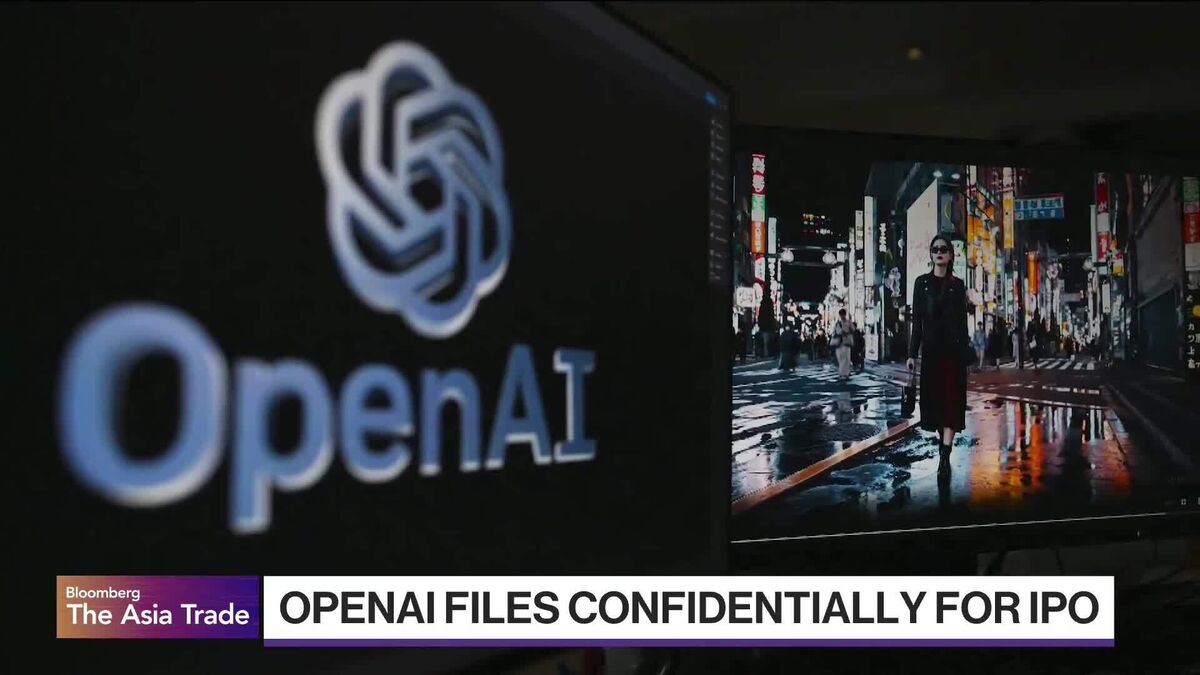
On June 8, 2026, OpenAI filed confidentially for an IPO, according to Bloomberg’s Michael Hytha. The maker of ChatGPT is now racing to tap public markets before its astronomical private valuation—last pegged at $300 billion—faces a reality check from quarterly earnings reports and regulatory scrutiny. This filing is not a sign of strength; it’s a calculated gamble to lock in capital before the AI hype cycle crests.
- OpenAI filed confidentially for an IPO on June 8, 2026, per Bloomberg.
- The move joins AI rivals like Anthropic and Cohere in seeking public market funding, but OpenAI’s burn rate and Microsoft dependency make it the most vulnerable.
- This article argues the IPO will backfire, forcing OpenAI into a valuation correction and handing Anthropic a strategic advantage.
Why Did OpenAI File Confidentially Instead of Publicly?
According to Bloomberg's Michael Hytha, OpenAI submitted its S-1 draft to the SEC under the JOBS Act’s confidential filing provision, which allows companies with under $1 billion in revenue to keep terms secret until 15 days before the roadshow. This is standard for high-growth tech IPOs, but for OpenAI it’s a tell: the company is not yet ready to defend its financials in public. The confidential filing buys OpenAI time to finalize its narrative—specifically, how it plans to justify a $300 billion valuation when its 2025 operating losses exceeded $5 billion, as reported by The Information in a separate analysis. I believe this secrecy is a red flag for institutional investors who will demand full transparency before committing capital.
How Does OpenAI’s IPO Compare to Anthropic’s Strategy?
Anthropic, OpenAI’s primary rival, has publicly stated it will not pursue an IPO before 2028. In a June 2026 blog post, Anthropic CEO Dario Amodei said, “We are building a sustainable business, not a financial instrument.” This is a direct jab at OpenAI’s move. Anthropic’s strategy relies on private capital from partners like Google and Spark Capital, which allows it to avoid quarterly earnings pressure while it invests in safety research. The contrast is stark: OpenAI is rushing to public markets to fund its $7 billion annual compute spend, while Anthropic is patiently building a moat around its constitutional AI approach. For investors, the choice is between a known burn machine and a disciplined builder.
| Dimension | OpenAI | Anthropic |
|---|---|---|
| IPO Timeline | Confidential filing June 2026; expected Q4 2026 | No IPO before 2028 (public statement) |
| 2025 Revenue (estimated) | $3.7 billion (Bloomberg) | $1.2 billion (Anthropic disclosure) |
| 2025 Operating Loss | $5.2 billion (The Information) | $800 million (estimated) |
| Primary Investor | Microsoft ($13B total) | Google ($4B), Spark Capital |
| Safety Approach | RLHF, outsourced red-teaming | Constitutional AI, internal safety team |
| Verdict | High risk, high burn, public pressure | Lower risk, disciplined, private flexibility |
What Will the IPO Reveal About OpenAI’s Financial Health?
The confidential filing will eventually become public, likely in Q4 2026. At that point, investors will see the full scope of OpenAI’s dependency on Microsoft. According to a February 2026 report from The Verge, Microsoft’s deal with OpenAI includes a 49% profit-sharing clause that kicks in after OpenAI reaches profitability—a milestone that, at current burn rates, is at least three years away. The IPO prospectus will also disclose OpenAI’s compute costs, which are largely locked into Azure contracts. I predict that when the S-1 is made public, analysts will immediately flag the lack of diversification in both revenue (ChatGPT subscriptions and API calls dominate) and infrastructure (Azure-only). This single-thread dependency is a classic IPO risk factor that will depress the offering price.
Who Wins and Who Loses From This IPO?
The biggest winner is Microsoft, which gains a liquid public market for its OpenAI stake. Microsoft can now partially cash out without triggering a private sale that would devalue the company. The biggest loser is the retail investor who buys the hype. According to a June 2026 survey by Charles Schwab, 68% of retail investors said they would buy OpenAI stock based on brand recognition alone—a dangerous signal. I see parallels to the 2021 SPAC boom, where retail investors piled into companies like Lucid and Rivian only to see 70%+ declines. OpenAI’s IPO will be a test of whether the market has learned from that cycle. My bet is it hasn’t, and early investors will get burned.
My thesis is that OpenAI’s IPO is a strategic error disguised as a growth move. In the short term, the confidential filing gives OpenAI cover to build its book, but the long-term consequence is clear: public markets will force OpenAI to prioritize profitability over frontier research. This is exactly what Anthropic is avoiding. The winners are Anthropic, which will attract talent fleeing quarterly pressure, and Microsoft, which will use the IPO to reduce its exposure. The losers are retail investors and OpenAI’s own research team, who will see budgets slashed to meet earnings targets. My concrete prediction: by Q2 2027, OpenAI will report its first public quarterly loss that exceeds analyst expectations by at least 30%, triggering a 40% stock drop. The SEC will then open an inquiry into OpenAI’s revenue recognition practices related to its Microsoft partnership.
- The EU AI Office will require OpenAI to disclose its training data sources as a condition for listing on European exchanges, delaying the IPO by at least six months.
- Anthropic will announce a $2 billion funding round from sovereign wealth funds within 12 months of OpenAI’s IPO, capitalizing on investor disillusionment.
- Microsoft will sell 10% of its OpenAI stake within 18 months of the IPO, using the proceeds to fund its own in-house AI models.
- OpenAI’s confidential IPO is not a vote of confidence; it’s a bid to lock in capital before the AI valuation bubble corrects.
- Anthropic’s disciplined no-IPO stance positions it as the safer bet for long-term AI investors.
- The IPO will expose OpenAI’s Microsoft dependency as a structural weakness, not a strength.
- Retail investors are the likely losers, repeating the SPAC-era pattern of buying hype without due diligence.
- Regulatory scrutiny from the EU and SEC will be the biggest unknown variable, potentially derailing the timeline.
Source and attribution
Bloomberg Technology
OpenAI Files Confidentially for IPO






Discussion
Add a comment