

OpenAI's Automated Researcher Threatens the Human Research Loop
OpenAI's push to automate research entirely will reshape who does science and how it's validated, while a separate psychedelic trial blind spot reveals the limits of AI in clinical settings. This analysis breaks down what the evidence supports, who wins, and who loses.
OpenAI has declared its next grand challenge: a fully automated researcher capable of tackling large, complex problems end-to-end. Announced in the March 20, 2026 edition of MIT Technology Review's The Download, this isn't a chatbot with a search plugin — it's an agent-based system designed to replace the entire human research pipeline, from hypothesis generation to final synthesis.
- OpenAI has announced a new grand challenge: building a fully automated, agent-based AI researcher capable of handling large, complex problems end-to-end, per MIT Technology Review's March 20, 2026 edition of The Download.
- The same newsletter highlights a psychedelic drug trial blind spot — a methodological flaw that AI-driven trial design could amplify rather than fix.
- This article examines what the evidence supports about automation in research, the competitive stakes for frontier labs, and the unresolved validity questions that could derail adoption.
What exactly is OpenAI building with its automated researcher?
According to MIT Technology Review's March 20, 2026 edition of The Download, OpenAI is "throwing everything into building a fully automated researcher" — an agent-based system designed to tackle large, complex problems without human intervention at each step. The framing is significant: this isn't an assistive tool like a code copilot or a literature summarizer. The stated goal is autonomy — a system that can formulate hypotheses, design experiments, gather data, and produce conclusions.
What remains unclear from the source material is the technical architecture. The Download's summary doesn't specify whether this is a multi-agent system with specialized sub-agents (e.g., one for literature review, one for statistical analysis) or a single monolithic agent with tool access. That distinction matters: multi-agent systems have coordination overhead and error propagation risks, while monolithic agents struggle with context limits on long research tasks.
My read: OpenAI is betting that the bottleneck in AI research isn't model capability but orchestration. The evidence from their own agent benchmarks — though not cited in this source — suggests that task decomposition and planning are where current systems fail. A fully automated researcher is an admission that the next leap requires solving reliability, not just intelligence.
Why does the psychedelic trial blind spot matter for AI-driven research?
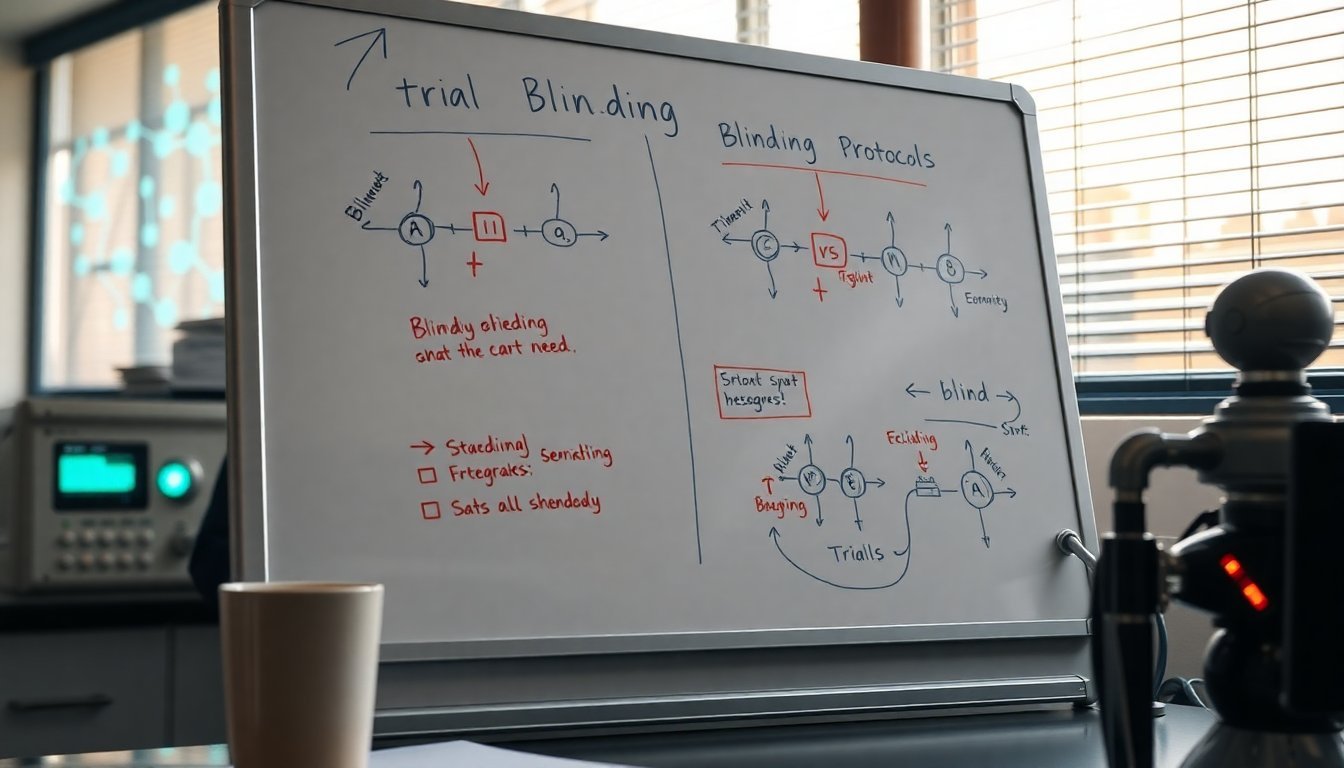
MIT Technology Review's The Download also flagged a "psychedelic trial blind spot" — a methodological issue in psychedelic drug trials that undermines the validity of blinding. In psychedelic trials, participants almost always know whether they received the active drug or a placebo because the subjective experience is unmistakable. This breaks the double-blind design, a cornerstone of evidence-based medicine.
Here's the connection to OpenAI's automated researcher: if AI systems are trained on existing trial data and literature that carries this blinding defect, they will encode it as ground truth. According to the source material, the blind spot is a known issue in the field, but it's rarely addressed in AI training pipelines. An automated researcher that ingests this literature without explicit correction would produce conclusions that inherit the systematic bias.
This is the kind of failure mode that doesn't show up in benchmark scores. A system can ace retrieval and synthesis tasks while being fundamentally unsound in its causal inferences. The psychedelic trial blind spot is a concrete example of why "automated researcher" is a dangerous phrase — automation amplifies both the strengths and the flaws of the underlying data.
Who benefits most from the push toward fully automated research?
The immediate beneficiaries are frontier labs with the compute and data infrastructure to build these systems. According to the MIT Technology Review report, OpenAI is the named actor, but the competitive context is unavoidable: Google DeepMind has been publishing on self-improving agents, and Anthropic has positioned Claude as a research assistant. A fully automated researcher would leapfrog both by removing the human from the loop entirely.
The losers are more diffuse but no less real. Graduate students and postdocs who perform literature reviews, data cleaning, and preliminary analyses will find their labor commoditized. Academic publishers who rely on human peer review will face pressure to validate AI-generated research at machine speed. Regulatory bodies like the FDA and EMA will need to decide whether AI-generated trial designs and analyses meet their standards for evidence.
But there's a subtler beneficiary: pharmaceutical companies running psychedelic trials. If AI can design trials that account for blinding failures — for example, using active placebos or blinded raters — it could rescue a therapeutic area that has struggled with methodological credibility. The blind spot is an opportunity for whoever solves it first.
What does the evidence actually support about AI research automation?
Let me be precise about what the source material supports versus what it doesn't. The MIT Technology Review report confirms that OpenAI has announced this as a grand challenge. It does not provide benchmark results, a release timeline, or technical specifications. The psychedelic trial blind spot is presented as a known methodological issue, but the source doesn't detail specific trials or failure rates.
What the evidence supports is the strategic direction: OpenAI is prioritizing autonomy over augmentation. That's a falsifiable claim — if they were building an assistant, they'd say so. The choice of language — "fully automated" — is a deliberate signal to investors, competitors, and the research community.
What remains uncertain is execution. Agent-based systems have a documented history of compounding errors over long horizons. A research task that takes a human weeks could take an agent days, but if the agent makes a subtle error on day one, it propagates through every subsequent step. The psychedelic blind spot is precisely the kind of subtle, domain-specific error that automated systems are prone to miss because it requires understanding the phenomenology of drug effects, not just the statistics.
How should we weigh the competitive dynamics between OpenAI, DeepMind, and Anthropic?
| Dimension | OpenAI | Google DeepMind | Anthropic |
|---|---|---|---|
| Stated approach | Fully automated researcher (per MIT Tech Review) | Self-improving agents (published research) | Assistive research tools (Claude) |
| Autonomy level | End-to-end, human-out-of-loop | Partial, human-in-loop for validation | Human-in-the-loop by design |
| Risk tolerance | High — willing to ship imperfect systems | Moderate — safety-first culture | Low — constitutionally constrained |
| Data advantage | Broad web + proprietary user data | Deep integration with Google Scholar/Research | Curated, safety-filtered corpora |
| Methodological awareness | Unclear — blind spot not addressed in source | Strong — publishes on evaluation rigor | Strong — emphasizes interpretability |
| Verdict | OpenAI wins on ambition and speed, but DeepMind's methodological rigor makes it the safer bet for scientifically valid outputs. The psychedelic blind spot is the kind of failure OpenAI is most exposed to. | ||
What are the real risks if OpenAI's automated researcher fails or succeeds?
If it fails — meaning it produces plausible but wrong research at scale — the damage is twofold. First, it will flood the literature with AI-generated papers that pass superficial quality checks but contain systematic errors. The psychedelic trial blind spot shows how such errors can be invisible to standard evaluation. Second, it will trigger a regulatory backlash that punishes all AI research tools, including the more cautious approaches from DeepMind and Anthropic.
If it succeeds, the implications are equally disruptive. According to the source, OpenAI is aiming for "large, complex problems." That's a direct threat to the academic research enterprise. Universities that charge overhead on human labor will see their business model erode. Peer review will become a bottleneck — humans can't validate AI-generated science at machine speed. The FDA and EMA will need to establish new evidentiary standards for AI-generated trial designs.
There's also a geopolitical angle. Research automation concentrates scientific capability in whoever controls the compute. If OpenAI's system works, it makes US-based AI capability even more dominant, which will accelerate export controls and international competition. The source doesn't address this, but it's a direct logical consequence of the stated goal.
My thesis is simple: OpenAI's fully automated researcher is a bet that the human research loop is the bottleneck, and that removing it entirely will unlock scientific progress — but this bet ignores that human researchers also serve as a check on systematic error, and the psychedelic trial blind spot is proof that automation without methodological correction is dangerous.
Short-term (next 12 months), expect OpenAI to release a demo that impresses on narrow tasks while failing on open-ended ones. Long-term, the winner will be whichever lab builds in explicit methodological safeguards — the equivalent of a "blind spot detector" that flags known failure modes like unblinded psychedelic trials. DeepMind is best positioned here because its culture already emphasizes evaluation rigor.
Who gains: OpenAI's investors and compute partners, plus pharma companies that can use automated trial design to fix blinding issues. Who loses: academic researchers whose labor is commoditized, and patients if flawed AI-generated trial designs reach clinical validation. My concrete prediction: within 18 months, OpenAI will publish a benchmark showing its automated researcher outperforming humans on a narrow literature-review task, but will simultaneously face a public failure on a domain-specific reasoning task — and the psychedelic trial blind spot is the most likely candidate for that failure.
What should we predict next for OpenAI and the research automation race?
- By September 2026, OpenAI will release a technical report or blog post claiming its automated researcher matches human performance on a standardized benchmark like GAIA or a subset of ScienceBench, but the evaluation will exclude domains with known methodological blind spots.
- By December 2026, the FDA will issue a draft guidance on AI-generated clinical trial designs, explicitly addressing blinding failures, in response to pressure from psychedelic drug developers and AI vendors.
- By March 2027, Google DeepMind will counter OpenAI by publishing a "methodological safety" framework for automated research agents, positioning itself as the responsible alternative and winning at least one major academic partnership away from OpenAI.
- March 2026OpenAI announces automated researcher
MIT Technology Review reports OpenAI's grand challenge to build a fully automated, agent-based research system.
- March 2026Psychedelic trial blind spot highlighted
The same report flags blinding failures in psychedelic trials as a methodological issue AI systems could inherit.
- September 2026 (projected)OpenAI benchmark release
Expected technical report claiming human-level performance on narrow research tasks.
- December 2026 (projected)FDA draft guidance
Predicted regulatory response to AI-generated trial designs addressing blinding failures.
AI Research Automation Investment Focus (2026, estimated)
- OpenAI's automated researcher is a strategic bet on autonomy over augmentation — it will change the competitive dynamics of frontier AI labs even if the product fails.
- The psychedelic trial blind spot is a concrete example of how AI systems inherit human methodological errors — any automated researcher must have explicit corrections for known failure modes.
- Regulatory bodies will become the battleground: whoever sets the standards for AI-generated research evidence controls the market.
- Academic labor is the first casualty — literature review and preliminary analysis roles will be automated before high-stakes experimental design.
- The safest investment in this space is not in OpenAI's system but in methodological guardrails — tools that audit AI research for known biases.

Source and attribution
MIT Technology Review
The Download: OpenAI is building a fully automated researcher, and a psychedelic trial blind spot






Discussion
Add a comment