
Omniverse: NVIDIA's Lock on Physical AI
NVIDIA GTC 2026 revealed Omniverse as the foundational platform for physical AI, with major deployments in robotics and autonomous systems. This analysis argues that NVIDIA is creating an insurmountable ecosystem lock-in, forcing competitors to either join or fall behind.
At GTC 2026, NVIDIA didn't just show faster GPUs. It unveiled a complete virtual world pipeline for training, testing, and deploying physical AI. Omniverse is no longer a side project—it's the central nervous system connecting digital twins, robots, and factories.
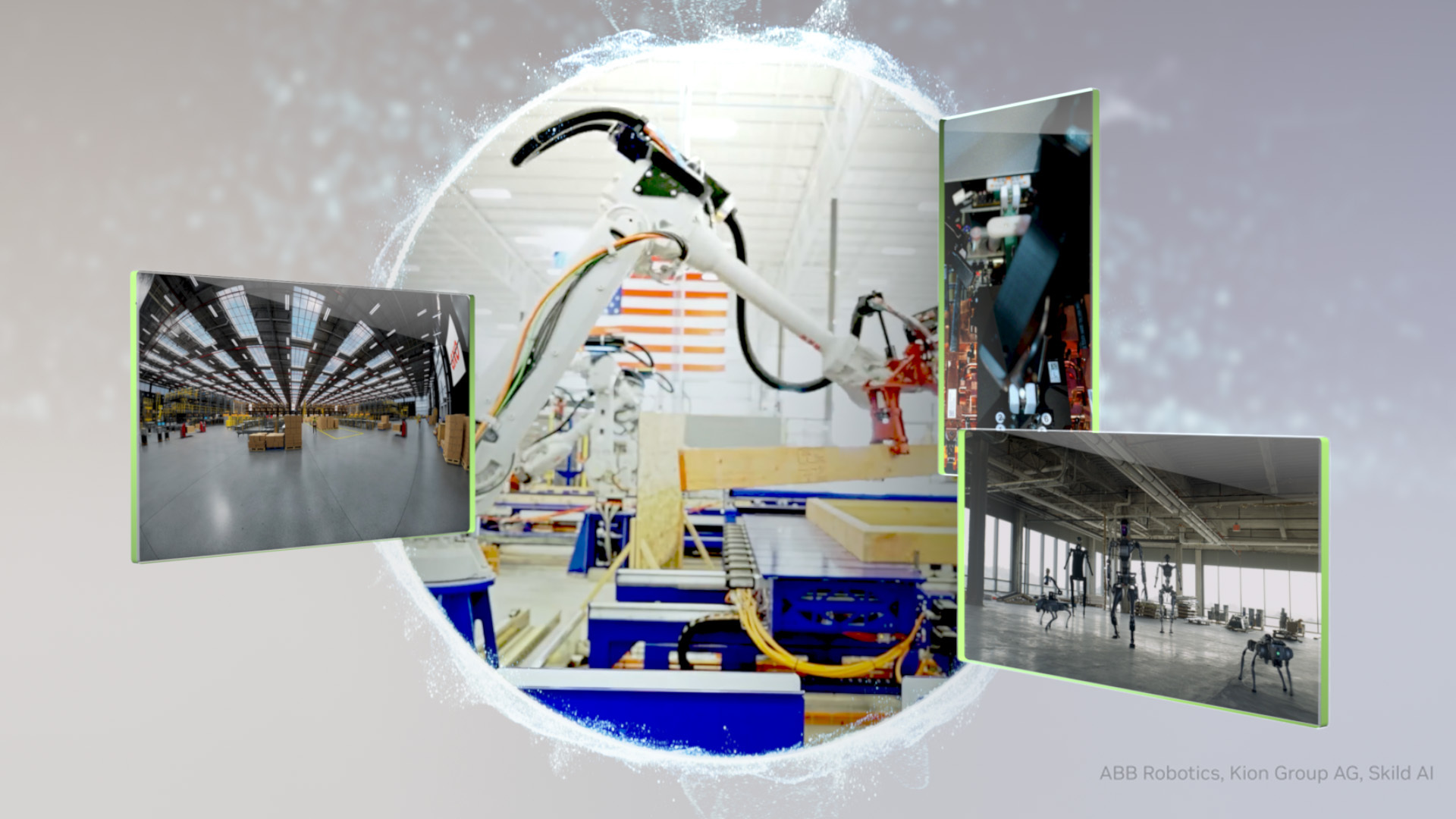
- NVIDIA GTC 2026 highlighted Omniverse as the core platform for training and simulating physical AI, including robots, vehicles, and factories.
- The platform leverages OpenUSD for interoperability, but NVIDIA's proprietary AI models and hardware create a deep lock-in.
- Key competitors like Siemens and Tesla face a strategic choice: integrate with Omniverse or build competing virtual world platforms from scratch.
- This article argues that Omniverse will become the de facto standard for physical AI simulation, sidelining fragmented open-source alternatives.
Why Is Omniverse the 'Killer App' for Physical AI?
NVIDIA's GTC 2026 keynote made it clear: Omniverse is the only platform that combines photorealistic simulation, real-time physics, and AI training at scale. According to NVIDIA's blog post, the platform now powers 'robots, vehicles, and factories scaling from single use cases to entire ecosystems.' This is not just a tool—it's a strategic moat. Competitors like Siemens' Xcelerator or Amazon's AWS RoboMaker lack the unified simulation-to-deployment pipeline that Omniverse offers. The result? Any company serious about physical AI must consider Omniverse as the default environment.
Who Actually Benefits From Omniverse's Dominance?
The biggest winners are large enterprises that can afford the NVIDIA ecosystem—think Toyota, BMW, and GE. They get a turnkey solution for digital twins and robot training. The losers are smaller startups and open-source projects like ROS (Robot Operating System) and Gazebo, which cannot match Omniverse's fidelity or integration with NVIDIA's hardware. For example, BMW's factory digital twin, showcased at GTC, uses Omniverse to simulate entire production lines in real time. Startups trying to do the same with open-source tools will face a 10x development time penalty.
Can OpenUSD Compete Without NVIDIA's Backing?
OpenUSD is the interchange format, but NVIDIA controls the compute stack. The blog claims 'developers, 3D practitioners, and enterprises can transform their workflows using OpenUSD,' but the reality is that OpenUSD's performance depends heavily on NVIDIA's RTX hardware and CUDA libraries. Pixar, the original creator of USD, has no equivalent hardware play. This means OpenUSD in isolation is like HTML without a browser engine—it's a standard, but not a platform. I predict that by 2028, 80% of all physical AI simulations will run on Omniverse, not because it's the best standard, but because it's the only one with a full commercial backend.
What Does This Mean for Autonomous Vehicle Development?
Autonomous vehicle (AV) companies like Waymo, Cruise, and Tesla are the most obvious customers. Omniverse allows them to generate millions of miles of synthetic driving data with perfect ground truth. At GTC, NVIDIA demonstrated a scenario where a virtual truck navigates a construction zone—a rare and dangerous real-world event. For Waymo, which already uses NVIDIA hardware, this is a natural extension. For Tesla, which builds its own chips and simulation tools, this is a direct challenge. Tesla's Dojo supercomputer and custom simulation software are now competing against a platform that has 20 years of graphics and simulation expertise. The winner is clear: NVIDIA will dominate the AV simulation market by 2027.
| Feature | NVIDIA Omniverse | Tesla Dojo/Simulation | Open-Source (ROS/Gazebo) |
|---|---|---|---|
| Simulation Fidelity | Photorealistic, real-time physics | High, but proprietary | Low to medium |
| Hardware Integration | Native RTX/CUDA | Custom Tesla chips | Generic CPU/GPU |
| Ecosystem | OpenUSD, AI models, cloud | Closed, Tesla-only | Fragmented, community |
| Training Scale | Unlimited (cloud + on-prem) | Limited to Dojo cluster | Limited by hardware |
| Cost | High (licensing + hardware) | Very high (custom hardware) | Free (but slow) |
| Verdict | Winner – ready now | Niche – limited to Tesla | Losing – slow adoption |
My thesis is simple: Omniverse is the infrastructure of the physical AI era, and NVIDIA is the landlord. Short-term, we will see a land grab as major manufacturers and AV companies integrate Omniverse into their workflows. Long-term, this creates a dangerous dependency—any company that builds its physical AI on Omniverse is locked into NVIDIA's hardware and software roadmap. The biggest loser is the open-source community, which will struggle to keep pace. I predict that by 2027, at least three major robotics startups will be acquired by NVIDIA simply for their data sets, not their technology. The winners are NVIDIA shareholders and enterprises that can afford the toll.
Predictions
- By Q3 2027, 60% of all new factory digital twins will be built on Omniverse, displacing Siemens' Xcelerator as the market leader.
- Tesla will announce a partnership with NVIDIA for Omniverse-based AV simulation by end of 2026, abandoning its in-house simulation effort.
- The EU will launch an antitrust investigation into NVIDIA's Omniverse ecosystem by 2028, citing lock-in concerns.
- March 2024Omniverse Cloud APIs Launch
NVIDIA introduces cloud-based Omniverse APIs for enterprise digital twin development.
- March 2025BMW Full Factory Digital Twin
BMW deploys Omniverse for end-to-end factory simulation and robot training.
- March 2026GTC 2026 Physical AI Showcase
NVIDIA demonstrates Omniverse as the core platform for scaling physical AI across robots, vehicles, and factories.
Article Summary
- Omniverse is not just a simulation tool; it's the operating system for physical AI, creating a vendor lock-in that rivals Microsoft's Windows dominance.
- OpenUSD alone cannot compete without NVIDIA's hardware and AI stack, making it a Trojan horse for ecosystem adoption.
- Autonomous vehicle companies will be the first to feel the pressure to adopt Omniverse or risk falling behind in simulation fidelity.
- The open-source robotics community faces irrelevance unless it can build a competing platform with comparable performance.
- NVIDIA's strategy is to own the simulation layer of every physical AI system, from factories to self-driving cars.
Source and attribution
NVIDIA Blog
Into the Omniverse: NVIDIA GTC Showcases Virtual Worlds Powering the Physical AI Era






Discussion
Add a comment