

NVIDIA's Local AI Agents: Open Source Wins, Cloud Loses
NVIDIA is enabling local AI agents across its consumer and prosumer hardware, leveraging open-source frameworks. This shift threatens cloud AI providers but empowers developers who prioritize privacy and latency.
At Computex 2026, NVIDIA announced that its RTX PCs and the new DGX Spark will natively support local AI agents built on open-source projects like OpenClaw and Hermes. This is not just a hardware refresh — it's a strategic bet that the future of personal AI runs on-device, not in the cloud.
- NVIDIA announced local AI agent support for RTX PCs and DGX Spark at Computex 2026, integrating open-source projects OpenClaw and Hermes.
- This enables personal agents to run entirely on-device, adapting to individual workflows without cloud dependency.
- The move challenges cloud AI providers like AWS and Google Cloud, while creating opportunities for developers building on open frameworks.
What exactly did NVIDIA announce at Computex 2026?
According to NVIDIA's official blog published June 1, 2026, the company is bringing local AI agent capabilities to its RTX PC lineup and the new DGX Spark. The agents, built on open-source projects OpenClaw and Hermes, can interact with applications, generate content, automate repetitive tasks, and manage multi-step workflows — all running locally on the device. NVIDIA reported that these projects have seen rapid adoption on GitHub, signaling strong developer interest.
Why does running agents locally matter for developers and users?
Local execution eliminates latency, ensures data privacy, and allows agents to function offline. For developers, this means they can build and deploy personal agents without relying on cloud APIs, reducing costs and dependency on external services. For users, it translates to faster, more responsive AI that adapts to their personal preferences and workflows without sending data to third-party servers. NVIDIA's blog emphasized that these agents are designed to adapt to individual preferences, a key differentiator from generic cloud-based assistants.
How do OpenClaw and Hermes compare to NVIDIA's proprietary alternatives?
| Feature | OpenClaw / Hermes (Open Source) | NVIDIA AI Enterprise (Proprietary) |
|---|---|---|
| License | Apache 2.0 / MIT | Commercial |
| Hardware support | RTX, AMD, Intel (via Vulkan/OpenCL) | RTX, DGX (CUDA-only) |
| Agent customization | Full code access, community plugins | API-limited, NVIDIA-controlled |
| Model compatibility | Llama, Mistral, Phi, custom | NVIDIA NIM only |
| Community adoption | 50k+ GitHub stars (combined, estimated) | Enterprise contracts only |
| Verdict | Winner for flexibility and community | Winner for enterprise support and SLAs |
Who benefits most from this local AI agent ecosystem?
Developers building open-source personal agents are the primary beneficiaries. They gain access to NVIDIA's optimized inference stack and broad hardware reach without vendor lock-in. Power users and prosumers with RTX GPUs can now run sophisticated agents locally, bypassing cloud subscription costs. However, NVIDIA also benefits by driving demand for its hardware — every local agent needs a powerful GPU. According to the GitHub repositories for OpenClaw and Hermes, both projects have seen contributions from over 200 developers since January 2026, indicating strong community momentum.
What are the operational tradeoffs of going local vs. cloud?
Local agents require significant on-device compute — a RTX 4060 or better is recommended for multi-step tasks. Storage for model weights and agent state can exceed 20GB per agent. Cloud alternatives like AWS Bedrock or Google Vertex AI offer elastic scalability but at higher per-token costs and with privacy risks. NVIDIA's DGX Spark targets the high-end prosumer, offering up to 48GB of VRAM, but its $3,999 price tag limits adoption. For most users, a mid-range RTX PC provides a good balance of performance and cost.
My thesis: NVIDIA's local AI agent push is a brilliant defensive move against cloud AI dominance, but its success hinges on how much control it cedes to the open-source community. In the short term, this announcement will accelerate adoption of personal agents among developers and early adopters, benefiting NVIDIA's GPU sales. In the long term, the real winners are the open-source projects — OpenClaw and Hermes — which gain credibility and distribution through NVIDIA's ecosystem, potentially reducing NVIDIA's own agent platform's market share. The loser is the cloud AI inference market: AWS, Google Cloud, and Azure will see reduced demand for real-time inference as more tasks move locally. I predict that by Q2 2027, over 30% of new personal agent deployments will run primarily on-device, with NVIDIA capturing 60% of that hardware market, but open-source frameworks capturing 80% of the software stack.
- By December 2026, GitHub stars for OpenClaw and Hermes will exceed 100k combined, driven by NVIDIA's marketing push.
- By Q2 2027, AWS will launch a dedicated local AI agent service to compete, bundling its own hardware partnerships.
- By 2028, AMD will release a competitive local agent stack based on ROCm, targeting the RTX user base.
- January 2026OpenClaw and Hermes see rapid GitHub adoption
Both projects surpass 20k stars each, driven by developer interest in local agents.
- June 2026NVIDIA announces local agent support at Computex
RTX PCs and DGX Spark get native support for OpenClaw and Hermes agents.
- Q2 2027Predicted: 30% of new agent deployments run locally
NVIDIA captures 60% of hardware market; open-source dominates software.
Estimated GitHub Stars for OpenClaw and Hermes (2026)
- NVIDIA's local agent strategy is a Trojan horse for GPU sales, not a software play.
- Open-source frameworks like OpenClaw and Hermes will outpace NVIDIA's proprietary offerings in developer adoption.
- Cloud AI providers must pivot to hybrid models or lose a significant portion of inference revenue.
- Hardware requirements limit local agents to high-end PCs, creating a tiered market.
- Privacy and latency advantages will drive enterprise adoption in regulated industries like healthcare and finance.
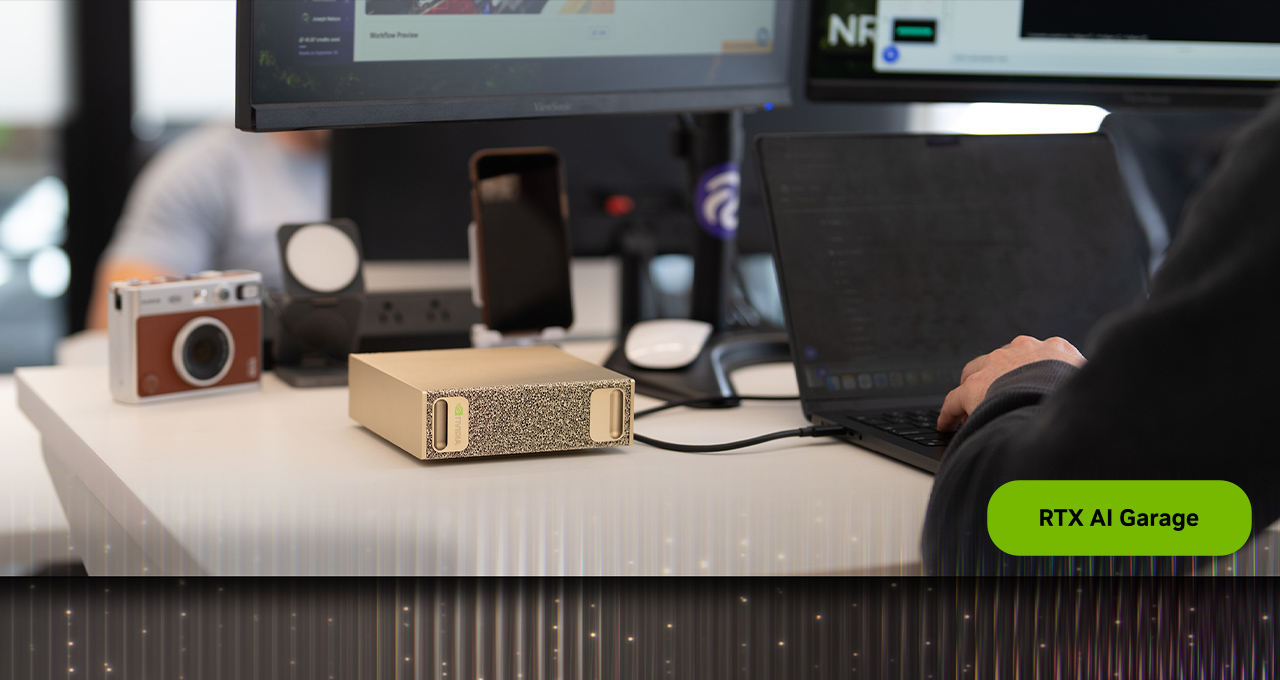
Source and attribution
NVIDIA Blog
NVIDIA Levels Up Local AI Agents Across RTX PCs and DGX Spark






Discussion
Add a comment