
Nvidia's China Chip Bet: Bluff or Breakthrough?
Jensen Huang predicts China will open its market to US AI chips, but evidence suggests this is a strategic bluff. Analysis of the competitive landscape and policy signals reveals who really wins and loses.
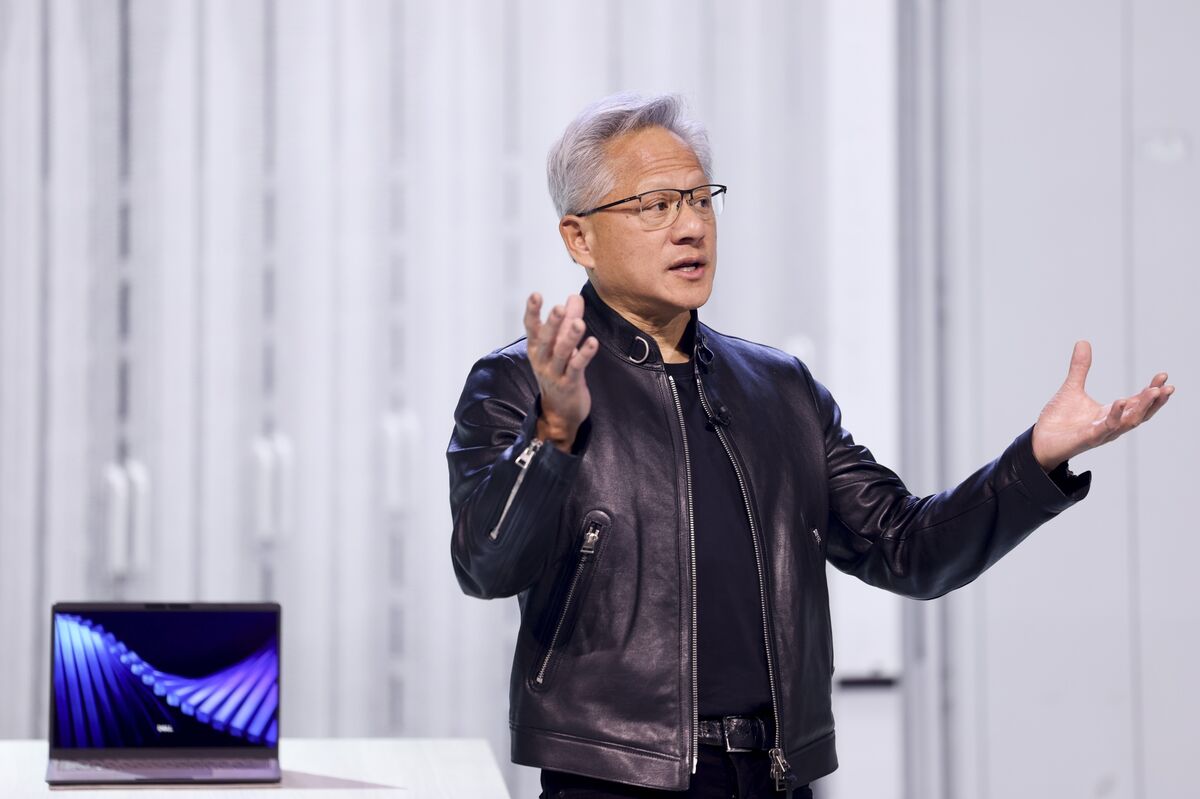
Nvidia CEO Jensen Huang claimed on May 18, 2026, that China will eventually allow imports of US AI chips, speaking just days after attending President Trump's summit in Beijing. This is not a neutral prediction—it is a high-stakes negotiation tactic that could reshape the global AI hardware market.
- Nvidia CEO Jensen Huang predicted China will eventually allow US AI chip imports, speaking after the Trump summit in Beijing.
- No Chinese official has confirmed this; the prediction contradicts current export controls and China's push for self-sufficiency.
- The real stakes: Nvidia's $5.6B China revenue hangs in the balance, while Huawei's Ascend 920 gains ground.
Why Did Huang Make This Prediction Now?
According to Bloomberg Technology, Huang's statement came days after he joined President Donald Trump's summit in China on May 15, 2026. The timing is critical: Nvidia has been locked out of the Chinese market for advanced AI chips since October 2022, when the Biden administration imposed export controls on A100 and H100 chips. Since then, Nvidia's China revenue has dropped from $7.1 billion in fiscal 2022 to an estimated $5.6 billion in fiscal 2026, with the gap increasingly filled by Huawei's Ascend 910B and 920 chips. Huang's prediction is best understood as a signal to Washington—not Beijing. By publicly claiming China will open its market, he is implicitly arguing that current export controls are unnecessary and counterproductive, and that the US should relax restrictions before China fully develops domestic alternatives.
What Evidence Supports an Actual Policy Shift in Beijing?
Reuters reported on May 18, 2026, that Chinese Ministry of Commerce officials declined to comment on Huang's statement, and no official policy document has been released. The only concrete data point is the summit itself, where Trump and Chinese President Xi Jinping agreed to restart trade talks—but AI chip exports were not mentioned in the official readout. China's 14th Five-Year Plan explicitly prioritizes semiconductor self-sufficiency, and the country has invested over $50 billion in domestic chip fabrication since 2023. The evidence for a policy shift is thin: one CEO's optimistic reading of a diplomatic photo opportunity. I find this deeply unconvincing as a basis for market prediction.
Who Wins and Who Loses If Huang Is Right?
If Huang's prediction materializes, the immediate winners are Nvidia (which can sell its H200 and B100 chips to Chinese hyperscalers), AMD (with its MI300X), and Intel (with Gaudi 3). The losers would be Huawei's Ascend division, which has captured 65% of China's domestic AI chip market according to IDC estimates, and Chinese startups like Cambricon and Biren Technology, which have bet on a closed market. But even in this scenario, the victory is temporary: China's domestic chip ecosystem will not vanish overnight.
| Dimension | Nvidia (US) | Huawei (China) |
|---|---|---|
| Current China AI chip market share | ~30% (estimated 2026) | ~65% (estimated 2026) |
| Top chip for training | H200/B100 (not sold in China) | Ascend 920 (in production) |
| Top chip for inference | L40S (limited availability) | Ascend 910B (widely deployed) |
| Software ecosystem | CUDA (mature, locked) | CANN (growing, open-source) |
| Price per chip (estimated) | $25,000 (H100) | $18,000 (Ascend 920) |
| Verdict | Wins on performance; loses on price and access | Wins on availability and government backing |
What Does This Mean for the US-China Tech War?
According to a May 2026 report from the Center for Strategic and International Studies (CSIS), the US export control regime has slowed China's AI progress by 12-18 months but has also accelerated domestic investment. Huang's prediction, if wrong, exposes a dangerous asymmetry: Nvidia is betting on diplomacy while China is betting on engineering. The US Commerce Department's Bureau of Industry and Security (BIS) has not signaled any intent to relax controls, and the 2026 National Defense Authorization Act includes provisions to tighten them further. The real question is whether Huang's public lobbying will shift BIS policy—and so far, the evidence suggests it will not.
My thesis is that Huang's prediction is a strategic bluff designed to pressure the US government, not a reflection of actual Chinese policy. In the short term (6-12 months), I expect no change in Chinese import restrictions; Nvidia will continue to sell lower-end chips like the L40S while Huawei's Ascend 920 captures more training workloads. In the long term (18-24 months), the US may face a choice: relax controls and lose leverage, or maintain them and watch China achieve near-parity in AI chips. The biggest winner is Huawei, which gains market share and time to refine its software stack. The biggest loser is Nvidia, which is stuck between a US export regime it cannot change and a Chinese market it cannot access.
- By Q3 2027, Huawei will announce a 5nm-class Ascend 930 chip produced on SMIC's N+3 process, matching Nvidia's 2024 performance.
- The US Commerce Department will not relax AI chip export controls before the 2028 presidential election, regardless of Huang's lobbying.
- Nvidia's China revenue will decline to under $4 billion in fiscal 2027 as domestic alternatives capture more of the training market.
- October 2022US export controls imposed
Biden administration bans sale of A100 and H100 chips to China.
- May 2026Trump-Xi summit
Trump and Xi meet in Beijing; trade talks resume but AI chips not mentioned.
- May 18, 2026Huang's prediction
Nvidia CEO says China will open market to US AI chips; no official confirmation.
- Huang's prediction is a negotiation tactic, not a market forecast.
- China has no incentive to open its market when domestic chips are approaching parity.
- Huawei, not Nvidia, is the structural winner of the current export control regime.
- The US-China AI chip standoff will persist for at least two more years.
- Investors should discount Huang's statement by 80% and watch BIS policy instead.
Source and attribution
Bloomberg Technology
China Will Open Its Market to AI Chips From US, Nvidia’s CEO Says






Discussion
Add a comment