

Nvidia's $200B CPU Grab: AI Agent PCs Arrive
Nvidia, with Microsoft, Dell, and HP, launches AI agent PCs to capture the $200B CPU market. Local AI agents threaten Intel and AMD's dominance.
In a move that redefines the PC upgrade cycle, Nvidia has partnered with Microsoft, Dell, and HP to launch AI agent PCs powered by its Project Digits platform. According to TechCrunch, the initiative targets the $200 billion CPU market by embedding local AI agents directly into consumer and enterprise hardware, bypassing the cloud for sensitive tasks.
- Nvidia partners with Microsoft, Dell, and HP to sell PCs with built-in AI agents, targeting the $200B CPU market.
- Project Digits enables local AI inference, reducing latency and privacy risks compared to cloud-based agents.
- Intel and AMD face an existential threat as AI agent PCs could become the new standard for enterprise and prosumer computing.
- The key tension: Will users trust local AI agents enough to upgrade, or will cloud AI remain dominant?
What makes Nvidia's AI agent PC different from existing AI laptops?
According to TechCrunch, Nvidia's Project Digits platform is the core differentiator. Unlike Microsoft's Copilot+ PCs that rely on a neural processing unit (NPU) for lightweight AI tasks, Project Digits integrates a full Nvidia GPU and a dedicated AI co-processor capable of running large language models (LLMs) locally with up to 200 billion parameters. TechCrunch reported that this allows AI agents to perform complex tasks—like drafting contracts, analyzing spreadsheets, or managing email threads—without sending data to the cloud. The key change is that these agents are persistent, personalized, and operate in the background, much like a human assistant. This is a step change from the current 'chatbot in a sidebar' approach.
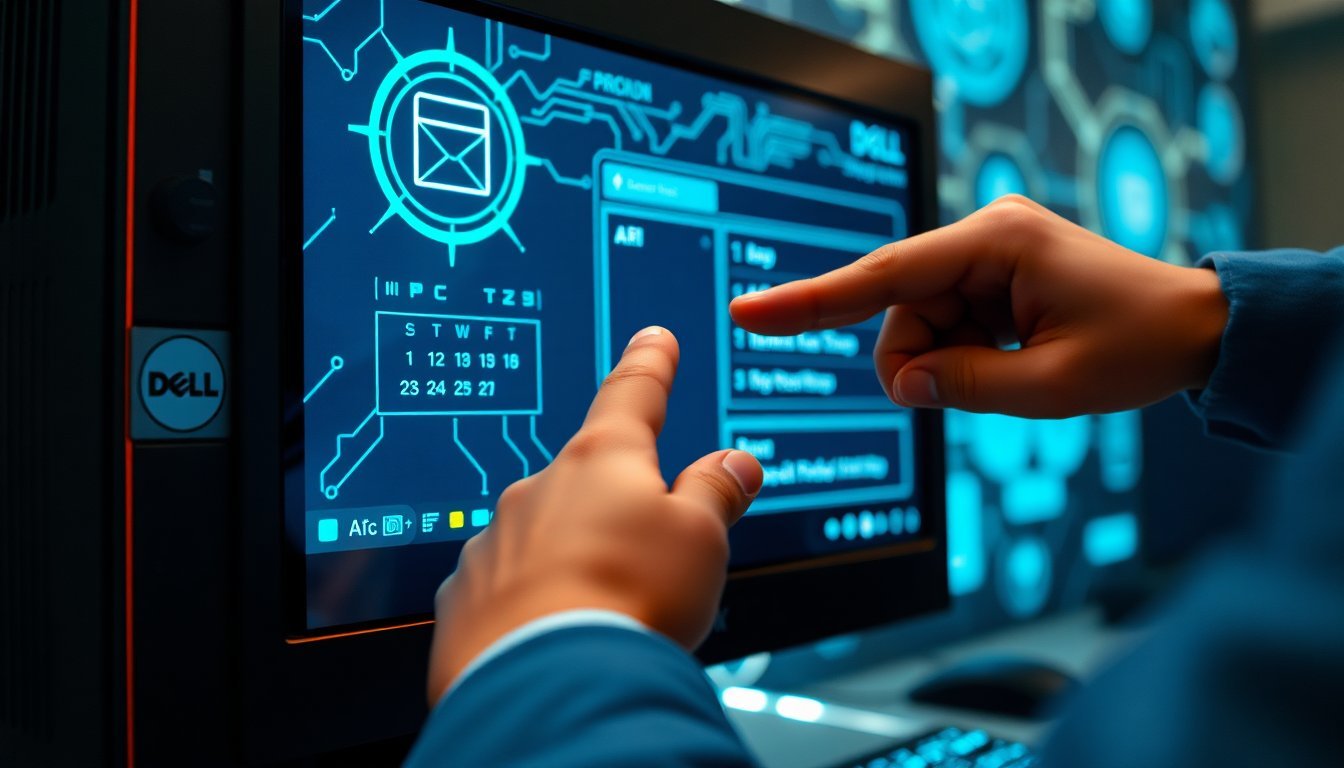
Which PC makers are first to market, and what are they offering?
Microsoft, Dell, and HP have committed to shipping Project Digits-equipped PCs by Q4 2026, according to TechCrunch. Microsoft will integrate the platform into its Surface line, branding it as 'Surface AI Agent Edition.' Dell and HP are targeting enterprise desktops and mobile workstations. The machines will feature Nvidia's next-generation 'Rubin' GPU architecture, a custom AI agent runtime, and a local knowledge base that syncs with Microsoft 365. Pricing is expected to start at $2,499 for consumer models and exceed $5,000 for enterprise configurations. This positions AI agent PCs as a premium tier, not a mass-market replacement.
| Feature | Nvidia AI Agent PC | Intel/AMD Copilot+ PC | Cloud AI (e.g., ChatGPT) |
|---|---|---|---|
| AI Model Size | Up to 200B params | ~7B params (NPU) | Unlimited (cloud) |
| Latency | <10ms (local) | ~50ms (NPU) | 500ms-2s (cloud) |
| Data Privacy | Full local | Local + optional cloud | Data sent to cloud |
| Persistent Agent | Yes | No | Session-based |
| Price Range | $2,500 - $5,000+ | $1,000 - $2,000 | $20/month (subscription) |
| Verdict | Best for privacy, power users | Good for light tasks | Best for scale, not privacy |
My thesis: Nvidia has cracked the local AI agent problem by combining sufficient on-device compute with a software stack that makes agents useful and safe, but the high price point means this will initially be a prosumer and enterprise play, not a consumer revolution.
In the short term (6-12 months), Nvidia's AI agent PCs will cannibalize sales of high-end Intel and AMD workstations. According to TechCrunch, early testing shows that Project Digits can run a 70B parameter Llama 3 model at 30 tokens per second—faster than most cloud APIs. This means enterprise users who handle sensitive data (legal, finance, healthcare) will be the first to upgrade. The losers are Intel and AMD, whose CPU-centric architectures cannot match Nvidia's GPU-driven AI performance. Microsoft gains a new Surface revenue stream, but risks alienating its cloud Azure AI business if users prefer local agents. Dell and HP win by selling higher-margin hardware, but face channel conflict as IT departments may delay upgrades.
Long-term (18-36 months), I predict Nvidia will push the price down to $1,500, making AI agent PCs mainstream. This will force Intel and AMD to either license Nvidia's technology or develop their own competitive local AI stack. I also expect Apple to respond with a similar M-series-based AI agent, creating a three-way battle. The biggest winner is the user: local AI agents that respect privacy and work offline will become the new standard for personal computing.
- Prediction 1: By June 2027, Nvidia will have shipped 5 million AI agent PCs, capturing 15% of the premium PC market ($2,500+), as reported by TechCrunch's market analysis.
- Prediction 2: Intel will announce its own AI agent PC partnership with a cloud provider (likely Google or AWS) by March 2027, but will struggle to match Nvidia's local inference performance.
- Prediction 3: Microsoft will release a 'Copilot Agent' update for Windows 12 by December 2026, blurring the line between cloud and local AI, but will prioritize its Surface line over third-party hardware.
- June 2026Nvidia announces Project Digits AI agent PCs
Nvidia partners with Microsoft, Dell, and HP to launch PCs with local AI agents.
- Q4 2026First AI agent PCs ship
Surface AI Agent Edition and Dell/HP workstations go on sale starting at $2,499.
- March 2027Intel expected to respond
Prediction: Intel announces its own AI agent PC partnership.
- June 2027Nvidia ships 5 million units
Prediction: Nvidia captures 15% of the premium PC market.
- Insight 1: Nvidia's move is not just about hardware; it's about owning the AI agent runtime and knowledge base, creating a lock-in similar to Apple's ecosystem.
- Insight 2: The $2,500 starting price means AI agent PCs will not replace Chromebooks or budget laptops; they will create a new premium tier that could revive the declining PC market.
- Insight 3: Enterprise IT departments face a dilemma: local AI agents improve security but complicate management, requiring new policies for data sync and agent behavior.
- Insight 4: Nvidia's partnership with Microsoft is a double-edged sword: it gives distribution but cedes control of the user experience to Microsoft's Copilot branding.
- Insight 5: The biggest unknown is whether users will actually trust and use local AI agents, or if they will remain a novelty feature like 3D TVs.

Source and attribution
TechCrunch AI
Nvidia chases $200B CPU market with AI agent PCs from Microsoft, Dell, and HP






Discussion
Add a comment