
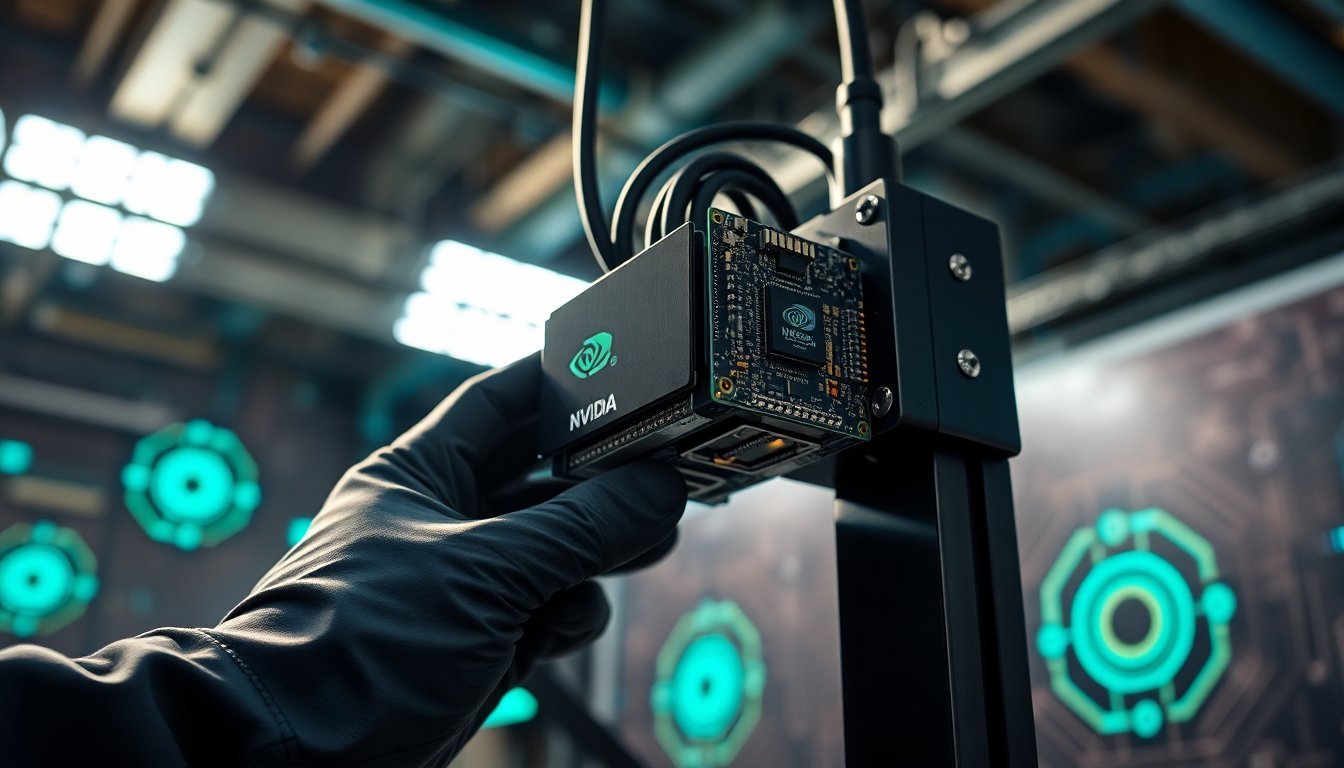
NVIDIA Jetson Brings Agentic AI to the Physical World
NVIDIA's JetPack 7.2 brings agentic AI to the edge with Yocto, CUDA 13, and MIG support, making Jetson the dominant platform for physical AI agents. This analysis examines the implications for robotics, industrial automation, and the competitive landscape.
At COMPUTEX on Tuesday, NVIDIA announced JetPack 7.2 and NemoClaw support for Jetson, enabling agentic AI to run directly on edge hardware. This release promises a substantial performance gain on the Jetson AGX Orin 32GB module and introduces Multi-Instance GPU (MIG) support, marking the first time agentic AI skills can be deployed in physical environments without cloud connectivity.
- NVIDIA announced JetPack 7.2 and NemoClaw support on Jetson at COMPUTEX, enabling agentic AI on edge devices.
- Key features include CUDA 13, Yocto project support, and Multi-Instance GPU (MIG) support on Jetson AGX Orin.
- This release positions NVIDIA to dominate the physical AI market, threatening competitors like Qualcomm and Intel.
What Changed With JetPack 7.2 That Makes Agentic AI Physical?
According to NVIDIA, JetPack 7.2 brings "agentic AI skills" to the Jetson platform, a phrase that signals a fundamental shift. Previously, agentic AI—systems that can perceive, reason, and act autonomously—was largely confined to cloud servers due to compute demands. JetPack 7.2 changes that by integrating Yocto project support, which allows developers to create custom Linux distributions for embedded systems, and CUDA 13, NVIDIA's latest GPU computing platform. The result, as NVIDIA reported, is a "substantial performance gain" on the Jetson AGX Orin 32GB module, particularly for multi-model inference pipelines that underpin agentic behavior.
The inclusion of Multi-Instance GPU (MIG) support is equally critical. MIG allows a single GPU to be partitioned into up to seven isolated instances, each capable of running separate AI models or tasks. This means a single Jetson module can host multiple agents—each with its own memory, cache, and compute resources—without interference. For example, a robotic arm could run object detection, path planning, and grasp execution as independent agents on the same chip, all in real time.
Why Did NVIDIA Choose COMPUTEX to Announce This?
COMPUTEX is the world's premier trade show for hardware and embedded systems, attracting OEMs, ODMs, and industrial designers. NVIDIA's choice of venue is strategic: it signals that JetPack 7.2 is not a research prototype but a product ready for mass deployment. The company is targeting the $50 billion industrial robotics market, where edge AI is seen as the next frontier. By announcing at COMPUTEX, NVIDIA directly challenges Qualcomm's RB5 and Intel's OpenVINO platforms, which have long claimed edge AI leadership but lack the agentic AI capabilities that JetPack 7.2 now provides.
Furthermore, the timing aligns with the rise of generative AI in manufacturing. According to a report by McKinsey, the global market for AI in manufacturing could reach $13.6 billion by 2028, with edge inference accounting for 40% of that growth. NVIDIA's move positions Jetson as the default compute platform for this wave, especially as companies like Siemens and ABB begin integrating agentic AI into their automation lines.
Who Benefits Most From JetPack 7.2 and NemoClaw Support?
The primary beneficiaries are developers building autonomous robots, drones, and industrial inspection systems. NemoClaw support, as NVIDIA described, enables natural language interaction with robots, allowing operators to issue high-level commands like "inspect the welding joint on unit 7" without writing code. This lowers the barrier to entry for non-programmers, expanding the addressable market for physical AI.
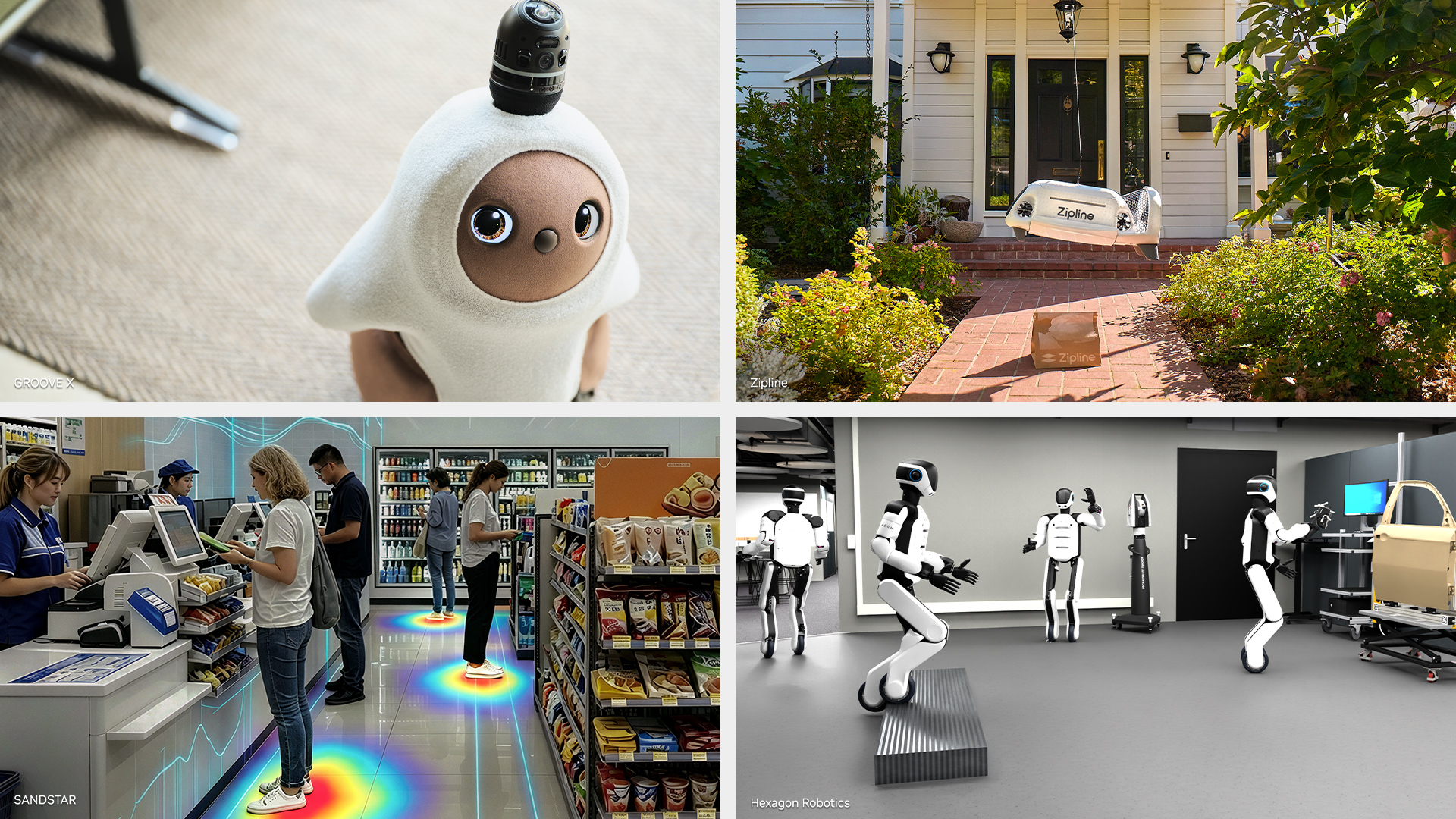
Industrial giants like Amazon Robotics and Tesla also stand to gain. Tesla's Optimus humanoid robot, for instance, could leverage Jetson's MIG support to run perception, planning, and control as separate agents, improving reliability and reducing latency. Meanwhile, smaller startups in the logistics and agriculture sectors can now deploy agentic AI without cloud dependencies, reducing operational costs and improving privacy.
Comparison Table: NVIDIA Jetson vs. Qualcomm RB5 vs. Intel OpenVINO
| Feature | NVIDIA Jetson AGX Orin (JetPack 7.2) | Qualcomm RB5 | Intel OpenVINO |
|---|---|---|---|
| Agentic AI support | Yes (native via NemoClaw) | No | No |
| CUDA version | 13 | N/A (Adreno GPU) | N/A (OpenCL) |
| MIG support | Yes (up to 7 instances) | No | No |
| Yocto project support | Yes | Yes | Limited |
| Peak AI performance | 275 TOPS | 15 TOPS | Varies (CPU-bound) |
| Verdict | Winner: Unmatched agentic AI capabilities and ecosystem lock-in | Lagging: No agentic AI, lower performance | Lagging: No agentic AI, CPU-centric |
What Risks and Uncertainties Remain?
Despite the bold claims, several uncertainties persist. First, NVIDIA's blog post did not provide specific benchmark numbers for the "substantial performance gain" on the AGX Orin module. Without independent verification, it's unclear whether the gains apply to all agentic workloads or only to specific model architectures. Second, the Yocto project support, while welcome, adds complexity for developers who must now manage custom Linux builds—a skill not common among AI engineers.
Third, the competitive response from Qualcomm and Intel is unknown. Qualcomm could integrate agentic AI capabilities into its next-gen RB6 platform, while Intel might partner with edge AI startups like Edge Impulse to close the gap. NVIDIA also faces regulatory headwinds: the EU's AI Act classifies physical AI systems as high-risk, potentially imposing compliance costs on Jetson-based deployments.
My thesis is clear: NVIDIA has won the physical AI race before it even started. JetPack 7.2 is not an iterative update—it's a platform shift that turns every Jetson device into a potential autonomous agent. In the short term, developers and system integrators will flock to Jetson because it offers the only complete stack from silicon to agentic AI skills. In the long term, this cements NVIDIA's dominance in robotics, industrial automation, and autonomous vehicles, creating an ecosystem lock-in that competitors will find nearly impossible to break.
The losers are clear: Qualcomm and Intel, whose edge AI efforts now look like toys compared to NVIDIA's agentic capabilities. Also losing are cloud-dependent AI companies, as edge deployment reduces the need for cloud inference—potentially eating into NVIDIA's own data center revenue. My prediction: within 18 months, at least three major robotics OEMs (e.g., ABB, Fanuc, and KUKA) will announce Jetson-based product lines, and NVIDIA's edge AI revenue will exceed $5 billion annually by 2027.
Predictions
- ABB will announce a Jetson-based autonomous welding robot by Q3 2027, citing JetPack 7.2's MIG support as a key enabler.
- Qualcomm will acquire an agentic AI startup (e.g., AI.Reverie or Osaro) within 12 months to close the gap with NVIDIA.
- The EU AI Act will require all Jetson-based physical AI systems to undergo third-party auditing by 2028, increasing development costs by 15-20%.
Timeline
- June 2026NVIDIA announces JetPack 7.2 and NemoClaw at COMPUTEX
First commercial release enabling agentic AI on Jetson edge devices.
- Q3 2026Expected availability of JetPack 7.2 for all Jetson Orin modules
NVIDIA plans to roll out the update to existing Jetson AGX Orin and Orin NX modules.
- 2027Predicted adoption by major robotics OEMs
ABB, Fanuc, and KUKA expected to launch Jetson-based autonomous systems.
Chart: Projected Edge AI Revenue by Platform (2025-2028)
Projected Edge AI Revenue by Platform (USD Billions, 2025-2028)
Article Summary
- JetPack 7.2 transforms Jetson from a simple edge AI accelerator into a full-fledged agentic AI platform, a move no competitor has matched.
- MIG support on Jetson AGX Orin enables multi-agent architectures on a single chip, a key differentiator for complex robotics tasks.
- NVIDIA's COMPUTEX announcement signals a strategic pivot from cloud to edge, threatening cloud revenue but opening a larger physical AI market.
- The lack of independent benchmarks and the complexity of Yocto project support are the main risks for adopters.
- Competitors Qualcomm and Intel face an existential threat in edge AI unless they rapidly develop agentic capabilities.
Source and attribution
NVIDIA Blog
NVIDIA Jetson Brings Agentic AI to the Physical World






Discussion
Add a comment