
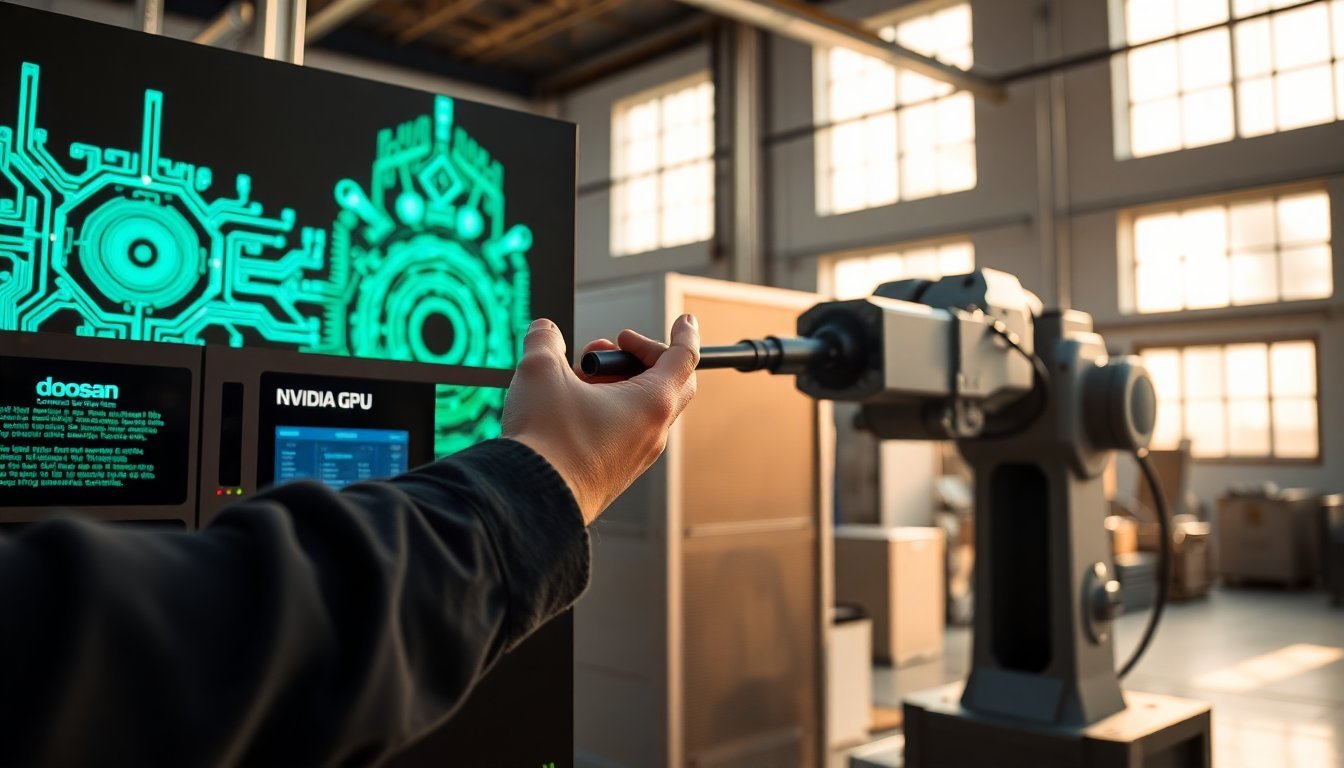
NVIDIA and Doosan: Physical AI's New Power Couple
NVIDIA and Doosan Group are deepening their partnership to deploy physical AI across robotics, energy, and manufacturing. This analysis examines the winners, losers, and market shifts driven by this deal.
On June 7, 2026, NVIDIA and Doosan Group announced an expanded collaboration targeting physical AI, robotics, and AI factory infrastructure. This move integrates NVIDIA's accelerated computing platforms with Doosan's industrial automation, power generation, and advanced electronics materials, marking a significant escalation in the race to embed AI into physical industries.
- NVIDIA and Doosan Group announced an expanded collaboration on June 7, 2026, covering Doosan Robotics, Doosan Bobcat, Doosan Enerbility, and Doosan Corporation Electro-Materials BG.
- The partnership aims to integrate NVIDIA's full-stack accelerated computing platforms with Doosan's industrial capabilities to advance physical AI and AI factory infrastructure.
- This move positions Doosan as a leader in AI-driven industrial automation and energy, while challenging competitors like Siemens and Fanuc in the physical AI space.
Why Is This Collaboration Different From Previous NVIDIA Industrial Deals?
According to NVIDIA's blog post published on June 7, 2026, the collaboration spans four Doosan subsidiaries: Doosan Robotics, Doosan Bobcat, Doosan Enerbility, and Doosan Corporation Electro-Materials BG. This breadth is unprecedented—previous NVIDIA industrial partnerships, such as those with Siemens or ABB, focused on specific verticals like digital twins or edge computing. Here, NVIDIA is embedding its technology across robotics, construction equipment, power generation, and advanced materials. According to Doosan Group's press release on the same date, the collaboration will leverage NVIDIA's Isaac platform for robot simulation and Omniverse for digital twins, directly targeting factory automation and power plant optimization. This is not a pilot; it's a multi-industry rollout.
Which Doosan Subsidiaries Benefit Most From This Deal?
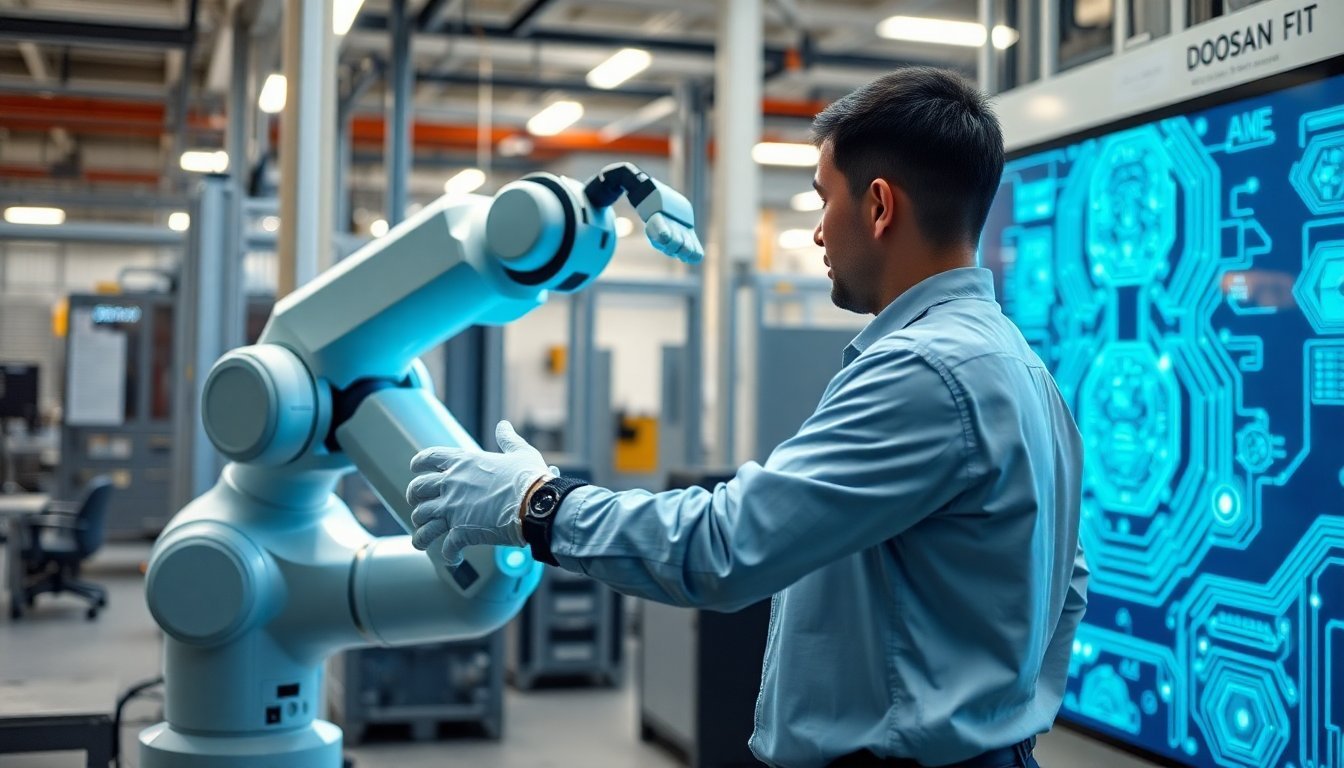
Doosan Robotics stands out as the immediate winner. The subsidiary already produces collaborative robots (cobots) for manufacturing and logistics. By integrating NVIDIA's Isaac and Jetson platforms, Doosan Robotics can enhance robot perception, manipulation, and autonomy. Doosan Bobcat, known for construction equipment, gains access to NVIDIA's AI for autonomous site operation and predictive maintenance. Doosan Enerbility, a power generation giant, can use NVIDIA's AI to optimize turbine performance and grid integration. Doosan Corporation Electro-Materials BG, which produces copper foil for batteries, benefits from AI-driven quality control and process optimization. The breadth of application suggests a systemic transformation rather than isolated upgrades.
What Does This Mean for Competitors Like Siemens and Fanuc?
The collaboration creates a formidable ecosystem that challenges established industrial automation leaders. Siemens, which has its own digital twin platform (Xcelerator) and AI partnerships, now faces a direct competitor with NVIDIA's full-stack advantage. Fanuc, a leader in industrial robotics, relies on proprietary control systems; integrating NVIDIA's AI stack could require significant adaptation. According to industry analyst firm Omdia, NVIDIA's GPU dominance in AI training and inference gives it a unique position to offer end-to-end solutions from simulation to deployment. This deal signals that physical AI is no longer a niche—it's becoming a battleground for industrial dominance.
| Dimension | NVIDIA + Doosan | Siemens | Fanuc |
|---|---|---|---|
| AI Platform | Full-stack (Isaac, Omniverse, Jetson) | Xcelerator (partial AI) | Proprietary (limited AI) |
| Robotics | Collaborative + construction | Industrial automation | Industrial robots |
| Energy Integration | Yes (Doosan Enerbility) | Limited | No |
| Advanced Materials | Yes (Electro-Materials BG) | No | No |
| Deployment Scale | Multi-industry (robotics, energy, construction) | Manufacturing-focused | Manufacturing-focused |
| Verdict | Winner: diversified AI factory infrastructure | Challenged: needs stronger AI integration | Under threat: proprietary systems may lose relevance |
How Will This Impact the Physical AI Market?
According to a report from MarketsandMarkets published in May 2026, the physical AI market (including robotics, autonomous vehicles, and industrial AI) is projected to grow from $12 billion in 2026 to $45 billion by 2031. This collaboration accelerates that timeline by providing a proven integration model. Doosan's existing customer base in construction, energy, and manufacturing becomes a testbed for NVIDIA's technology. The risk is lock-in: Doosan subsidiaries may become dependent on NVIDIA's ecosystem, potentially limiting future flexibility. However, the short-term gains in efficiency and capability likely outweigh this concern.
My Analysis: This deal is a masterstroke for NVIDIA, but a calculated risk for Doosan. The thesis: NVIDIA is using Doosan as a Trojan horse to enter heavy industry, bypassing slower incumbents. Short-term, Doosan Robotics and Doosan Bobcat will gain a 2-3 year lead over competitors in AI integration for construction and manufacturing. Long-term, Doosan Enerbility could become a case study for AI-optimized power generation, potentially influencing global energy policy. The loser is Siemens, which now faces an existential choice: deepen its AI partnerships or risk becoming a legacy provider. I predict that within 18 months, Doosan will announce a physical AI product line based on this collaboration, and at least one major competitor will attempt a similar partnership with NVIDIA or another AI vendor.
- By December 2027, Doosan Robotics will launch a new cobot series with integrated NVIDIA AI, achieving 30% faster deployment times than current models.
- By June 2028, at least two major industrial automation competitors (e.g., Siemens or ABB) will announce similar AI partnerships to counter the NVIDIA-Doosan ecosystem.
- The physical AI market will exceed $20 billion by 2029, driven by multi-industry collaborations like this one.
- June 2026NVIDIA-Doosan collaboration announced
Expanded partnership across four Doosan subsidiaries for physical AI.
Physical AI Market Projections (2026-2031)
- This collaboration is not a pilot; it's a multi-industry rollout covering robotics, construction, energy, and materials.
- Doosan gains a 2-3 year lead in AI integration for industrial automation, but risks ecosystem lock-in.
- Siemens and Fanuc are the primary losers, facing pressure to accelerate AI partnerships.
- The physical AI market is accelerating faster than previously projected, with this deal as a catalyst.
- NVIDIA's strategy of embedding its stack across diverse industries is a blueprint for future AI infrastructure deals.
Source and attribution
NVIDIA Blog
NVIDIA and Doosan Group Collaborate to Advance Physical AI and AI Factory Infrastructure






Discussion
Add a comment