

Mistral's Custom AI Bet: Enterprise Win or Geopolitical Risk?
Mistral AI's CRO touts global demand for custom models, but the cybersecurity focus raises trust and sovereignty questions. This analysis dissects the operational tradeoffs and predicts which enterprises will adopt—and which will pass.
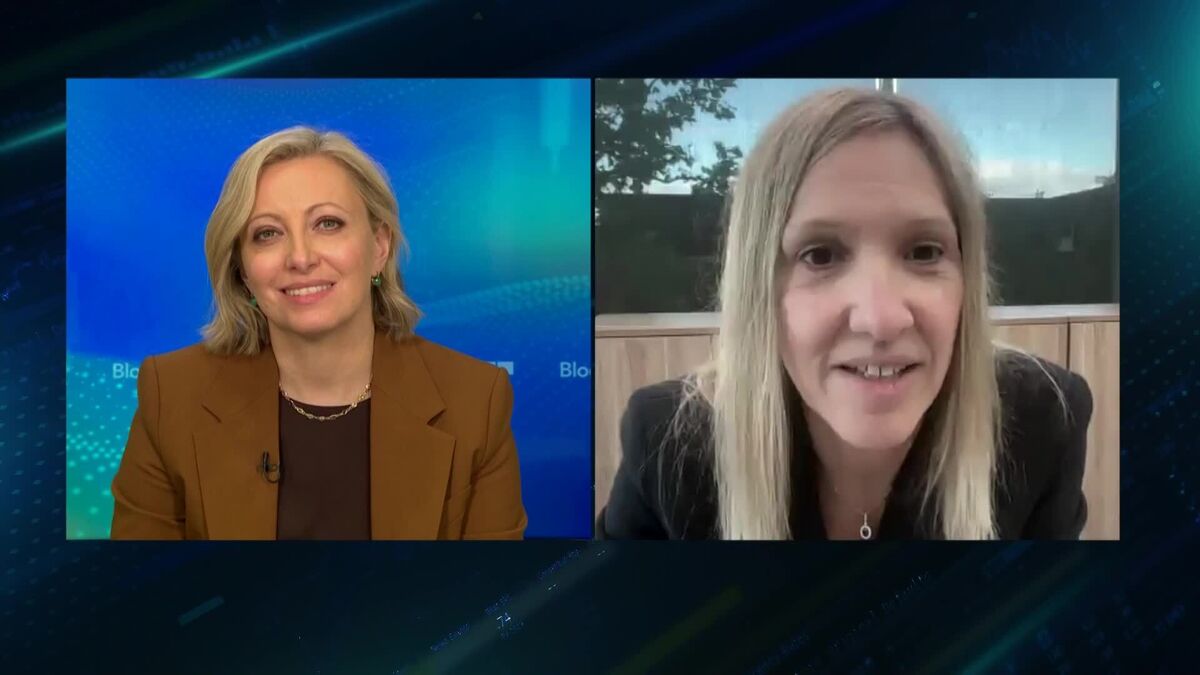
Marjorie Janiewicz, Mistral AI's Chief Revenue Officer, told Bloomberg on April 21, 2026, that the French startup is 'very committed' to the US and seeing global demand for custom enterprise models—especially in cybersecurity. This marks a decisive shift from Mistral's open-source origins to a full-stack services play, but the question is whether enterprises will trust a foreign AI vendor with their most sensitive security workflows.
- Mistral AI's CRO Marjorie Janiewicz says the company is evolving into a full-stack enterprise AI provider, with custom models for cybersecurity as a key growth driver.
- Revenue is coming from large global clients deploying tailored models, but Mistral must prove it can compete with hyperscaler-owned AI services and overcome US data sovereignty concerns.
- The tension: Mistral's customization advantage is real, but its French origin and geopolitical climate may limit US enterprise adoption in sensitive sectors.
Why Is Mistral AI Pivoting to Custom Enterprise Models Now?
According to Marjorie Janiewicz in her Bloomberg interview, Mistral AI has "evolved to become a full-stack company" whose advantage lies in customizing AI for enterprise workflows. This is a dramatic departure from the company's 2023 launch as an open-source model provider. The shift is driven by cold market reality: generic foundation models are becoming commodities, and the real money—and defensibility—lies in vertical-specific fine-tuning. Janiewicz stated that revenue is being driven by "large global clients deploying tailored models across industries," signaling that Mistral is betting its future on services, not just model weights.
My take: This is the right move, but it is also a forced one. Mistral cannot outspend OpenAI or Google on general-purpose model training. By focusing on customization, it targets a segment where hyperscalers are slower because their margins depend on selling standardized API calls. However, customization is labor-intensive and requires deep domain expertise—exactly the kind of business that is hard to scale without a massive professional services arm.
What Does the Cybersecurity Focus Tell Us About Enterprise Demand?
Janiewicz specifically noted that companies have been asking Mistral AI to customize models for cybersecurity. This is a telling data point. Cybersecurity is a high-stakes, data-sensitive domain where off-the-shelf models often fail because they lack context about specific threat landscapes, compliance requirements, and internal network topologies. A custom model tuned on an enterprise's own security logs could outperform generic models on detection accuracy and false positive rates.
But here is the operational tradeoff: training a cybersecurity model requires access to the enterprise's most sensitive data—network traffic, user behavior, vulnerability scans. According to Bloomberg's earlier reporting in July 2025, Mistral secured $600 million in funding to scale custom models, but that capital does not buy trust. US enterprises, especially in defense, finance, and critical infrastructure, may balk at sending security data to a French company subject to EU data regulations and potential French government access requests. Mistral's "very committed" US stance will be tested by every procurement officer's first question: "Where will my data be processed?"
How Does Mistral's Customization Compare to Hyperscaler Offerings?
To understand Mistral's positioning, it is useful to compare its approach to the major alternatives. The table below shows the key differences.
| Dimension | Mistral AI (Custom Models) | OpenAI (GPT-4o Fine-Tuning) | Anthropic (Claude Enterprise) |
|---|---|---|---|
| Customization depth | Full fine-tuning, including architecture changes | API-level fine-tuning only | Prompt engineering + limited fine-tuning |
| Data residency | EU-based training, US inference possible | US-based (Azure) | US-based (AWS) |
| Cybersecurity focus | Explicitly named as a target vertical | General purpose, no vertical specialization | Safety-focused, not security-specific |
| Enterprise support | Dedicated account teams, custom SLAs | Standard support tiers | Enterprise tier with limited customization |
| Geopolitical risk | High (French company, EU regulations) | Low (US company) | Low (US company) |
| Verdict | Best for EU enterprises needing deep customization | Best for US enterprises needing scale and simplicity | Best for safety-conscious enterprises with moderate customization needs |
Who Actually Benefits From Mistral's Custom AI Strategy?
The clear winners are large European enterprises—especially in finance, energy, and telecom—that want AI tailored to their workflows without sending data to US hyperscalers. Mistral's French origin is a selling point in the EU, where data sovereignty is a regulatory and political priority. According to Janiewicz, global momentum is real, and I interpret that to mean Mistral is winning deals in the Middle East and Asia-Pacific as well, where US AI vendors face varying degrees of suspicion.
The losers are smaller AI startups trying to compete on customization. Mistral's $600 million war chest gives it a scale advantage in building the professional services and infrastructure needed for bespoke model delivery. Also losing out are any US-based AI vendors that cannot offer similar customization depth—they will be squeezed between Mistral's niche and hyperscaler scale.
My thesis: Mistral's custom AI pivot is operationally sound but strategically fragile—it wins on depth but loses on trust in the US market.
In the short term (12-18 months), Mistral will see strong revenue growth from EU and non-US enterprises, particularly in cybersecurity. The company will likely announce several large deals with European banks and telecom operators by Q3 2026. However, in the long term (3-5 years), Mistral faces an existential challenge: if US-China AI tensions escalate, the US government may restrict federal contractors from using EU AI models for security-related workloads, cutting off Mistral's largest potential market. The company's "very committed" US stance may become moot if the US government decides that AI sovereignty cuts both ways.
Who gains: EU enterprises that want AI customization without US data exposure. Who loses: Mistral's US ambitions, which will remain limited to non-sensitive commercial sectors. My concrete prediction: By December 2027, Mistral will either establish a US-based data center with independent governance or withdraw from the US cybersecurity market entirely.
What Should Enterprise Buyers Do Now?
- Assess data sensitivity: If your cybersecurity use case involves classified or critical infrastructure data, Mistral is likely not an option due to geopolitical risk. For less sensitive commercial data, Mistral's customization depth is a genuine advantage.
- Demand data residency guarantees: Before signing, ensure Mistral contractually commits to processing all training and inference data within your jurisdiction. Janiewicz's Bloomberg interview did not address this, so procurement teams must push for it.
- Pilot before committing: Custom models require significant upfront investment. Start with a narrow cybersecurity use case—such as phishing detection tuning—to evaluate Mistral's delivery capabilities before scaling.
- Monitor regulatory developments: The EU AI Act and potential US executive orders on AI supply chains will directly impact Mistral's viability. Assign a team member to track these policies quarterly.
Predictions
- Mistral will announce at least two multi-million-dollar cybersecurity customization deals with European banks by Q3 2026.
- The US Department of Defense will issue a directive by Q2 2027 prohibiting the use of AI models trained outside the US for cybersecurity applications in defense contractors.
- By 2028, Mistral will either establish a US-based data center with independent governance or exit the US cybersecurity market.
Article Summary
- Mistral's custom AI pivot is a smart operational move but faces a trust ceiling in the US market due to geopolitical and data sovereignty concerns.
- Cybersecurity is the most promising vertical for Mistral, but it is also the most sensitive—enterprises must demand clear data residency guarantees.
- The real competition is not between Mistral and OpenAI, but between deep customization (Mistral) and hyperscaler simplicity (Azure/AWS).
- Enterprise buyers should pilot narrow use cases before committing to large-scale custom model deployments.
- Mistral's US commitment will be tested by regulatory actions within 18 months; the company needs a concrete US data-sovereignty plan now.
Source and attribution
Bloomberg Technology
Mistral AI Sees Global Demand for Custom AI






Discussion
Add a comment