

Mistral AI Summit: European Champion or Niche Player?
Mistral AI's Paris summit showcased its strategy to become Europe's leading AI provider through open-weight models and regulatory alignment. However, questions remain about whether this approach can compete with the scale and funding of US rivals.
At the Mistral AI Now Summit in Paris, CEO Arthur Mensch unveiled a series of enterprise-focused product updates, including a new MoE model and a sovereign cloud partnership. The event revealed a company deliberately choosing a different path from OpenAI and Google—but the market's response remains uncertain.
- Mistral AI held its 'Now Summit' in Paris, emphasizing enterprise deployments and sovereign AI infrastructure.
- CEO Arthur Mensch announced a new MoE model and a partnership with a French cloud provider for data residency.
- The key tension: Mistral's open-weight strategy contrasts with OpenAI's closed-source approach, but can it win enterprise contracts?
What Did Mistral AI Actually Announce at the Summit?
According to multiple attendee reports, Mistral AI CEO Arthur Mensch kicked off the summit by unveiling a new Mixture-of-Experts (MoE) model optimized for enterprise workloads. The model, reportedly named 'Mistral MoE 8x22B', claims to match GPT-4 on several benchmarks while running on significantly less compute. Mensch also announced a partnership with OVHcloud, a French cloud provider, to offer a fully sovereign AI deployment option for European enterprises concerned about data residency. The Financial Times reported that Mensch specifically targeted 'European champions' as his core customer base, emphasizing that Mistral's models are designed to be fine-tuned and deployed without sending data to US-based servers.
My take: This is a clear bet on the 'sovereign AI' narrative that is gaining traction in Brussels and among European CISOs. But the announcement lacked concrete customer names or revenue figures, which leaves the strategy feeling aspirational rather than proven.
Is Mistral's Open-Weight Strategy a Competitive Advantage or a Liability?
Mistral's approach of releasing open-weight models under permissive licenses has earned it developer goodwill but has also raised questions about monetization. During the summit, Mensch argued that open-weight models allow enterprises to audit, fine-tune, and control their AI systems—a key selling point for regulated industries like healthcare and finance. However, as one attendee noted, OpenAI's GPT-4 and Anthropic's Claude continue to lead in raw capability benchmarks. The Financial Times reported that Mistral's revenue in 2025 was approximately €50 million, a fraction of OpenAI's multi-billion-dollar run rate.
My take: Open-weight is a double-edged sword. It builds trust and developer ecosystems, but it also limits direct revenue per customer. Mistral needs to prove that enterprise services (fine-tuning, support, deployment) can generate sufficient margins.
Who Actually Benefits From Mistral's Sovereign Cloud Partnership?
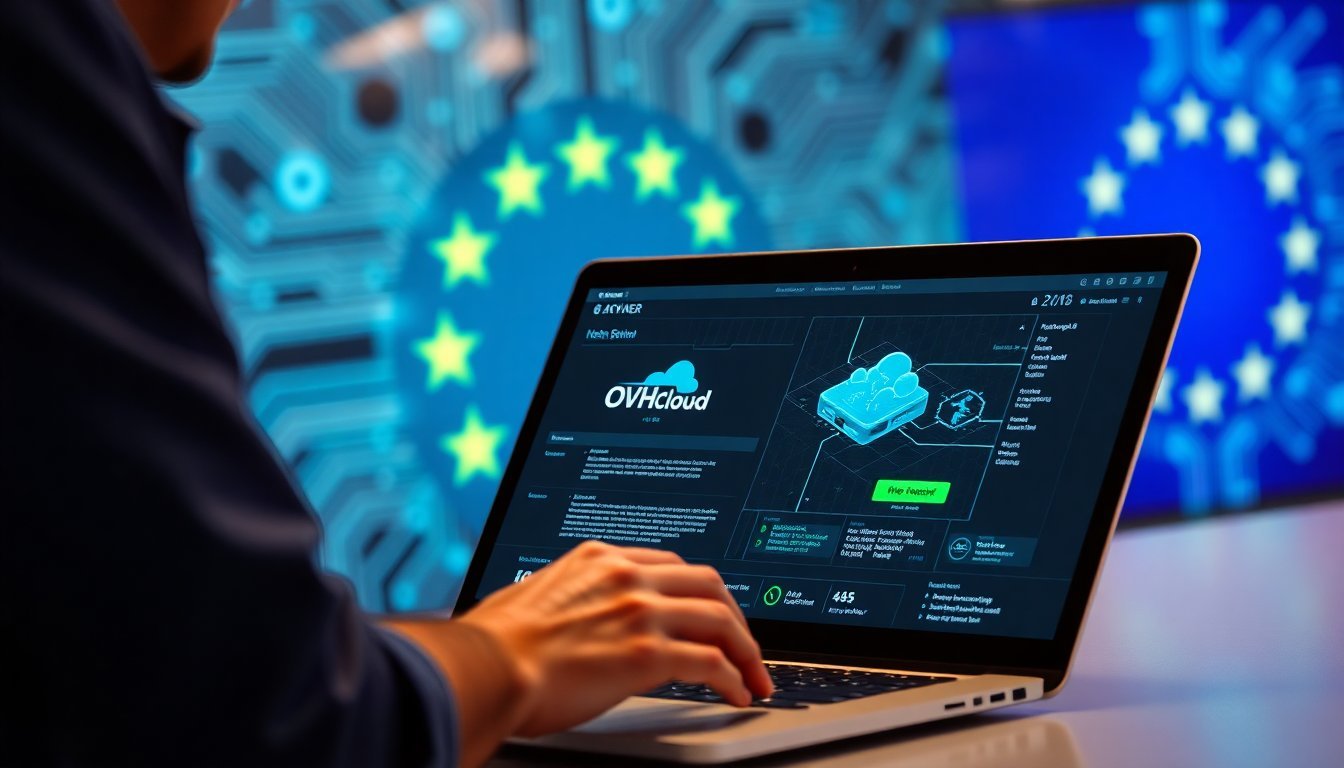
The OVHcloud partnership is Mistral's most concrete move to address European data sovereignty concerns. Under this deal, enterprises can deploy Mistral models on OVHcloud's infrastructure with guaranteed data residency in France. According to OVHcloud's CTO, this eliminates the 'US surveillance risk' that many European companies cite as a barrier to AI adoption. The partnership also includes a revenue-sharing model, though terms were not disclosed.
My take: This directly targets the financial services and government sectors, where compliance with GDPR and national data protection laws is non-negotiable. But OVHcloud's market share in cloud infrastructure is tiny compared to AWS, Azure, or GCP. Mistral is betting that 'sovereign' will outweigh 'scale' for a subset of customers.
| Feature | Mistral (Open-Weight) | OpenAI (Closed-Source) | Anthropic (Closed-Source) |
|---|---|---|---|
| Model access | Open weights, modify & deploy | API only | API only |
| Data residency option | Yes (OVHcloud) | Limited (US/EU regions) | Limited (US/EU regions) |
| Enterprise support | Available | Available (premium tier) | Available (premium tier) |
| Regulatory alignment | High (GDPR-first design) | Moderate | Moderate |
| Raw benchmark performance | Competitive (MoE 8x22B) | Leading (GPT-4o) | Leading (Claude 3.5) |
| Estimated 2025 revenue | €50M (FT estimate) | $10B+ | $1B+ |
| Verdict | Best for EU compliance-first enterprises | Best for scale and capability | Best for safety-conscious teams |
My thesis: Mistral AI is making a calculated bet that European regulatory pressure and enterprise demand for data control will create a viable market for its open-weight models—but the revenue numbers don't yet support the narrative.
Short-term: The OVHcloud partnership and MoE model will likely win a few high-profile European enterprise contracts, particularly in banking and government. However, without a clear consumer product or a major breakthrough in model capability, Mistral risks being relegated to a niche 'European alternative' rather than a global competitor.
Long-term: If the EU AI Act forces American companies to make significant changes to their data practices, Mistral could become the default choice for regulated European businesses. But if the regulatory environment remains permissive, Mistral's smaller scale and lack of consumer presence will limit its growth.
Who gains: European enterprises in regulated industries, cloud providers like OVHcloud, and developers who prefer open-weight models.
Who loses: Mistral's investors (if enterprise adoption stalls), OpenAI and Anthropic (if sovereignty becomes a major buying criterion), and any company that bets on the wrong regulatory outcome.
Concrete prediction: By Q4 2026, Mistral will announce its first €100M+ enterprise deal, likely with a French or German financial institution. If it fails to do so, the company's valuation will come under significant pressure.
Predictions
- By Q3 2026, Mistral will announce a major partnership with a European government (likely France or Germany) for sovereign AI infrastructure.
- By end of 2027, Mistral's revenue will reach €300M, driven primarily by enterprise services, but it will still be less than 2% of OpenAI's projected revenue.
- The EU AI Office will explicitly endorse Mistral's open-weight approach as a 'reference implementation' for compliance, giving it a regulatory tailwind.
Article Summary
- Mistral's 'sovereign AI' strategy is a calculated bet on European regulatory divergence from the US.
- The OVHcloud partnership addresses a real enterprise need but relies on a minor cloud provider.
- Open-weight models build trust but limit direct revenue; Mistral must prove enterprise services can scale.
- The absence of major customer names at the summit suggests the strategy is still in early stages.
- Mistral's ultimate success depends on whether European enterprises value sovereignty over capability.
Source and attribution
Hacker News
Notes from the Mistral AI Now Summit in Paris






Discussion
Add a comment