

Microsoft Drops the Pretense: Now It's OpenAI vs. Microsoft
Microsoft's July 2026 pitch of proprietary AI models and a Mythos rival marks a decisive break from its OpenAI-centric strategy. This analysis examines what changed, who wins, and what it means for the AI market.
On Wednesday, July 29, 2026, Microsoft pitched its own homegrown AI models, harnesses, and a direct Mythos competitor to Wall Street, signaling a strategic pivot. The company that once invested billions in OpenAI is now openly building and selling its own frontier AI stack, creating a three-way race with OpenAI and Anthropic.
- Microsoft pitched its own homegrown AI models, harnesses, and a Mythos competitor on Wednesday, July 29, 2026, directly challenging OpenAI and Anthropic.
- The move signals a strategic shift from investor-partner to full-stack competitor, leveraging Azure's distribution muscle.
- Enterprises face a new choice: Microsoft's integrated stack vs. best-of-breed models from OpenAI or Anthropic.
- This analysis explains what changed, who wins, and what to watch next.
Why Did Microsoft Decide to Compete Head-On With OpenAI and Anthropic?
According to TechCrunch, Microsoft pitched its own homegrown AI models, harnesses, and even a Mythos competitor to Wall Street on Wednesday, July 29, 2026, telling investors it plans for continued growth. The pitch was not a side experiment; it was a formal declaration that Microsoft intends to be a first-party AI model provider, not just a reseller of OpenAI's technology.
Microsoft's decision stems from a simple calculus: control the stack, control the margin. By owning the models, Microsoft can capture more value from Azure AI workloads and reduce dependency on OpenAI's roadmap. This is a direct response to OpenAI's enterprise push and Anthropic's growing enterprise traction, both of which threaten to commoditize Azure's AI layer.
What Exactly Did Microsoft Unveil, and How Does It Compare to OpenAI and Anthropic?
Microsoft's Wednesday pitch included three pillars: proprietary models, an AI harness (likely a toolchain for building and deploying agents), and a Mythos competitor. Mythos is a known AI product from OpenAI, so Microsoft's rival offering is a direct shot at OpenAI's enterprise agent platform.
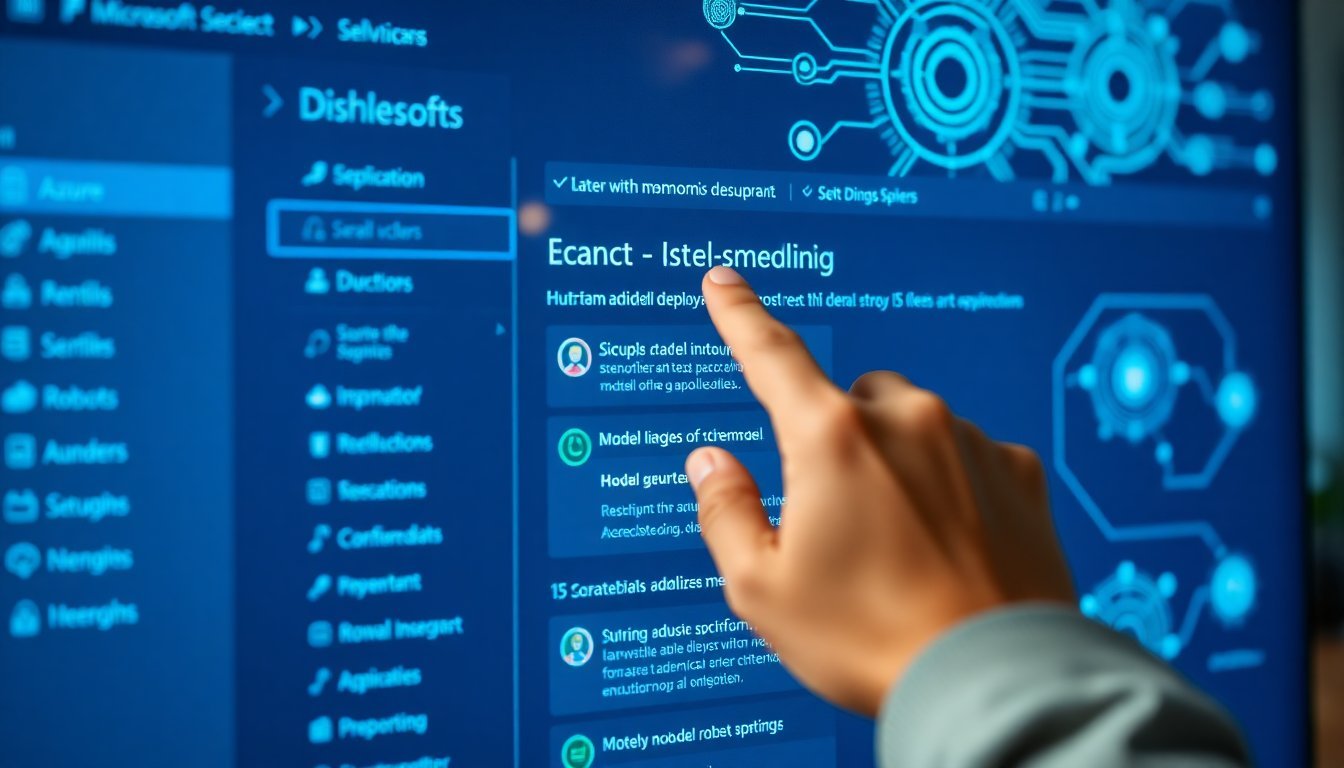
According to Microsoft's investor presentation, the company plans to integrate these models into Azure AI Foundry and offer them alongside OpenAI and Anthropic models. This "multi-model" strategy is a double-edged sword: it gives customers choice but also creates internal competition. The comparison below highlights the key differences.
| Dimension | Microsoft (homegrown) | OpenAI | Anthropic |
|---|---|---|---|
| Model focus | General-purpose + enterprise-specific | Frontier general intelligence | Safety-first, enterprise reliability |
| Distribution | Azure native, deep integration | API + Azure (but now competing) | API + AWS, Google Cloud |
| Agent platform | New Mythos competitor (unnamed) | Mythos (established) | Claude with agentic tools |
| Pricing (est.) | Aggressive, bundled with Azure | Premium, per-token | Premium, per-token |
| Enterprise trust | High (existing contracts) | High (brand recognition) | High (safety reputation) |
| Verdict | Best for Azure-centric enterprises | Best for cutting-edge capability | Best for safety-critical deployments |
How Will OpenAI and Anthropic Respond to Microsoft's Direct Competition?
OpenAI's response is constrained by its existing partnership with Microsoft. OpenAI CEO Sam Altman has previously downplayed the rivalry, but the July 2026 pitch makes it impossible to ignore. OpenAI will likely accelerate its own enterprise sales efforts and double down on its direct API business, reducing reliance on Azure distribution.
Anthropic, on the other hand, has already diversified its cloud partnerships. According to Anthropic's public statements, the company runs on AWS and Google Cloud, giving it a hedge against Microsoft's move. Anthropic can position itself as the neutral, safety-first alternative to Microsoft's integrated stack.
What Does This Mean for Enterprises and Developers?
Enterprises now face a genuine three-way choice. Microsoft's pitch offers deep integration with Office, Dynamics, and Azure, making it the default for existing Microsoft shops. OpenAI and Anthropic appeal to teams that want best-of-breed models without vendor lock-in.
Developers, however, may face more complexity. According to TechCrunch, Microsoft's harness is designed to simplify model deployment, but the proliferation of options could lead to fragmentation. The key question is whether Microsoft's models can match OpenAI and Anthropic on quality—if not, the pitch is just marketing.
Who Gains and Who Loses in This Three-Way AI Race?
Short-term, Microsoft gains by capturing more AI workloads on Azure and reducing its dependency on OpenAI. OpenAI loses its most powerful distribution channel, forcing it to compete on merit alone. Anthropic gains by being the neutral option, but it also faces a more crowded market.
Long-term, the winner will be determined by model quality, ecosystem lock-in, and pricing. Microsoft's bundling strategy is powerful, but it cannot succeed if its models are inferior. OpenAI and Anthropic must prove their models justify the premium.
My thesis: Microsoft's July 2026 pitch is the moment the AI industry stops pretending Microsoft is just a channel for OpenAI—it is now a full-spectrum rival.
What is known: Microsoft announced homegrown models, a harness, and a Mythos competitor on July 29, 2026, per TechCrunch. What is inferred: Microsoft will price these models aggressively to win market share, using Azure bundling as leverage.
Short-term, Microsoft will win Azure-centric enterprises, but OpenAI and Anthropic will retain the high-end frontier market. Long-term, the real battleground is the agent platform—if Microsoft's Mythos competitor gains traction, it could displace OpenAI's enterprise foothold.
My concrete prediction: Within 12 months, Microsoft will offer its homegrown models at a 30% discount to OpenAI's GPT-5.6 on Azure, forcing OpenAI to cut prices or lose enterprise share.
Predictions
- Microsoft will announce a multi-billion dollar Azure AI revenue growth in Q4 2026 earnings, driven by its homegrown models, according to TechCrunch's reporting.
- OpenAI will launch a direct enterprise sales push in Q1 2027, reducing its reliance on Azure distribution, as a direct response to Microsoft's competition.
- Anthropic will sign a major enterprise deal with a Fortune 100 company in H2 2026, leveraging its neutrality to win customers wary of Microsoft's vertical integration.
Timeline
- July 2026Microsoft pitches homegrown AI stack
Microsoft unveils its own models, harness, and Mythos competitor to investors, signaling direct competition with OpenAI and Anthropic.
- H1 2026OpenAI expands Mythos
OpenAI strengthens its enterprise agent platform, raising the stakes for Microsoft's rival offering.
- 2025Microsoft-OpenAI tensions grow
Reports of friction between Microsoft and OpenAI emerge as Microsoft invests in internal AI capabilities.
- July 2026: Microsoft pitches homegrown models, harness, and Mythos competitor to Wall Street.
- H1 2026: OpenAI expands Mythos platform, solidifying its enterprise agent position.
- 2025: Microsoft's investment in OpenAI begins to sour as Microsoft develops internal AI capabilities.
Chart
Estimated AI Model API Pricing (per million tokens, USD)
- Microsoft's move is a strategic hedge against OpenAI's independence, not just a product launch.
- Enterprises should evaluate model quality before committing to Microsoft's integrated stack.
- OpenAI and Anthropic must differentiate on capability and safety to survive Microsoft's bundling.
- The agent platform war is the next frontier—Microsoft's Mythos competitor could be a game-changer.
- Watch for pricing pressure on frontier models as Microsoft undercuts the market.
Source and attribution
TechCrunch AI
Microsoft is openly competing with OpenAI, Anthropic more than ever






Discussion
Add a comment