


Liquid AI's On-Device Agent Bet Hits a Memory Wall
Liquid AI's LFM2.5-24B-A2B promises private, on-device agents, but its 24B parameter size limits deployment to high-end hardware. The model's real value is data sovereignty, not ubiquitous local inference.
Liquid AI published LFM2.5-24B-A2B on Hugging Face on October 13, 2026, pitching it as a fast, private agent that runs on-device. The pitch is compelling, but the 24-billion-parameter footprint tells a more complicated story about who can actually run it.
- Liquid AI released LFM2.5-24B-A2B on Hugging Face on October 13, 2026, marketed as a fast, private on-device agent model.
- The model uses a mixture-of-experts design with 24B total parameters and 2B active parameters, aiming to balance capability with inference speed.
- The key tension: on-device privacy is valuable, but a 24B parameter footprint requires substantial memory, limiting which devices can actually run it.
- Liquid AI is betting that enterprises with data-sovereignty needs will pay for private agents even if performance trails cloud models.
What Exactly Did Liquid AI Release?
According to Liquid AI's blog post on Hugging Face, the company released LFM2.5-24B-A2B on October 13, 2026. The model is a mixture-of-experts (MoE) architecture with 24 billion total parameters and 2 billion active parameters per token. Liquid AI positions it for running "fast, private agents on-device" — meaning inference happens locally rather than through a cloud API. The MoE design is the critical detail. By activating only 2B parameters per forward pass, the model aims to deliver inference speeds closer to a 2B model while retaining the knowledge capacity of a 24B model. That is a well-established trade-off in the literature, but it does not eliminate the memory problem: all 24B parameters must still be loaded into memory, even if most are inactive at any given moment.Why Does "On-Device" Matter for Agents?
Agents — models that plan, call tools, and execute multi-step tasks — often need access to sensitive context: calendars, files, messages, credentials. Running those workloads through a cloud API means shipping that context to a third party. For regulated industries (healthcare, legal, finance) and privacy-conscious enterprises, that is often a non-starter. Liquid AI's pitch is that local inference eliminates that data-egress risk. The model card and blog frame privacy as the primary value proposition, with speed as a secondary benefit. That framing is consistent with the broader "private AI" narrative that has gained traction since 2024, as enterprises push back on sending proprietary data to model providers.Can a 24B Model Actually Run on Consumer Hardware?
This is where the marketing meets physics. A 24B parameter model in FP16 precision requires roughly 48 GB of memory just for weights. Even with 4-bit quantization — which Liquid AI likely expects for on-device use — the footprint is around 12–14 GB. That fits on high-end laptops with 16–32 GB of unified memory (Apple Silicon MacBook Pros, some Windows Copilot+ PCs) but not on typical smartphones, which currently top out at 8–12 GB of RAM shared with the OS. Liquid AI has not published detailed memory-footprint or tokens-per-second benchmarks in the blog post reviewed. That omission matters: "fast" and "on-device" are claims that require hardware-specific evidence. Until independent benchmarks appear, the speed claim should be treated as a design target, not a verified result.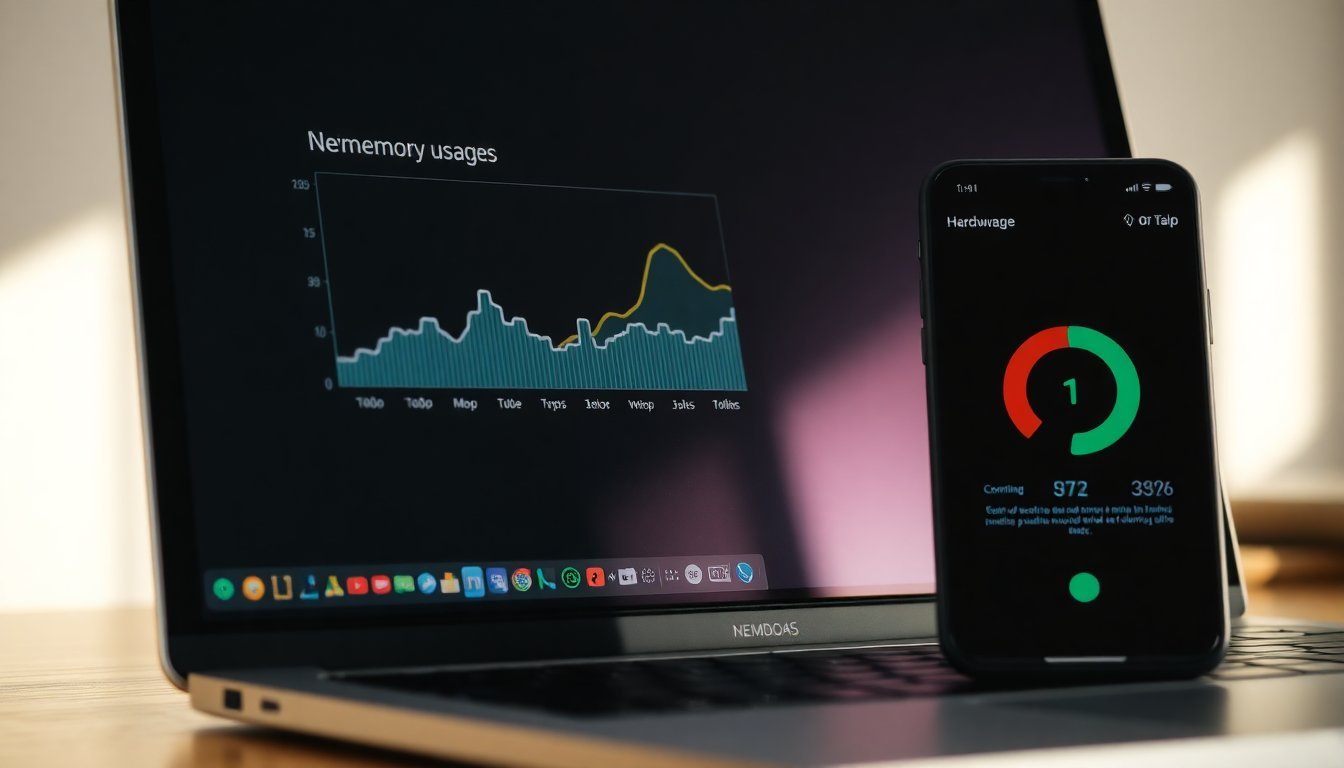
How Does LFM2.5-24B-A2B Compare to Alternatives?
| Model | Total / Active Params | Primary Deployment | Privacy | Typical Hardware |
|---|---|---|---|---|
| LFM2.5-24B-A2B (Liquid AI) | 24B / 2B | On-device agent | Full local | High-end laptop (16–32 GB) |
| Llama 3.2 3B (Meta) | 3B / 3B | On-device / edge | Full local | Smartphone, laptop |
| Phi-3.5-mini (Microsoft) | 3.8B / 3.8B | On-device / edge | Full local | Laptop, some phones |
| GPT-4o-mini (OpenAI) | Undisclosed | Cloud API | Cloud-dependent | Any device with network |
| Claude 3.5 Haiku (Anthropic) | Undisclosed | Cloud API | Cloud-dependent | Any device with network |
| Verdict | LFM2.5-24B-A2B wins on capability-per-active-parameter for local agents, but loses on accessibility — smaller models run on more devices, and cloud models outperform it outright. | |||
Who Is the Real Customer Here?
Not consumers. The realistic buyer is an enterprise with a compliance mandate: a hospital system that cannot send patient data to OpenAI, a law firm with client-privilege concerns, or a defense contractor with air-gapped requirements. For those buyers, a 24B model that runs on a workstation-class machine is a genuine alternative to cloud APIs — not because it is faster, but because it is permissible. Liquid AI's blog does not name specific enterprise customers or publish deployment case studies. That is a gap. Without evidence of real-world adoption, the enterprise-privacy thesis remains plausible but unproven.
Thesis: Liquid AI's LFM2.5-24B-A2B is a smart architectural bet that will win a narrow but real enterprise privacy market, not the mass on-device agent market its headline implies.
The short-term consequence is positioning: Liquid AI now has a differentiated story ("private agents that actually work") that separates it from both cloud API providers and tiny edge models. The long-term consequence depends on whether memory bandwidth and quantization improve fast enough to shrink the hardware requirement. I expect incremental progress, not a breakthrough, through 2027.
Who gains: enterprises with data-sovereignty mandates, and hardware vendors selling high-memory laptops (Apple, Qualcomm's Snapdragon X Elite line). Who loses: cloud API providers lose a slice of privacy-sensitive demand, and small edge-model vendors (Microsoft's Phi line, Meta's Llama 3.2 small models) face a capability gap for complex agent tasks.
Prediction: By Q2 2027, at least one Fortune 500 healthcare or financial-services company will publicly disclose an LFM2.5-24B-A2B deployment for internal agent workflows, validating the privacy-first thesis.
Predictions
1. Liquid AI will publish hardware-specific tokens-per-second benchmarks for LFM2.5-24B-A2B on Apple Silicon and Snapdragon X Elite by January 2027, responding to the missing-performance-data criticism. 2. At least one major cloud provider (AWS, Google Cloud, or Azure) will announce a managed on-device agent offering by mid-2027, competing directly with Liquid AI's private-deployment pitch. 3. The model will not achieve meaningful smartphone deployment before 2028, because 24B parameters exceed current mobile memory budgets even at 4-bit quantization.- October 2026LFM2.5-24B-A2B released
Liquid AI publishes the model on Hugging Face, marketed for fast, private on-device agents.
Estimated Memory Footprint by Quantization (GB)
What Should Readers Remember?
- Liquid AI's LFM2.5-24B-A2B is a real architectural achievement — 2B active parameters for 24B-class capability — but "on-device" is a hardware-conditional claim, not a universal one.
- The privacy value proposition is the model's strongest differentiator, not its speed, because speed claims remain unverified by independent benchmarks.
- Enterprises with compliance mandates are the likely early adopters; consumer smartphone deployment is unlikely before 2028.
- The competitive threat comes from both directions: smaller edge models on accessibility and cloud models on raw performance.

Source and attribution
Hugging Face Blog
Run fast, private agents on-device with LFM2.5-24B-A2B






Discussion
Add a comment