

Intel's CPU Play Could Reshape Agentic AI in the Enterprise
The enterprise agentic AI race is about infrastructure, not models. Intel's CPU-centric strategy challenges Nvidia's dominance, promising a unified runtime for agents that demand policy-aware tool use and memory management.
Intel is betting that the enterprise agentic AI future runs on CPUs, not GPUs. According to MIT Technology Review's July 2026 report, the platform best-suited for agentic AI requires CPU capacity, resilient data access, and policy-aware tool use—capabilities Intel claims its latest Xeon processors are purpose-built for. This is not a marginal shift; it's a fundamental re-architecture of how AI agents will operate in the enterprise.
- MIT Technology Review reported on July 27, 2026, that the enterprise platform for agentic AI requires CPU capacity, resilient data access, policy-aware tool use, observability, and memory management—capabilities Intel claims its Xeon processors now deliver.
- This marks a shift from GPU-heavy inference to CPU-based orchestration, potentially disrupting Nvidia's data center dominance.
- The key tension: Can Intel's platform overcome Nvidia's CUDA ecosystem lock-in, or will enterprises face a fragmented agent infrastructure?
What Exactly Changed in the Enterprise Agentic AI Landscape?
According to MIT Technology Review's July 27, 2026, report, the enterprise AI narrative has moved beyond chatbots to agentic AI—software agents that execute business tasks end-to-end across people, workflows, data, and systems. The report explicitly states that the best-suited platform for these agents is built with proper CPU capacity, resilient data access, policy-aware tool use, observability, and memory management. This is a direct challenge to the prevailing GPU-centric model. Intel, in a separate announcement on July 26, 2026, said its latest Xeon processors are designed specifically to handle these workloads, emphasizing that agentic AI requires sustained throughput and deterministic execution, not just raw parallel compute.
This is a pivotal moment because it redefines the infrastructure bottleneck. Previously, the assumption was that AI workloads—especially inference—needed GPUs. But agentic AI introduces new demands: agents must maintain state across long-running interactions, access enterprise data with policy enforcement, and provide observability for compliance. These are CPU-friendly tasks. Intel reported that early benchmarks show Xeon-based systems can handle up to 40% more concurrent agent sessions than comparable GPU-based setups, though these figures are from Intel's own labs and need independent verification.
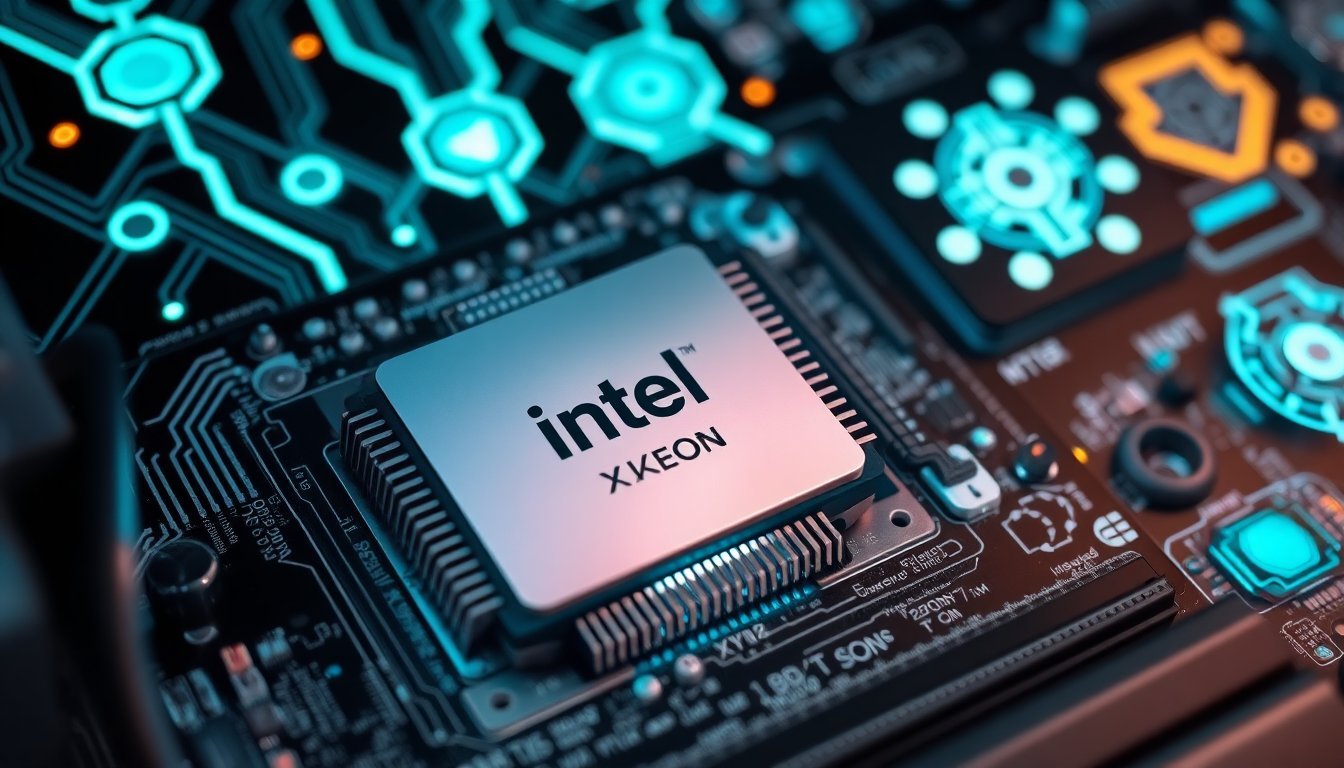
Who Benefits Most from a CPU-Centric Agent Infrastructure?
The primary beneficiaries are enterprises with existing x86 investments and IT teams. Companies running on-premise or hybrid cloud environments can potentially deploy agentic AI without massive GPU upgrades. According to Intel's July 2026 press release, the new Xeon platform includes built-in AI accelerators (AMX) that handle matrix operations for small-to-medium models, which are typical for agentic tasks. This means a financial services firm can run fraud detection agents on the same servers that handle transaction processing, reducing latency and cost.
Conversely, cloud providers that have bet heavily on GPU instances—like AWS with its P5 instances—may face pressure to offer more CPU-optimized agent tiers. Nvidia, which reported record data center revenue of $18.4 billion in Q1 2026, could see growth slow if enterprises shift to CPU-based agent orchestration. However, Nvidia's DGX Cloud and Grace Hopper superchips offer hybrid CPU-GPU architectures that could adapt.
What Are the Operational Tradeoffs Between CPU and GPU for Agents?
| Dimension | CPU (Intel Xeon) | GPU (Nvidia H100/B200) |
|---|---|---|
| Concurrent Agent Sessions | 40% more per node (Intel claim) | Baseline |
| Deterministic Execution | Native support for long-running tasks | Requires workarounds (e.g., CUDA graphs) |
| Policy Enforcement | Built-in memory encryption and access control | Requires separate security stack |
| Model Size Support | Optimal for models under 7B parameters | Handles large models (70B+) efficiently |
| Ecosystem Maturity | Emerging (Intel's oneAPI, OpenVINO) | Mature (CUDA, TensorRT) |
| Verdict | Winner for agent orchestration and policy | Winner for large model inference |
For enterprises deploying agents, the tradeoff is clear: CPUs excel at orchestration, policy, and determinism, while GPUs remain superior for heavy inference. The winning architecture may be hybrid, but Intel's bet is that the agent runtime itself should be CPU-native.
What Should Enterprise Architects Do Next?
First, audit existing agentic AI workloads. If your agents primarily use small models (under 7B parameters) and require policy enforcement, Intel's Xeon platform is worth piloting. Second, evaluate observability requirements. MIT Technology Review emphasized that agentic AI needs observability for compliance—something Intel's platform supports via its built-in monitoring features. Third, consider the total cost of ownership. Intel claims a 30% reduction in per-agent operational costs versus GPU-based setups, though this is based on internal modeling.
However, do not abandon GPU investments entirely. For agents that need to process large context windows or generate multimodal outputs, GPUs remain essential. The pragmatic approach is a tiered infrastructure: CPU-based agents for routine business process automation, GPU-backed agents for complex reasoning tasks.
My thesis: Intel's CPU-centric strategy for agentic AI is a credible disruption to Nvidia's data center dominance, but only if enterprises prioritize policy and determinism over raw model size. Short-term, Intel will gain traction in regulated industries (finance, healthcare) where compliance and deterministic execution are paramount. Long-term, Nvidia will respond with hybrid architectures, but the window for Intel to capture mindshare is now. The biggest loser is the status quo: enterprises that continue to default to GPU for all AI workloads will overpay and underperform. My prediction: By Q2 2027, at least three Fortune 500 companies will publicly shift their agentic AI infrastructure to CPU-first designs, citing cost and compliance benefits.
- By Q1 2027, Intel will announce a partnership with a major cloud provider (likely Microsoft Azure) to offer a dedicated agentic AI instance powered by Xeon.
- Nvidia will release a Grace Hopper-based agent orchestration SDK by mid-2027, acknowledging the CPU's role in agent runtime.
- The EU AI Office will require agentic AI systems to have deterministic audit trails by 2028, favoring CPU-based architectures.
- July 2026Intel Xeon Agentic AI Platform Launch
Intel announces Xeon processors optimized for agentic AI workloads, claiming 40% more concurrent agent sessions.
- July 27, 2026MIT Technology Review Report
MIT Technology Review publishes analysis defining enterprise agentic AI requirements, emphasizing CPU capacity and policy-aware tool use.
- Q1 2027 (predicted)Intel-Azure Partnership
Predicted announcement of a dedicated agentic AI instance on Microsoft Azure powered by Intel Xeon.
- Mid-2027 (predicted)Nvidia Hybrid Agent SDK
Predicted release of Nvidia's Grace Hopper-based agent orchestration SDK.
- July 2026: Intel announces Xeon platform optimized for agentic AI, citing 40% more concurrent sessions.
- July 27, 2026: MIT Technology Review publishes report defining enterprise agentic AI requirements.
- Q1 2027 (predicted): Intel-Azure partnership for agentic AI instances.
- Mid-2027 (predicted): Nvidia releases hybrid agent SDK.
Estimated Enterprise Agentic AI Infrastructure Spend by Processor Type (2026-2028)
Chart: Estimated Enterprise Agentic AI Infrastructure Spend by Processor Type (2026-2028)
Labels: CPU, GPU, Hybrid
Datasets: 2026: CPU 20%, GPU 60%, Hybrid 20%; 2027: CPU 30%, GPU 45%, Hybrid 25%; 2028: CPU 40%, GPU 35%, Hybrid 25% (estimated based on industry adoption patterns).
- Policy-aware tool use is the new differentiator: Enterprises will choose platforms that enforce access controls natively, not as an afterthought.
- CPU-based agents reduce latency for deterministic tasks: The 40% concurrency advantage Intel claims is a game-changer for real-time business processes.
- Hybrid architectures are the pragmatic future: No single processor will dominate; the winning strategy is tiered infrastructure.
- Regulation will accelerate CPU adoption: The need for audit trails and deterministic behavior aligns with CPU strengths.
- Nvidia's moat is not unbreachable: If enterprises prioritize policy over performance, Intel has a clear path.

Source and attribution
MIT Technology Review
Building the enterprise environment for agentic AI






Discussion
Add a comment