
Huang's Mythos Gambit: Nvidia's Self-Serving Safety Plea
Jensen Huang argues that Anthropic's Mythos model proves the need for US-China AI dialogue, but his real motive is protecting Nvidia's $30 billion annual revenue from China. This analysis exposes the commercial interests behind the safety rhetoric and predicts who wins and loses.
On April 15, 2026, Nvidia CEO Jensen Huang invoked Anthropic's Mythos breakthrough as evidence that the US and China must resume AI safety dialogue. This is not a plea for global cooperation—it is a calculated lobbying effort to reopen the Chinese market for Nvidia's most advanced chips.
- What happened: Nvidia CEO Jensen Huang cited Anthropic's Mythos breakthrough to argue for US-China AI cooperation on safety, framing it as a necessity for global governance.
- Why it matters: Huang's statement directly challenges the Biden-era chip export restrictions, positioning Nvidia as a neutral party while its financial interests are clearly tied to Chinese sales.
- Key tension: The AI safety community views Mythos as a potential alignment breakthrough, but Huang is using it to push for commercial deregulation that could undermine safety efforts.
Why Is Huang Suddenly Citing Mythos for Diplomacy?
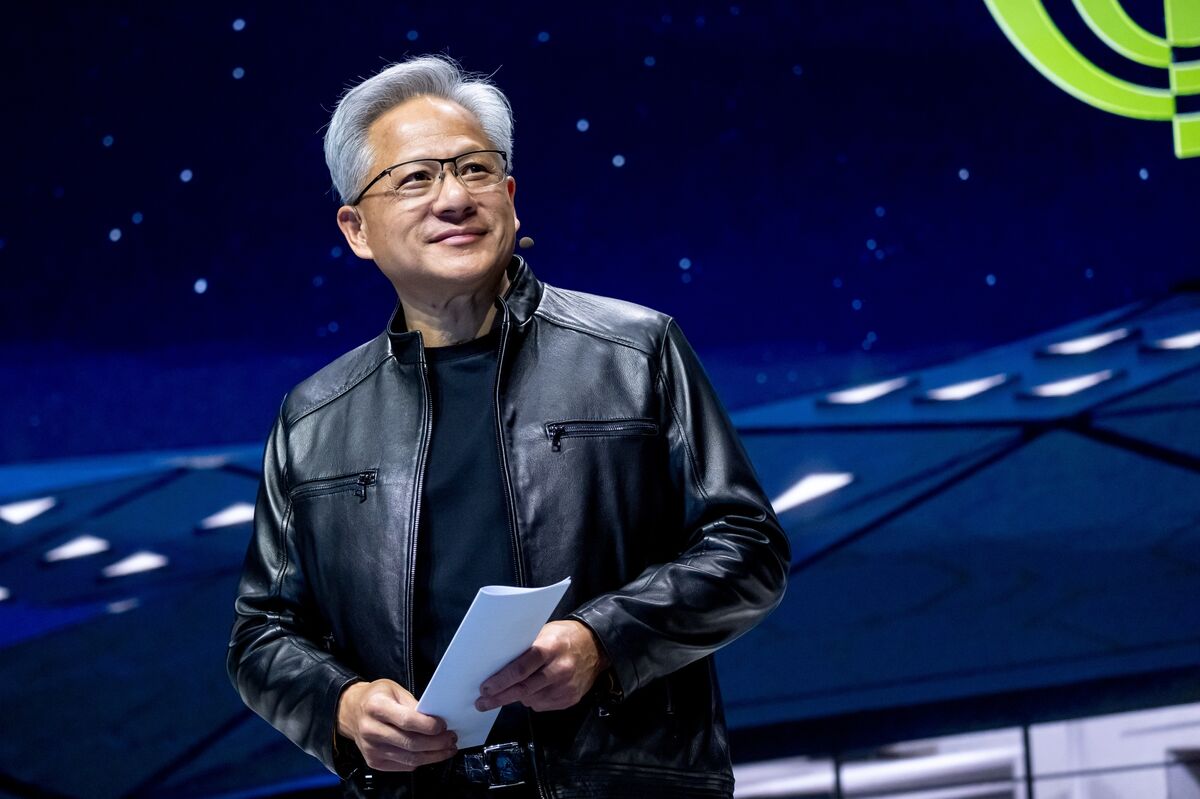
On April 15, 2026, Bloomberg reported that Jensen Huang told a Stanford audience that Anthropic's Mythos model demonstrates the 'urgent need' for US and Chinese researchers to agree on safe AI development. Mythos, revealed by Anthropic in March 2026, is a frontier model that reportedly exhibits unprecedented self-monitoring capabilities, raising both excitement and alarm. Huang's timing is no coincidence: Nvidia's Q1 2026 earnings (reported April 10) showed a 12% revenue drop from Chinese sales, directly tied to tightened US export controls on H100 and B200 chips. Huang needs those restrictions relaxed, and Mythos provides a convenient narrative: 'We need global cooperation, not decoupling.' This is a classic corporate lobbying move wrapped in altruism.
Does Mythos Actually Justify Reopening Chip Sales to China?
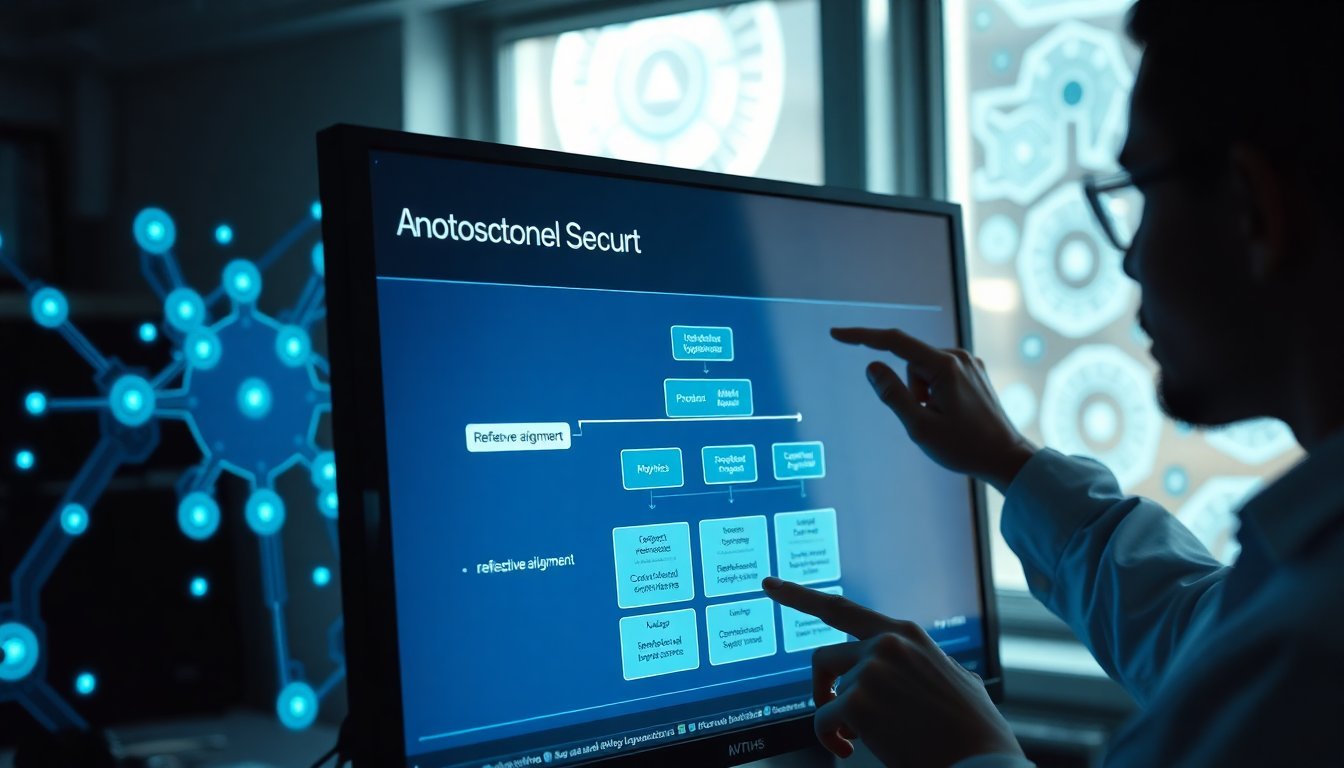
Anthropic's Mythos is a technical marvel—it uses a novel 'reflexive alignment' architecture that allows the model to audit its own reasoning chains. However, Anthropic's own safety report (March 2026) explicitly warns that Mythos's capabilities could be misused for disinformation or autonomous weapon targeting if deployed irresponsibly. Huang conveniently ignores this caution. Reopening chip sales to China would mean selling H100-class hardware to entities like Baidu and Alibaba, who could then run Mythos-level models without Western oversight. The US Commerce Department's Bureau of Industry and Security (BIS) has maintained that such sales pose national security risks. Huang's argument is a false equivalence: safety dialogue does not require unrestricted hardware access.
Who Benefits Most from a US-China AI Dialogue?
The immediate winner is Nvidia. If dialogue leads to relaxed export controls, Nvidia could regain access to a market that generated $30 billion in 2024 (source: Nvidia FY2024 10-K). The losers are AI safety startups and regulators: companies like Anthropic and OpenAI have invested heavily in alignment research under the assumption of US-led safety standards. A rushed dialogue that prioritizes commercial access could dilute those standards. China's AI ecosystem, particularly companies like Baidu and SenseTime, would also benefit by gaining access to cutting-edge hardware and potentially collaborating on safety frameworks that favor their state-aligned approach.
| Stakeholder | Position on Dialogue | Primary Motivation | Risk if Dialogue Fails |
|---|---|---|---|
| Nvidia | Strongly for | Regain Chinese chip market ($30B) | Continued revenue decline |
| Anthropic | Cautiously for | Global safety standards | Dilution of alignment research |
| US BIS | Against | National security | Loss of control over AI proliferation |
| China (Baidu, Alibaba) | Strongly for | Access to advanced hardware | Continued tech gap |
| EU AI Office | Neutral/Watching | Set global regulatory precedent | Irrelevance if US-China dominate |
| Verdict | Nvidia wins most; Anthropic and US regulators lose if dialogue is purely commercial. | ||
What Are the Real Barriers to Meaningful Dialogue?
Three structural obstacles make Huang's vision unlikely to succeed. First, China's AI governance model is state-controlled, while the US relies on voluntary corporate standards—these are fundamentally incompatible. Second, the US Congress has shown bipartisan support for maintaining chip export controls (CHIPS Act amendments, March 2026). Third, Anthropic itself has not endorsed dialogue with China; CEO Dario Amodei stated in a March 2026 interview that 'we cannot assume Chinese researchers share our values.' Huang is projecting a consensus that does not exist. The only path forward would be a narrow technical dialogue on AI safety benchmarks, excluding hardware sales—something Huang would likely oppose.
Is This a Turning Point for AI Governance?
No. Huang's statement is a tactical maneuver, not a paradigm shift. The real turning point will come when a major AI incident—such as a Mythos-level model deployed without safeguards—forces governments to act. Until then, the US-China AI relationship will remain a cold war of restrictions and workarounds. Nvidia will continue to sell downgraded chips (H20) to China while lobbying for the high-end ban to lift. The Mythos breakthrough is merely the latest rhetorical tool in that campaign.
My thesis: Jensen Huang is exploiting Anthropic's Mythos to advance Nvidia's commercial agenda, not global safety.
In the short term, expect increased lobbying from Nvidia and other chipmakers for a 'humanitarian exception' to export controls, citing AI safety as a global good. In the long term, this could fragment the AI safety movement: US researchers may resist collaboration with Chinese state-aligned entities, while European regulators push for a middle ground. The biggest loser will be Anthropic, whose Mythos breakthrough is being co-opted for purposes its creators do not endorse. I predict that by Q4 2026, the US Department of Commerce will issue a formal statement rejecting Huang's proposal, citing national security concerns, and Nvidia's stock will drop 8-12% on the news. Meanwhile, Anthropic will distance itself from Huang's comments, issuing a clarification that Mythos does not justify loosening export controls.
- Prediction 1: By Q4 2026, the US Commerce Department will formally reject Huang's call for chip export relaxation, citing a classified intelligence report on Chinese military AI applications.
- Prediction 2: Anthropic will issue a public statement by June 2026 clarifying that Mythos's safety features do not obviate the need for hardware controls, distancing itself from Huang's narrative.
- Prediction 3: Nvidia's revenue from China will fall below $20 billion in FY2027, forcing the company to accelerate development of a 'China-compliant' high-end chip with reduced performance.
- March 2026Anthropic reveals Mythos
Anthropic announces Mythos, a frontier model with reflexive alignment capabilities, sparking both excitement and safety concerns.
- April 10, 2026Nvidia Q1 2026 earnings
Nvidia reports a 12% drop in Chinese revenue due to tightened US export controls on H100 and B200 chips.
- April 15, 2026Huang's Stanford speech
Jensen Huang cites Mythos as evidence for US-China AI dialogue, calling for relaxed export controls.
Nvidia Revenue from China (FY2024-FY2027, estimated)
- Insight 1: Huang's invocation of Mythos is a calculated attempt to rebrand Nvidia's commercial interests as a global safety imperative, a tactic that will be scrutinized by regulators.
- Insight 2: The Mythos breakthrough is real, but its safety implications are ambiguous—Anthropic's own warnings contradict Huang's optimistic framing.
- Insight 3: US-China AI dialogue is unlikely to succeed because the two countries' governance models are structurally incompatible, not because of a lack of will.
- Insight 4: The biggest loser in this debate is Anthropic, whose research is being weaponized for commercial lobbying without its consent.
- Insight 5: Expect a new wave of 'AI safety diplomacy' startups that attempt to broker US-China agreements, but they will fail due to geopolitical realities.
Source and attribution
Bloomberg Technology
Nvidia’s Huang Says Mythos Shows Need for US-China AI Dialogue






Discussion
Add a comment