

Huang’s Altruism Is Nvidia’s Best Sales Pitch
Nvidia’s CEO wants enterprises to stop obsessing over AI ROI and start chasing moonshots. But this advice serves Nvidia’s balance sheet far more than it serves any corporate strategy.
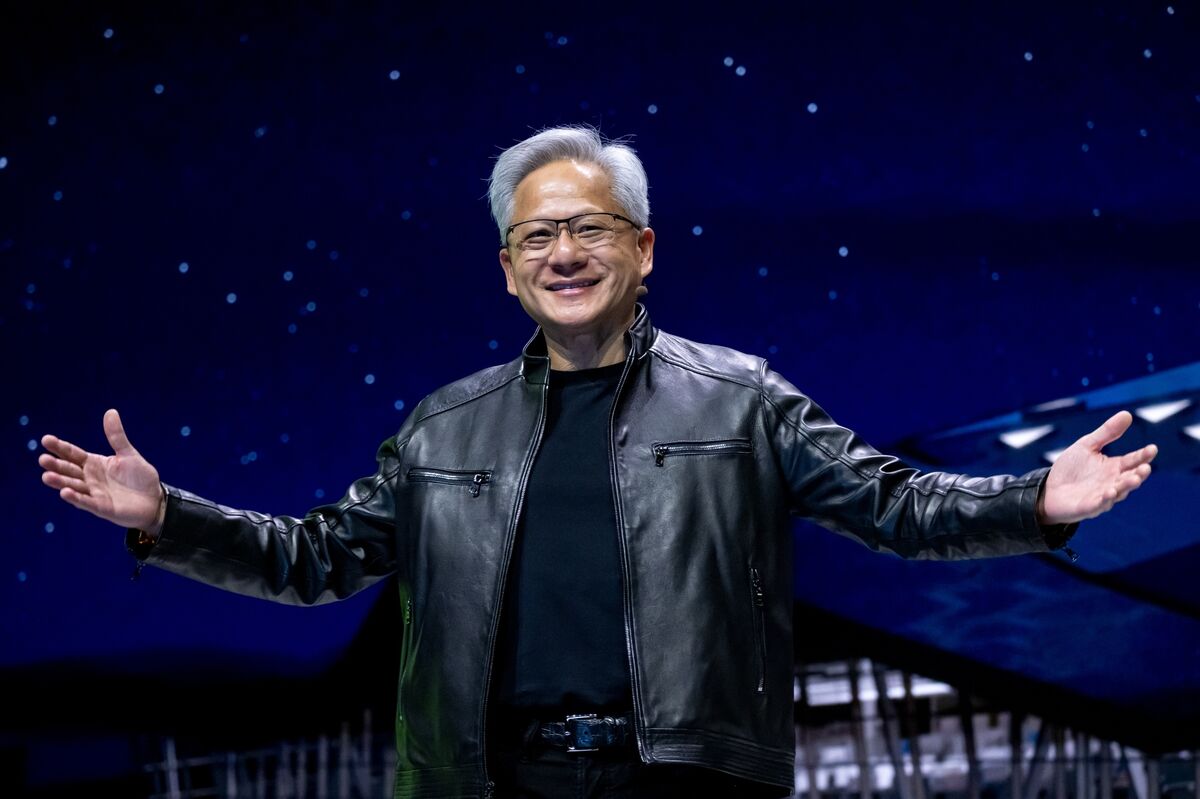
Jensen Huang, CEO of the world’s most valuable chip company, told Bloomberg on April 10, 2026, that companies are too focused on immediate AI profits and should instead chase breakthroughs. This is the same man whose company sells the $30,000 H200 GPUs required for those breakthroughs—and whose quarterly revenue depends on customers buying them faster than they can justify.
- Nvidia CEO Jensen Huang told Bloomberg on April 10, 2026, that companies are too focused on short-term profit from AI and should prioritize breakthroughs instead.
- This statement comes as Nvidia’s data center revenue hit $47.5 billion in Q4 FY2026, with growth slowing—Huang needs new buyers to keep the GPU spigot flowing.
- The tension: Huang’s advice benefits Nvidia’s sales pipeline, but enterprise CFOs who follow it risk billions in stranded assets if AI monetization fails to materialize.
Why Is Huang Suddenly Preaching Altruism Over Profit?
On April 10, 2026, Jensen Huang told Bloomberg that “the biggest risk is not investing enough in AI breakthroughs, not investing too much.” This is rich coming from a CEO whose company just posted a 78% gross margin on hardware that costs pennies to design but sells for tens of thousands of dollars. Huang’s real audience isn’t tech visionaries—it’s the skeptical CFOs who are starting to ask for ROI timelines. By framing profit-seeking as cowardice, Huang is trying to extend the AI investment cycle before the inevitable enterprise pullback. He knows that once companies demand profitability from AI projects, GPU orders will drop. His statement is a preemptive strike against that moment.
Who Actually Benefits From Putting Breakthroughs Before Profit?
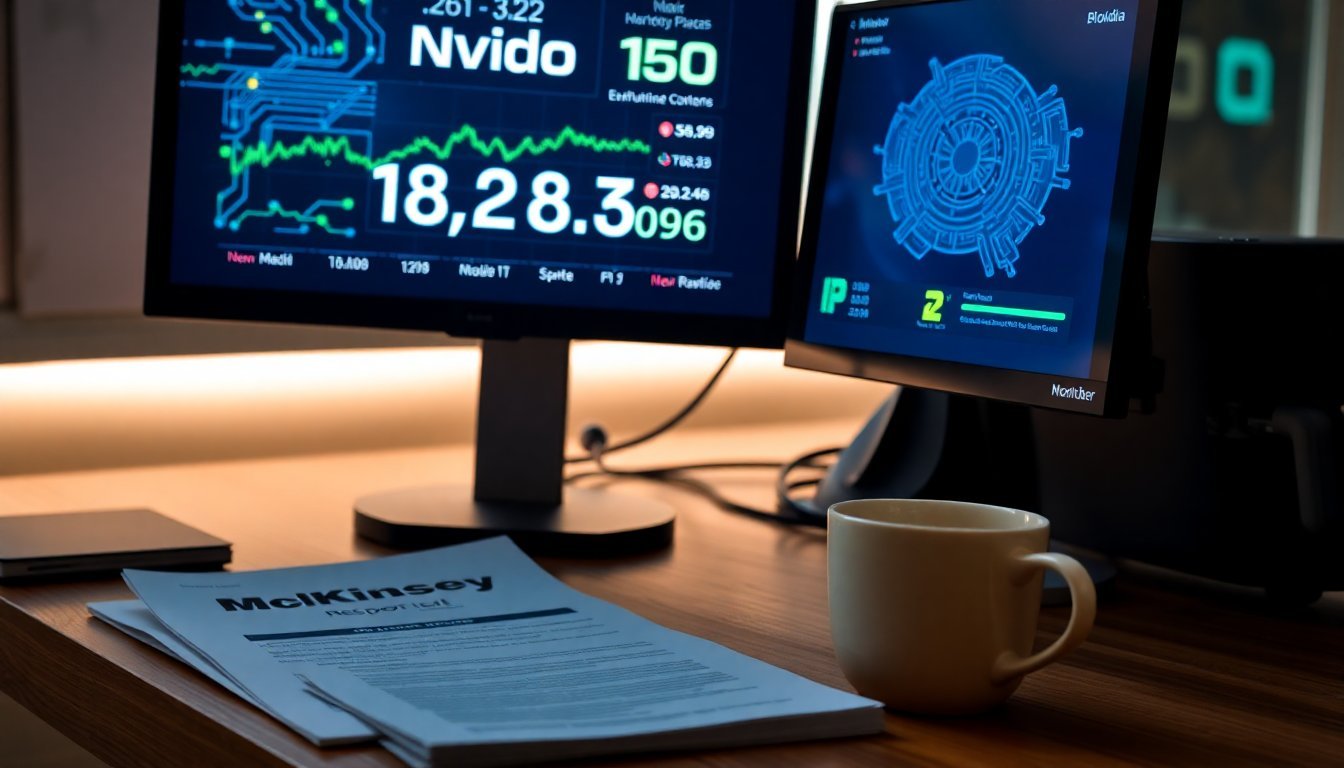
The immediate beneficiary is Nvidia. Every company that postpones ROI analysis to chase “breakthroughs” will need more H200s, more networking gear, and more data center power—all sold by Nvidia. The losers are the enterprises themselves. According to a McKinsey report from February 2026, only 12% of generative AI pilots have moved to production with measurable revenue impact. Huang is asking the other 88% to double down on unproven experiments. The hidden winner is also the hyperscaler cloud providers—Microsoft Azure, AWS, and Google Cloud—who will happily rent GPU time to companies that can’t afford to buy. They win regardless of whether the breakthroughs happen.
Is This a Repeat of the Dot-Com ‘Build It and They Will Come’ Fallacy?
Yes, with one critical difference. In the dot-com era, companies overspent on servers and bandwidth with no clear business model. Today, they are overspending on GPUs and inference compute. The difference is that Nvidia has a near-monopoly on the hardware, so Huang can dictate the narrative. In 2000, Cisco CEO John Chambers urged companies to invest in networking infrastructure for the “new economy.” Cisco’s stock peaked at $80 in March 2000 and didn’t recover for 15 years. Huang’s advice is structurally identical: buy more of my product now, and the profits will follow. History suggests they won’t—at least not for most buyers.
| Dimension | Dot-Com (2000) | AI Boom (2026) |
|---|---|---|
| Narrative Driver | “Build the internet infrastructure” | “Invest in AI breakthroughs” |
| Hardware Seller | Cisco (routers/switches) | Nvidia (GPUs) |
| Typical Buyer | Enterprise IT departments | Enterprise AI/ML teams |
| ROI Timeline Demanded | None (speculative) | None (Huang says wait) |
| Peak Market Cap | Cisco: $569B (March 2000) | Nvidia: $3.2T (April 2026) |
| Verdict | 80% of Cisco buyers saw no ROI within 3 years | Likely same fate for most AI buyers by 2029 |
My thesis is simple: Jensen Huang’s call to prioritize breakthroughs over profit is the most transparently self-serving corporate messaging since Steve Ballmer told developers to “developers, developers, developers” while ignoring mobile. Huang knows that Nvidia’s growth depends on enterprise AI spending remaining speculative. If companies start demanding concrete returns, GPU orders will slow. In the short term, this statement will embolden AI teams to request bigger budgets without accountability. CFOs will be overruled by boards who read Huang’s Bloomberg interview. Nvidia’s Q1 FY2027 earnings, expected in May 2026, will likely show another beat. But the long-term consequence is a wave of stranded assets—companies sitting on racks of GPUs running models that generate no revenue. The biggest loser will be any enterprise that takes Huang’s advice literally and postpones monetization planning. I predict that by Q3 2027, at least three Fortune 500 companies will publicly write down AI infrastructure investments worth over $500 million each, citing “overinvestment without clear business alignment.” The winner, besides Nvidia, will be the consulting firms—McKinsey, Accenture, Deloitte—who will charge millions to clean up the mess.
What Should Enterprise Leaders Actually Do?
Ignore Huang. The correct strategy is to bifurcate AI spending: allocate 20% of the budget to speculative breakthroughs (Huang’s advice) and 80% to projects with measurable ROI within 12 months. This is the approach Microsoft is taking internally, according to a leaked strategy memo from March 2026. The memo explicitly states that “Azure AI projects must demonstrate a path to revenue within two quarters or be deprioritized.” Microsoft is both Nvidia’s largest customer and its competitor in AI services—if they’re not following Huang’s advice, neither should you.
- Prediction 1: By Q4 2026, at least two major US banks will publicly announce AI ROI metrics, contradicting Huang’s thesis, and will see their stock prices rise relative to peers who followed his advice.
- Prediction 2: The EU AI Office will issue guidance in Q1 2027 requiring companies to disclose AI investment ROI assumptions, directly countering Huang’s “breakthroughs first” narrative.
- Prediction 3: Nvidia’s data center revenue growth will decelerate from 45% YoY in Q4 FY2026 to under 20% YoY by Q2 FY2028 as enterprises hit the “profit wall” and cut speculative spending.
- March 2000Cisco CEO urges infrastructure investment
John Chambers tells enterprises to invest in networking for the 'new economy'; Cisco stock peaks at $80.
- February 2026McKinsey reports low AI production rates
Only 12% of generative AI pilots have moved to production with measurable revenue.
- March 2026Microsoft internal memo prioritizes AI ROI
Leaked memo requires Azure AI projects to show revenue path within two quarters.
- April 10, 2026Huang's Bloomberg interview
Nvidia CEO urges companies to put AI breakthroughs before profit.
- Insight 1: Huang’s advice is a textbook example of a dominant supplier trying to extend the investment cycle—every hardware monopolist from IBM to Cisco has used the same playbook.
- Insight 2: The real signal is not Huang’s words but Nvidia’s actions: Nvidia’s own enterprise software division (NVIDIA AI Enterprise) is priced per GPU per year, incentivizing volume, not outcomes.
- Insight 3: The companies most likely to succeed are those like Microsoft and Google, who can afford to experiment because they monetize AI through cloud subscriptions—not through direct AI product sales.
- Insight 4: The “breakthroughs before profit” narrative will accelerate the consolidation of AI talent into a handful of hyperscalers, as smaller companies burn out chasing moonshots.
- Insight 5: This is a leading indicator that Nvidia’s growth is peaking—when the CEO starts moralizing about investment philosophy, the quarterly numbers are about to get harder to beat.
Source and attribution
Bloomberg Technology
Nvidia’s Huang Urges Companies to Put AI Breakthroughs Before Profit






Discussion
Add a comment