

Google's Offline Dictation App Is a Startup Slayer
Google's new offline-first dictation app, powered by Gemma models, targets startups like Wispr Flow. This article argues that Google's distribution and privacy angle will crush competitors, not raw performance.
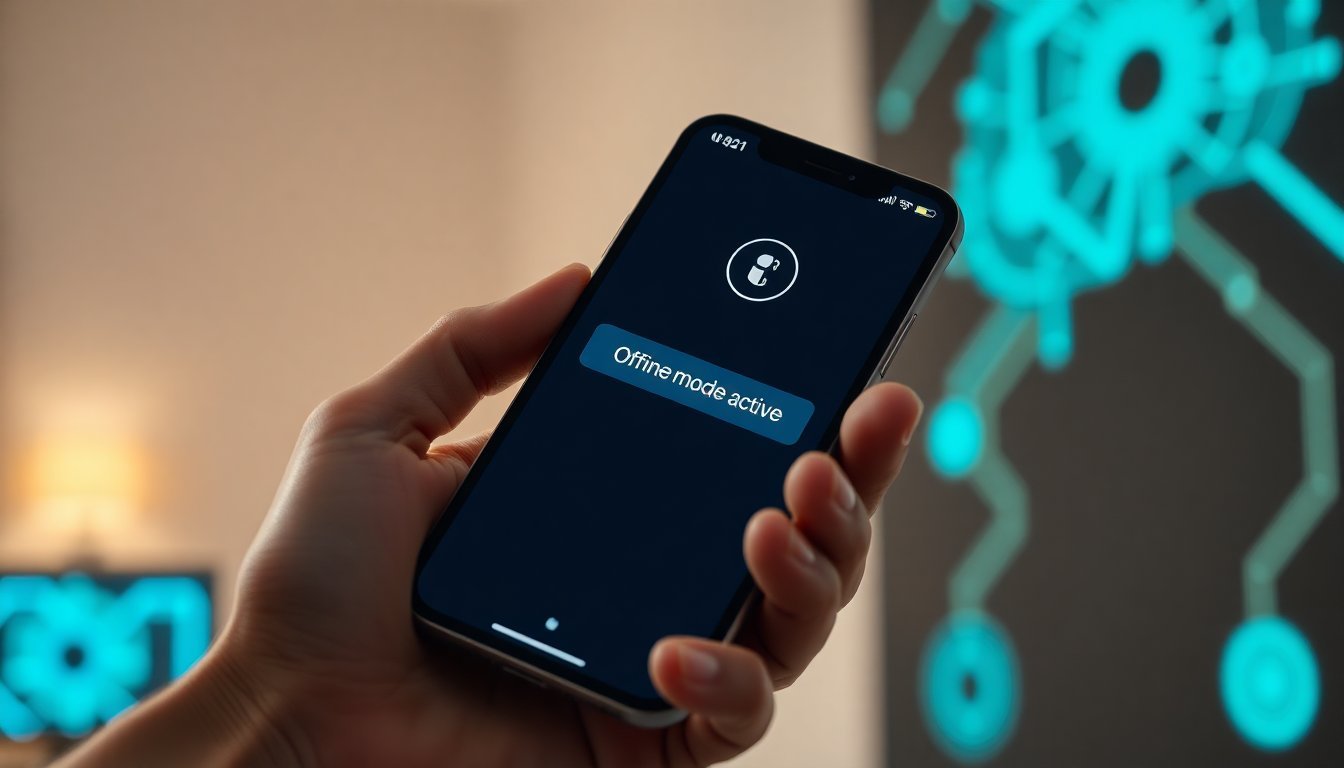
Google just dropped a quiet bomb on the dictation market: an offline-first AI app powered by its own Gemma models. While Wispr Flow and others have been touting cloud-powered speed, Google's move changes the game by eliminating the internet dependency entirely.
- Google launched an offline AI dictation app using Gemma models, challenging Wispr Flow's cloud-based approach.
- The app processes everything on-device, offering privacy and zero latency—no internet required.
- This is a strategic play to own the voice interface on mobile, sidelining third-party apps.
Why Is Google Attacking a Niche Dictation Market?
Most users don't think about dictation apps until they need one. But Google sees this as a wedge into the broader voice-as-input ecosystem. By making dictation offline-first, they remove the two biggest friction points: latency and privacy concerns. TechCrunch reported the app uses Gemma, Google's lightweight open-source model, fine-tuned for transcription. This isn't a side project—it's a direct line into on-device AI dominance.
My take: Google isn't after the 50,000 power users of Wispr Flow. They're after the 50 million casual users who will find the app pre-installed or discover it through the App Store. That's an asymmetrical war.
Who Loses Most: Wispr Flow or the Cloud-Based Dictation Crowd?
Wispr Flow's entire pitch is speed and accuracy—but that relies on sending audio to the cloud. Google's offline app turns that into a liability. If your phone can do it locally, why trust a third-party server? Wispr Flow raised a seed round in 2024, but they now face a competitor with infinite resources and a built-in user base. The comparison is brutal.
| Feature | Google Dictation (Gemma) | Wispr Flow |
|---|---|---|
| Internet Required | No | Yes |
| Privacy (on-device) | Full | Partial (cloud processed) |
| Model | Gemma (custom fine-tuned) | Whisper-based (OpenAI) |
| Distribution | App Store + Google ecosystem | Independent app |
| Latency | Near-zero (local) | Depends on network |
| Cost | Free | Freemium ($10/month pro) |
| Verdict | Winner: Google | Loser: Wispr Flow |
What Does This Mean for On-Device AI Adoption?
Google is betting that users will trade a marginal accuracy dip for total privacy and reliability. Gemma models are smaller than GPT-4 but optimized for phones. If this app gains traction, expect a flood of on-device AI tools from Google—translation, summarization, even image generation. The dictation app is a Trojan horse.
Google's offline dictation app is not a product launch—it's a strategic land grab for the voice interface on mobile. In the short term, Wispr Flow will lose users and valuation. In the long term, Google will bundle this into Android and iOS keyboards, making standalone dictation apps obsolete. I predict that by Q1 2027, Wispr Flow will either pivot to enterprise verticals or be acquired at a discount, because Google's distribution and zero-cost model leaves no room for a consumer competitor.
Will Apple or OpenAI Respond?
Apple has its own on-device dictation, but it's been stagnant. OpenAI's Whisper is cloud-based and expensive to run at scale. Neither has Google's combination of open-source models and device reach. Expect Apple to announce an upgraded dictation feature at WWDC 2026, but they'll be playing catch-up.
Predictions
- Wispr Flow will announce a pivot to enterprise transcription by Q4 2026, abandoning the consumer market.
- Google will integrate this dictation engine into Android's Gboard by Q2 2027, making it the default input method.
- Apple will release an on-device dictation upgrade at WWDC 2026, but it will lack Gemma's fine-tuning, leading to lower accuracy.
Article Summary
- Google's offline dictation app is a strategic play to own voice input, not just a feature release.
- Wispr Flow's cloud dependency becomes a fatal weakness against Google's privacy-first, on-device model.
- The app signals a broader shift: on-device AI will commoditize many cloud-based SaaS tools.
- Google's distribution network makes this an asymmetrical battle—startups cannot compete on scale.
- Expect this to be the first of many on-device AI tools from Google, bundled into core OS features.

Source and attribution
TechCrunch AI
Google quietly launched an AI dictation app that works offline






Discussion
Add a comment