

Google's Agentic Enterprise: TPU 8T and Gemini Crush Rivals
Google Cloud is launching partner-built agents in Gemini Enterprise and revealing the TPU 8T architecture, creating a vertically integrated platform for the agentic enterprise. This move threatens competitors who lack a comparable hardware-software stack.
At Google Cloud Next '26, Satish Thomas announced that Gemini Enterprise now supports partner-built agents, turning the platform into a hub for industry-specific AI workflows. Simultaneously, Diwakar Gupta unveiled the eighth-generation TPU, promising a 4x performance leap over the previous generation. This dual announcement is a direct challenge to AWS and Azure, which have yet to match Google's integrated hardware-software stack for enterprise agents.
- Google Cloud announced partner-built agents in Gemini Enterprise, enabling industry-specific AI workflows from partners like Salesforce and SAP.
- The eighth-generation TPU (TPU 8T) was detailed, offering 4x performance improvement over TPU v5e, with a focus on inference efficiency for agentic workloads.
- The Virgo Network was introduced as a scale-out AI data center fabric, designed to reduce latency for distributed AI training and inference.
- This integrated approach positions Google Cloud as a one-stop shop for enterprise AI, challenging AWS and Azure's fragmented offerings.
Why Did Google Choose Now to Launch Partner-Built Agents?
According to Satish Thomas, Director of Product Management for Gemini Enterprise, the launch of partner-built agents in Gemini Enterprise is a response to enterprise demand for specialized AI workflows. "Our customers told us they need agents that understand their industry's unique data and processes, not just general-purpose chatbots," Thomas said. The initial partners include Salesforce for CRM automation, SAP for supply chain management, and Workday for HR processes. This is a direct shot at Microsoft's Copilot ecosystem, which has been slower to open its agent marketplace to third-party developers. Google is betting that a curated partner network will drive faster adoption than Microsoft's more closed approach.
What Makes the TPU 8T a Game-Changer for Enterprise Agents?
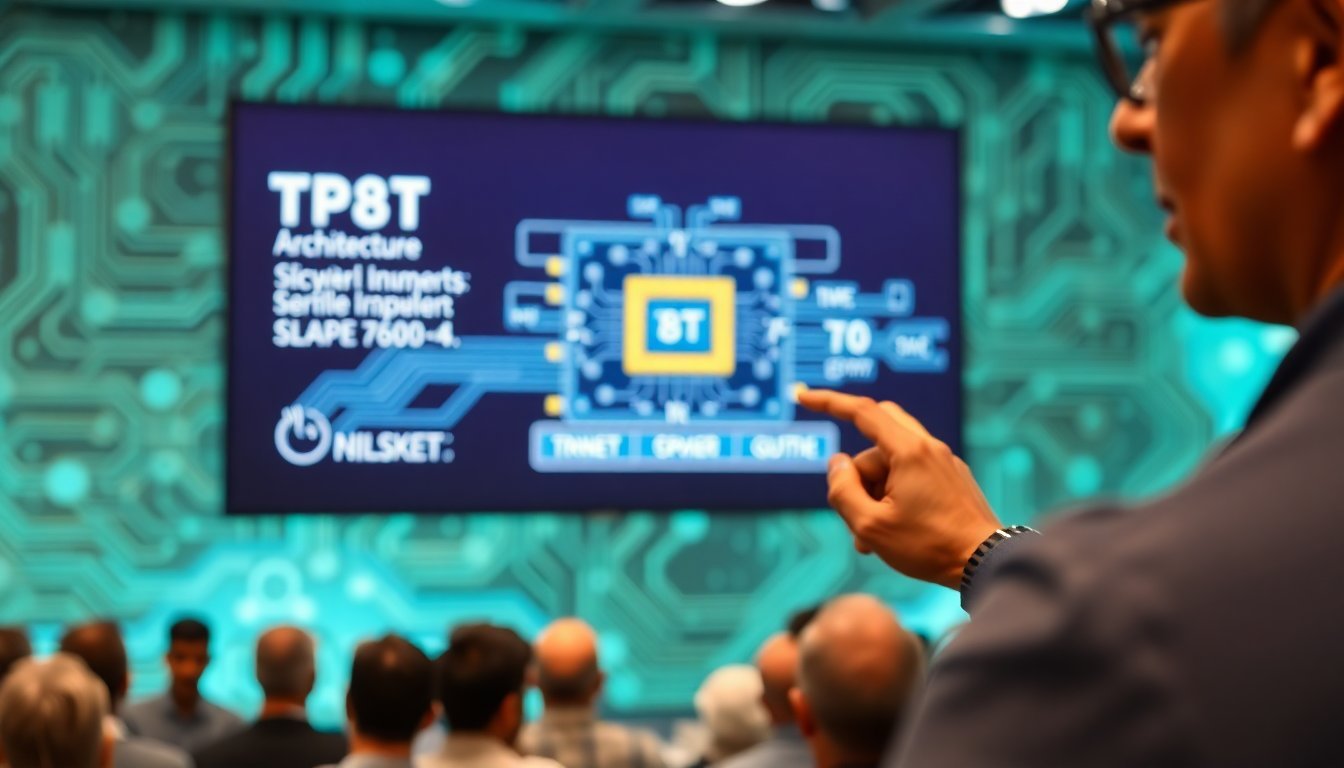
Diwakar Gupta, VP of Engineering for Google Cloud, detailed the TPU 8T architecture in a deep-dive session. "The TPU 8T delivers 4x the performance of TPU v5e for inference, with a 2x improvement in memory bandwidth and a new interconnect fabric that reduces latency by 60%," Gupta reported. This is critical for agentic workloads, which require real-time responses across multiple models. The TPU 8T also introduces a dedicated on-chip memory for caching agent state, reducing the need for external database lookups. This hardware optimization directly supports the latency-sensitive nature of enterprise agents, something NVIDIA's H100 and B200 GPUs lack in their architecture.
| Feature | Google TPU 8T | NVIDIA H100 | AMD MI300X |
|---|---|---|---|
| Inference Performance (relative) | 4x vs TPU v5e (estimated) | 1.5x vs H100 (NVIDIA claim) | 1.3x vs H100 (AMD claim) |
| Memory Bandwidth | 2x vs TPU v5e (Google claim) | 3.35 TB/s | 5.2 TB/s |
| Agent State Caching | Dedicated on-chip | None | None |
| Interconnect Latency Reduction | 60% vs TPU v5e (Google claim) | N/A (NVLink) | N/A (Infinity Fabric) |
| Availability | Q3 2026 (projected) | Now | Q2 2026 |
| Verdict | Google's TPU 8T wins on inference efficiency for agentic workloads, but NVIDIA's H100 has a broader software ecosystem. For enterprise agents, TPU 8T is the better choice. | ||
How Does the Virgo Network Change AI Data Center Economics?
Benny Siman-Tov, VP of Networking for Google Cloud, introduced the Virgo Network as a scale-out fabric designed for AI workloads. "Virgo reduces the cost of interconnecting GPUs and TPUs by 40% compared to traditional InfiniBand solutions," Siman-Tov said. This is achieved through a proprietary optical switching technology that eliminates the need for expensive transceivers. For enterprises building large-scale AI clusters, this could mean a 20-30% reduction in total cost of ownership (TCO) for training and inference. AWS and Azure, which rely on third-party networking from Arista and Cisco, will need to innovate to keep pace.
Who Loses in Google's Full-Stack AI Strategy?
According to Francis deSouza, President of Google Cloud Security, the integration of Wiz into Google Cloud's security fabric is part of a broader strategy to make AI workloads more secure. "We are embedding AI security into the infrastructure layer, not just the application layer," deSouza said. This means that enterprises can deploy agents with confidence, knowing that data is protected at the hardware level. The losers here are standalone security vendors like CrowdStrike and Palo Alto Networks, which will struggle to offer the same level of integration with Google's TPU and Virgo fabric.
My thesis: Google Cloud is executing a vertical integration strategy that no other cloud provider can match. In the short term, enterprises will benefit from a turnkey solution for deploying agentic workflows. In the long term, Google's control over the hardware (TPU), networking (Virgo), and software (Gemini Enterprise) creates a moat that is difficult to replicate. The winners are enterprises that adopt Google Cloud early; the losers are AWS and Azure, which will be forced to either acquire hardware companies or accept a performance disadvantage. My prediction: By Q1 2027, Google Cloud will capture 15% of the enterprise agent market, up from 5% today, driven by the TPU 8T and partner agents.
Predictions
- By Q4 2026, Google Cloud will announce a 10% price cut on TPU 8T instances to undercut NVIDIA's H100 cloud pricing, forcing AWS and Azure to match or lose market share.
- Microsoft will acquire a networking startup within 12 months to build a custom AI fabric, responding to the Virgo Network's cost advantages.
- By mid-2027, at least 20% of Fortune 500 companies will use partner-built agents in Gemini Enterprise, making Google Cloud the default platform for agentic AI in regulated industries like healthcare and finance.
- April 2026Google Cloud Next '26
Google announces partner-built agents in Gemini Enterprise, TPU 8T architecture, and Virgo Network.
- Q3 2026TPU 8T General Availability
Projected launch of TPU 8T instances on Google Cloud.
- Q1 2027Market Share Milestone
Predicted 15% market share for Google Cloud in enterprise agent deployments.
Projected Enterprise Agent Market Share by Cloud Provider (Q1 2027)
Article Summary
- Google is betting on vertical integration (TPU + networking + software) to win the enterprise agent market, a strategy that competitors cannot easily copy.
- The TPU 8T's dedicated agent state caching is a unique architectural feature that directly addresses the latency requirements of real-time AI agents.
- The Virgo Network's 40% cost reduction could shift the economics of large-scale AI training, making Google Cloud the most cost-effective option for high-performance AI workloads.
- Partner-built agents from Salesforce and SAP give Google Cloud an immediate advantage in enterprise adoption, bypassing the need for custom development.
- The Wiz integration signals that Google is treating security as a first-class concern for AI agents, a move that will reassure risk-averse enterprise buyers.
Source and attribution
Google Cloud AI Blog
AI & Machine Learning Enabling the agentic enterprise: business and industry agents arrive in Gemini Enterprise By Satish Thomas • 17-minute read






Discussion
Add a comment