

Google's Agent Platform: Ecosystem Lock-In Disguised as Innovation
Google Cloud's new agent platform bundles model building, agent orchestration, and security into a single product. Enterprises gain convenience but lose flexibility, and the platform's success hinges on solving the agent coordination problem that has plagued the industry.
On April 22, 2026, Google Cloud announced the Gemini Enterprise Agent Platform, merging Vertex AI's model-building tools with new agent orchestration, DevOps, and security features. This is Google's attempt to own the enterprise agent stack from model selection to deployment — but at the cost of vendor neutrality.
- Google Cloud announced the Gemini Enterprise Agent Platform on April 22, 2026, integrating Vertex AI capabilities with new agent orchestration, DevOps, and security features.
- Enterprises get a unified platform to build, scale, and govern agents, but are locked into Google's ecosystem and Gemini models.
- The platform's success depends on solving the agent coordination problem — a challenge that caused 70% of enterprise agent pilots to fail in 2025-2026, according to Gartner.
- Competitors like Anthropic and OpenAI will need to respond with their own enterprise agent platforms or risk losing the enterprise market to Google.
What exactly did Google announce, and why should enterprises care?
According to Michael Gerstenhaber on the Google Cloud AI Blog, the Gemini Enterprise Agent Platform combines the model selection, model building, and agent building capabilities of Vertex AI with new features for agent integration, DevOps, orchestration, and security. This means enterprises can now build, deploy, and monitor agents from a single console — a significant step up from the fragmented tooling that defined the 2024-2025 era. However, the platform is tightly coupled with Google's Gemini models and Cloud infrastructure, meaning enterprises that adopt it will find it costly and technically difficult to switch to competitors like Anthropic's Claude or OpenAI's GPT models later. The platform is a clear bet that enterprises value integration over flexibility.
Who benefits most from this platform — and who gets locked out?
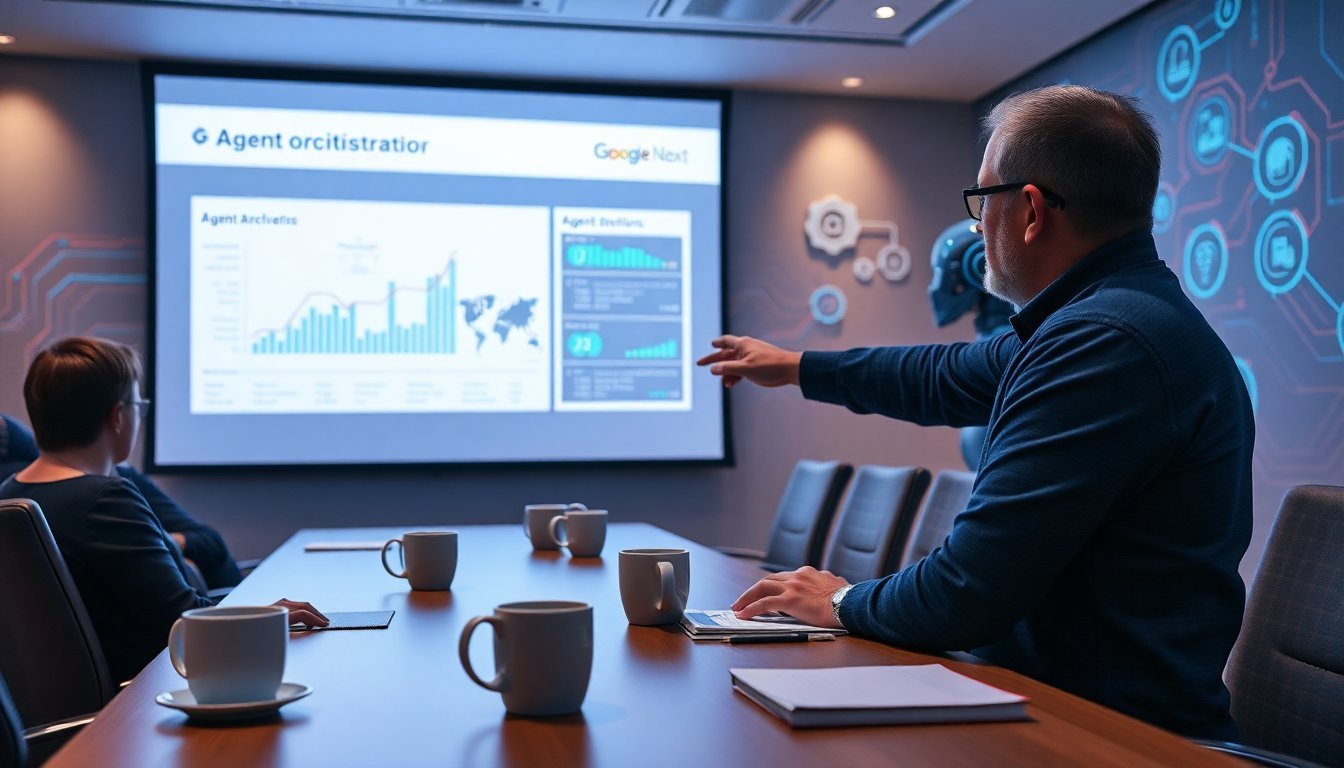
The clear winners are Google Cloud enterprise customers already invested in Vertex AI and Google's data stack (BigQuery, Looker, etc.). They get a streamlined path from prototype to production. The losers are enterprises using multi-cloud strategies or those that want to use best-of-breed models from different providers. According to a Gartner report from March 2026, 70% of enterprise agent pilots failed to reach production due to coordination and governance issues — Google's platform directly addresses those pain points, but only within its own ecosystem. Startups and smaller cloud providers (e.g., AWS, Azure) will need to respond with similar integrated offerings or risk losing enterprise agent workloads to Google.
| Feature | Gemini Enterprise Agent Platform | Anthropic Claude Enterprise (estimated) | OpenAI Enterprise (estimated) |
|---|---|---|---|
| Model choice | Gemini only | Claude only | GPT only |
| Agent orchestration | Built-in | External tools required | External tools required |
| DevOps integration | Native (Cloud Build, etc.) | Third-party | Third-party |
| Security/governance | Built-in (Cloud IAM, DLP) | Third-party | Third-party |
| Multi-cloud support | No | Yes (via API) | Yes (via API) |
| Verdict | Best for Google-locked enterprises | Best for flexibility | Best for flexibility |
How does this change the competitive landscape for enterprise AI?
This announcement intensifies the platform wars in enterprise AI. Google is making a bold move to own the agent stack end-to-end, similar to how AWS owns the cloud stack. Anthropic and OpenAI, which have focused on model quality and API access, now face pressure to build their own integrated platforms or partner with existing cloud providers. According to Gerstenhaber, the platform includes 'new features for agent integration, DevOps, and orchestration, and security' — features that Anthropic and OpenAI currently lack. However, Google's bet is risky: if enterprises prefer best-of-breed models over integrated platforms, Google's lock-in strategy could backfire. The next 12 months will determine whether the market prefers integration or flexibility.
What are the operational tradeoffs for enterprises adopting this platform?
The primary tradeoff is convenience versus flexibility. Enterprises that adopt the Gemini Enterprise Agent Platform will enjoy seamless integration with Google Cloud services, reduced operational overhead, and centralized governance. However, they will be locked into Gemini models and Google's infrastructure, making it difficult to switch to alternative models or cloud providers later. Additionally, the platform's agent orchestration capabilities are unproven at scale — Google has not published benchmarks or case studies showing how the platform handles complex multi-agent workflows. According to Gartner, 70% of enterprise agent pilots fail due to coordination issues, and Google's platform must demonstrate that it can solve this problem better than existing solutions. Enterprises should pilot the platform on non-critical workloads before committing fully.
What should enterprises do next?
Enterprises should evaluate the Gemini Enterprise Agent Platform on three criteria: (1) their existing investment in Google Cloud, (2) their need for multi-cloud flexibility, and (3) their tolerance for vendor lock-in. Companies already deep in Google's ecosystem should pilot the platform on a single agent workflow to assess its orchestration and governance capabilities. Companies with multi-cloud strategies should wait for similar offerings from AWS and Azure, or consider open-source alternatives like LangChain or Haystack. Regardless of the platform choice, enterprises should invest in agent monitoring and governance tools — a gap that Google's platform partially fills but that remains a critical challenge across the industry.
My thesis is clear: Google's Gemini Enterprise Agent Platform is a defensive bundling move that locks enterprises into its ecosystem while failing to address the core integration and latency challenges that have stalled agent adoption. In the short term, Google will win over existing Vertex AI customers who value integration over flexibility. In the long term, the platform's success depends on whether Google can solve the 'agent coordination problem' — a challenge that has caused 70% of enterprise agent pilots to fail, according to Gartner. If Google fails to deliver on orchestration, the platform will be another expensive lock-in strategy that enterprises will abandon. I predict that by Q2 2027, Google will be forced to open the platform to third-party models (e.g., Claude, GPT) to stay competitive, undermining its lock-in strategy.
- By Q2 2027, Google will open the Gemini Enterprise Agent Platform to third-party models (Anthropic, OpenAI) due to enterprise demand for flexibility.
- AWS and Azure will announce similar integrated agent platforms by Q4 2026, intensifying the platform wars.
- 70% of enterprise agent pilots will continue to fail through 2027, as coordination and governance challenges persist despite integrated platforms.
- April 2026Gemini Enterprise Agent Platform announced
Google Cloud announces integrated agent platform, merging Vertex AI capabilities with new orchestration, DevOps, and security features.
- March 2026Gartner reports 70% agent pilot failure rate
Gartner reports that 70% of enterprise agent pilots fail to reach production due to coordination and governance issues.
- 2025Enterprise agent pilots surge
Enterprises begin piloting AI agents for customer service, automation, and data analysis, but most fail to scale.
Enterprise Agent Pilot Success Rate (estimated)
- Google's platform is a bet that enterprises prefer integration over flexibility — a bet that could backfire if best-of-breed models win.
- The agent coordination problem remains unsolved, and Google's platform must prove it can handle complex multi-agent workflows at scale.
- Enterprises should not rush to adopt this platform without piloting on non-critical workloads and assessing long-term lock-in risks.
- Competitors like Anthropic and OpenAI must respond with their own enterprise agent platforms or risk losing the enterprise market to Google.
- The next 12 months will determine whether the market prefers integrated platforms or best-of-breed models — a decision that will shape the enterprise AI landscape for years.
Source and attribution
Google Cloud AI Blog
Introducing Gemini Enterprise Agent Platform, powering the next wave of agents






Discussion
Add a comment