
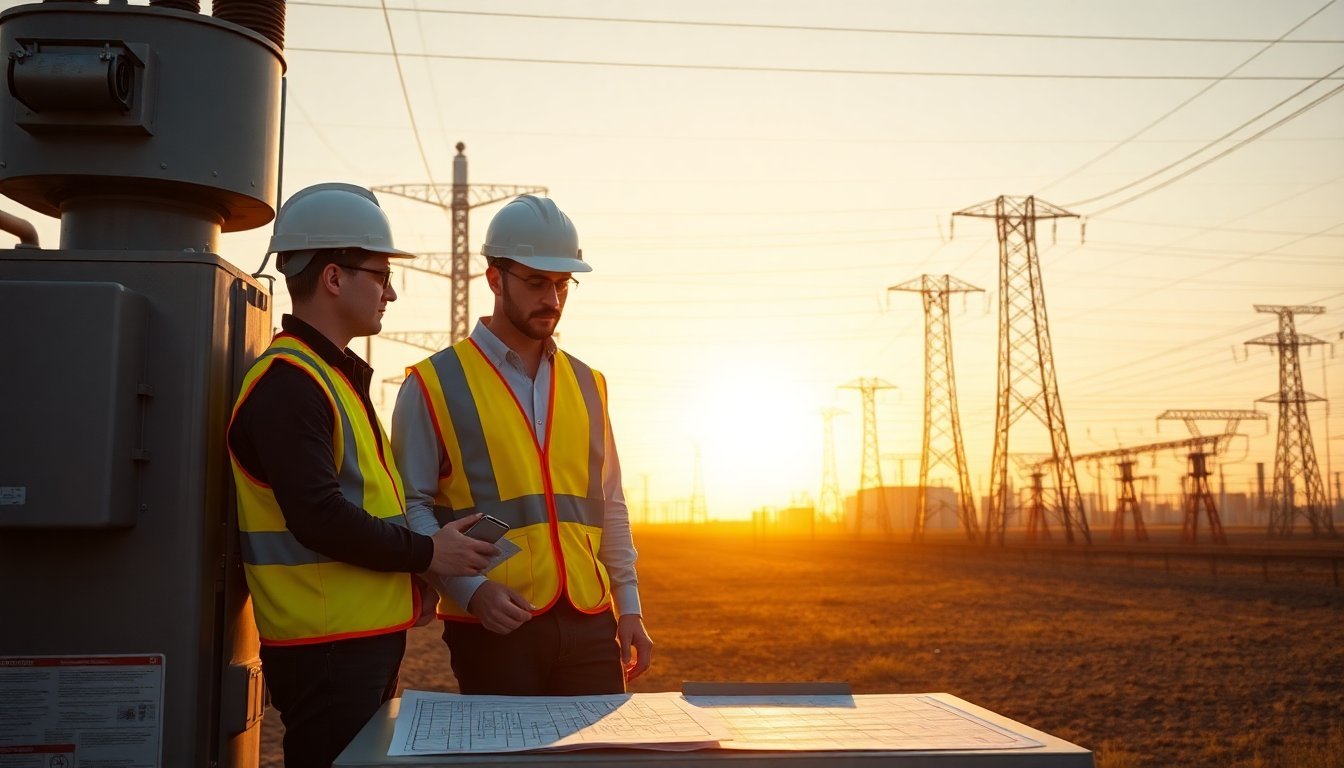
Google, Nvidia, Anthropic's 100 GW Grid Land Grab
A new coalition of Google, Nvidia, Anthropic, and Emerald AI wants to locate 100 GW of grid capacity for AI data centers. The move signals that power, not silicon, is now the bottleneck for AI scaling — and that grid access is becoming a competitive weapon.
Google, Nvidia, Anthropic, and Emerald AI announced a coalition on September 17, 2026, to find 100 GW of grid capacity for new data centers — roughly the output of 100 large nuclear reactors. This is the first time the three most powerful players in the AI stack have jointly admitted that the binding constraint on AI is no longer chips or models, but electrons.
- What happened: Google, Nvidia, Anthropic, and Emerald AI formed a coalition on September 17, 2026, to find 100 GW of grid capacity for new AI data centers.
- Why it matters: 100 GW is roughly 100 nuclear reactors' worth of capacity — more than the entire peak demand of a mid-sized country.
- Key tension: The coalition frames grid access as a shared infrastructure problem, but the members are also the primary beneficiaries, raising questions about who pays and who gets priority.
- What to watch: Whether utilities and regulators treat this as a partnership or a land grab.
What exactly is the 100 GW target, and is it even achievable?
TechCrunch reported that the coalition — Google, Nvidia, Anthropic, and Emerald AI — is targeting 100 GW of grid capacity for new data centers. For context, the entire U.S. installed capacity is roughly 1,200 GW, and peak demand is around 740 GW. Adding 100 GW of data-center load would represent a more than 13% increase in peak U.S. electricity demand, and that is before accounting for the generation, transmission, and interconnection timelines that routinely stretch 5–10 years.
According to TechCrunch, the coalition is not building power plants; it is searching for existing or planned grid capacity that can be reallocated or accelerated. That is a siting and permitting play, not an energy-generation play. The 100 GW figure is therefore less a forecast than a lobbying target — a number designed to force utilities and regulators to treat AI load as a national priority.
Why does Nvidia care about grid capacity when it sells chips?
Nvidia's participation is the most telling signal. Nvidia does not buy electricity at scale; it sells the GPUs that consume it. But if data centers cannot get powered, Nvidia's order book stalls. According to TechCrunch, Nvidia is part of the coalition, which means the company is effectively underwriting demand-side infrastructure to protect its own supply chain.
This is a reversal of the usual dynamic. For the past three years, Nvidia's constraint was TSMC's packaging capacity. Now the constraint is the local utility. Nvidia joining a grid-access coalition is an admission that its growth ceiling is no longer fab capacity but interconnection queues.
What does Anthropic get out of a coalition led by Google and Nvidia?
Anthropic is the odd member out. Google is an investor and cloud rival; Nvidia is a supplier to every lab. Anthropic's presence suggests it wants to avoid being disadvantaged by deals struck between Google and utilities that could prioritize Google Cloud regions. By joining early, Anthropic gets a seat at the table where siting and capacity allocations are discussed.
TechCrunch reported the coalition includes Anthropic alongside Google and Nvidia. The subtext is that Anthropic cannot afford to be excluded from a process that will determine where the next generation of training clusters can be built. If 100 GW is allocated through coalition-favored channels, non-members — including Meta, xAI, and smaller labs — face higher costs and longer waits.
Who is Emerald AI, and why is it the linchpin?
Emerald AI is the least-known member but arguably the most important. It is the entity tasked with actually finding the capacity — navigating utility territories, interconnection queues, and state regulatory commissions. According to TechCrunch, Emerald AI is the coalition partner responsible for the grid search.
This makes Emerald AI a new kind of AI infrastructure intermediary: not a cloud provider, not a chipmaker, but a power broker. If it succeeds, it becomes the de facto clearinghouse for AI data-center siting in the U.S., with enormous leverage over which labs and clouds get powered first.

How does this coalition compare to other AI infrastructure plays?
| Initiative | Lead actors | Primary constraint addressed | Scale | Risk |
|---|---|---|---|---|
| Emerald AI coalition | Google, Nvidia, Anthropic, Emerald AI | Grid capacity and interconnection | 100 GW target | Regulatory pushback, ratepayer costs |
| OpenAI-Stargate | OpenAI, Oracle, SoftBank | Data-center construction and capital | ~10 GW committed | Financing and execution |
| Microsoft-Fusion deals | Microsoft, Helion | Long-term generation | Unspecified, 2030s | Technology unproven at scale |
| Amazon nuclear PPA | Amazon, Talen | Behind-the-meter generation | ~1 GW | Local opposition, cost |
| Verdict | Emerald AI coalition | Grid access is the deepest moat | 100 GW dwarfs peers | Winners: coalition members; losers: non-members and ratepayers |
Thesis: The Emerald AI coalition is not a public-good infrastructure initiative — it is a coordinated attempt by the three most powerful AI companies to lock up grid capacity before competitors and regulators can organize a response.
In the short term, the coalition will use its combined lobbying weight to push utilities and state regulators to fast-track interconnection for member-favored projects. Google and Nvidia have the capital and political relationships to make this happen. Anthropic gets defensive cover. In the long term, if 100 GW is allocated through coalition channels, grid access becomes the new GPU allocation — a scarce resource controlled by a cartel of incumbents.
The losers are clear: Meta, xAI, Mistral, and every startup that cannot afford to wait 7 years in an interconnection queue. Also losing are residential ratepayers, who may see utility bills rise as data-center load forces new transmission and generation investments. The gainers are the coalition members and Emerald AI, which becomes a critical chokepoint.
Prediction: By Q2 2027, at least one state public utility commission — likely in Virginia, Texas, or Ohio — will open a formal docket on whether to grant preferential interconnection treatment to coalition-affiliated data centers, and Google or Nvidia will file comments in support.
- Google will announce a specific 10+ GW data-center campus in a U.S. utility territory by Q1 2027, citing the Emerald AI coalition's siting work as the enabling factor.
- The Federal Energy Regulatory Commission (FERC) will open an inquiry into large-load interconnection practices by mid-2027, driven by complaints from non-coalition utilities and consumer advocates.
- Meta or xAI will announce a competing grid-access coalition by Q3 2027, explicitly framed as a counterweight to the Google-Nvidia-Anthropic bloc.
- September 2026Emerald AI coalition announced
Google, Nvidia, Anthropic, and Emerald AI form a coalition to find 100 GW of grid capacity for AI data centers.
- Q1 2027 (projected)First major siting announcement expected
Coalition likely to announce a specific multi-gigawatt data-center campus tied to Emerald AI's grid search.
- Mid-2027 (projected)FERC inquiry into large-load interconnection
Regulators expected to examine whether preferential grid access for AI data centers is fair to other ratepayers.
Announced AI Data Center Power Targets (GW, estimated)
What should the industry remember from this?
- Power, not chips, is now the binding constraint on AI scaling — and the Emerald AI coalition is the first organized attempt to solve it at scale.
- The coalition's structure — three AI giants plus one intermediary — concentrates grid access in a way that could disadvantage non-members for years.
- Regulators and utilities are the new gatekeepers of AI progress, and they have not yet shown they are ready for that role.
- Nvidia's participation proves that even the most dominant chipmaker sees grid capacity as an existential risk to its order book.
- Watch Emerald AI: if it succeeds, it becomes the most important AI infrastructure company most people have never heard of.

Source and attribution
TechCrunch AI
Google, Nvidia, and Anthropic want Emerald AI to find space on the grid for more data centers






Discussion
Add a comment