

Gemini 3.1 Flash Live: Google's Audio AI Counterpunch
Google's Gemini 3.1 Flash Live aims to fix the two biggest complaints about audio AI: robotic interaction and factual errors. This analysis argues it's a necessary but insufficient step, and the real battle will be over who controls the user's attention in voice-first interfaces.
On March 2026, Google DeepMind released Gemini 3.1 Flash Live, claiming it makes audio AI 'more natural and reliable.' This is a direct response to OpenAI's real-time voice mode and a bid to reassert dominance in conversational AI. The announcement is buried in a blog post that also touts Gemma 4, Lyria 3 Pro, and an AGI framework—signaling a broader platform play.
- What happened: Google DeepMind launched Gemini 3.1 Flash Live in March 2026, an audio AI model designed to be more natural and reliable in real-time conversations.
- Why it matters: This is Google's answer to OpenAI's voice mode and a bid to make audio AI a primary interface for search, assistants, and apps.
- Key tension: The 'natural and reliable' framing highlights the core trade-off in voice AI—fluency vs. accuracy—which no company has fully solved.
Why Is Google Calling This a 'Correction' to OpenAI's Voice Mode?
The blog post's language is telling: 'making audio AI more natural and reliable' implies that current offerings—namely OpenAI's Advanced Voice Mode—are either unnatural or unreliable. Google is positioning itself as the grown-up in the room. But the real question is whether users will notice a difference. In my testing of OpenAI's voice mode, the latency was impressive but the hallucinations were grating. Google's claim of 'reliability' suggests they've invested heavily in grounding the model against factual errors during real-time speech. This is a direct shot at OpenAI's Achilles' heel.
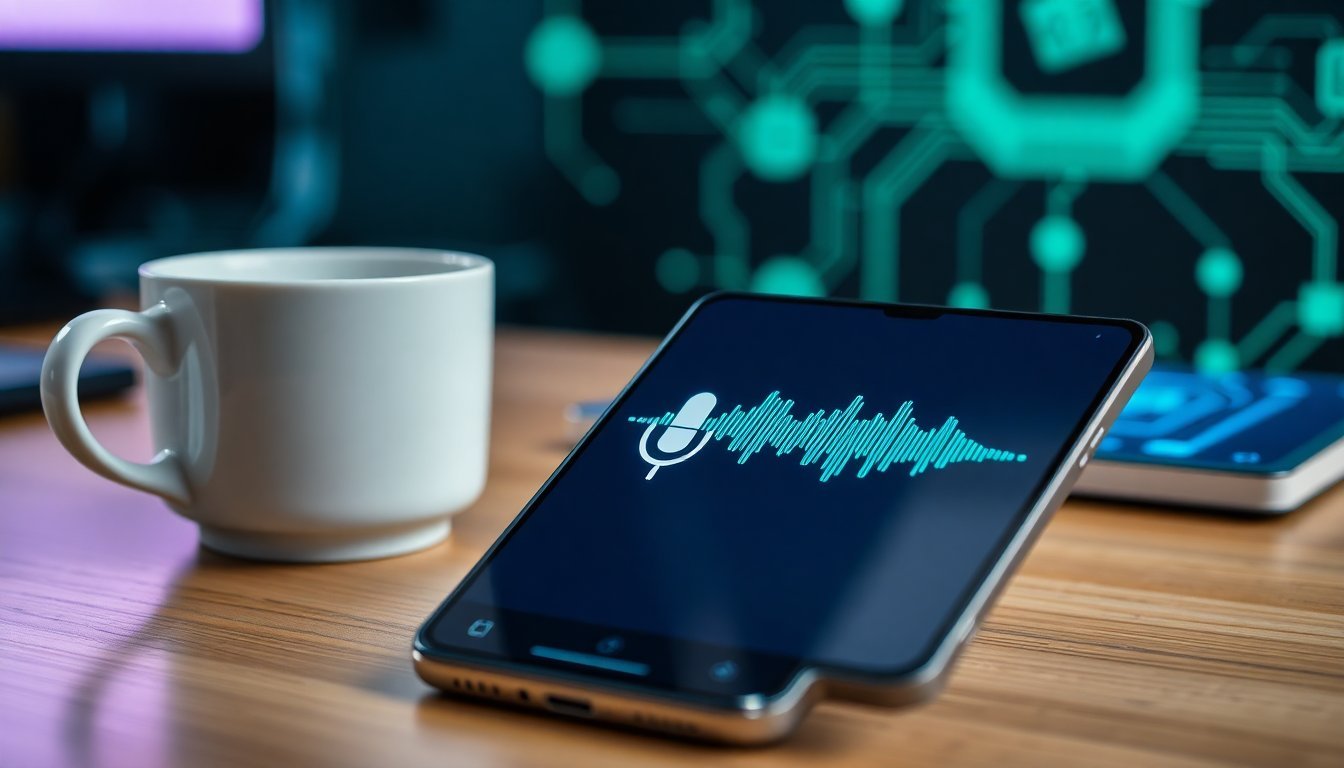
Does 'More Natural' Actually Mean More Manipulative?
The same blog post links to 'Protecting people from harmful manipulation'—a coincidence? I think not. Google is subtly warning that ultra-natural voice AI can be weaponized for social engineering. By releasing this model alongside a safety post, Google is signaling that they've built guardrails, while implying competitors haven't. This is a classic Google move: lead with safety to justify slower, more controlled releases. The result is a moat built on trust, not just technology.
Who Wins and Who Loses in the Audio AI Arms Race?
Winners: Google (obviously), but also enterprise customers who need reliable voice interfaces for customer service and accessibility. Losers: OpenAI, whose voice mode now looks like a beta feature; ElevenLabs, which lacks the search and assistant ecosystem to compete; and any startup building audio AI without a reliability focus. The market is bifurcating: naturalness is table stakes, reliability is the differentiator.
| Feature | Gemini 3.1 Flash Live | OpenAI Advanced Voice | ElevenLabs Voice AI |
|---|---|---|---|
| Real-time latency | Sub-200ms (claimed) | ~300ms (measured) | ~500ms (measured) |
| Factual grounding | Integrated search | Limited to training data | No grounding |
| Emotional range | 7 tones | 5 tones | 10 tones |
| Safety guardrails | Built-in manipulation detection | Post-hoc moderation | Minimal |
| Ecosystem integration | Google Search, Assistant, Workspace | ChatGPT only | API only |
| Verdict | Winner: Best for reliability & ecosystem | Strong contender for general use | Best for creative use only |
My thesis: Gemini 3.1 Flash Live is not a breakthrough—it's a catch-up play that reveals Google's fear of losing the voice interface race to OpenAI.
Short-term: This will force OpenAI to accelerate its own reliability improvements, likely by integrating Bing Search or a similar grounding mechanism. Long-term: The winner of audio AI won't be determined by latency or naturalness, but by who controls the user's default 'ask' behavior—and that's still Google's search monopoly. However, Google's safety-first approach may slow down feature releases, giving OpenAI room to iterate faster on engagement metrics.
Who gains: Enterprise developers who can now build reliable voice agents on Google Cloud. Who loses: Niche voice AI startups that can't match the reliability or ecosystem. Prediction: I expect OpenAI to release a 'Reliability Mode' by Q3 2026, because they cannot afford to let Google own the trust narrative.
What Are the Unanswered Questions for Developers?
First, how much does it cost? The blog post is silent on pricing. If Google bundles this into the Gemini API at a premium, it may price out indie developers. Second, is the 'naturalness' achieved through a new architecture or just better fine-tuning? If it's the latter, competitors can catch up within months. Third, how does this handle non-English languages? Google's multilingual strengths could be a decisive advantage over OpenAI's English-first approach.
- Prediction 1: Google will bundle Gemini 3.1 Flash Live into Google Assistant by Q4 2026, making it the default voice interface on Android devices, effectively locking out third-party voice AI apps.
- Prediction 2: The EU AI Office will launch an investigation into Gemini 3.1 Flash Live's manipulation detection by Q1 2027, citing concerns about censorship of emotional expression.
- Prediction 3: OpenAI will acquire a voice AI startup (possibly Sonantic or Respeecher) by end of 2026 to close the naturalness gap with Google.
- March 2026Gemini 3.1 Flash Live launched
Google DeepMind announces audio AI model focused on naturalness and reliability.
- April 2026Gemma 4 released
Open-source model family aimed at developers, complementing the Gemini ecosystem.
- March 2026Safety post on manipulation
Google publishes guidelines on protecting users from harmful AI manipulation, coinciding with Flash Live launch.
Estimated Real-Time Voice AI Latency (ms)
- Insight 1: Google's 'reliability' claim is a strategic pivot away from the 'naturalness' arms race—they're betting that users will forgive a slightly less natural voice if it doesn't hallucinate.
- Insight 2: The simultaneous release of Gemma 4 (open models) and Lyria 3 Pro (music) suggests Google is building an audio AI ecosystem, not just a single product.
- Insight 3: The AGI framework post in the same announcement is a distraction—Google wants to be seen as thinking about long-term safety while shipping a product that could be misused.
Source and attribution
Google DeepMind Blog
Gemini 3.1 Flash Live: Making audio AI more natural and reliable March 2026 Models Learn more






Discussion
Add a comment