
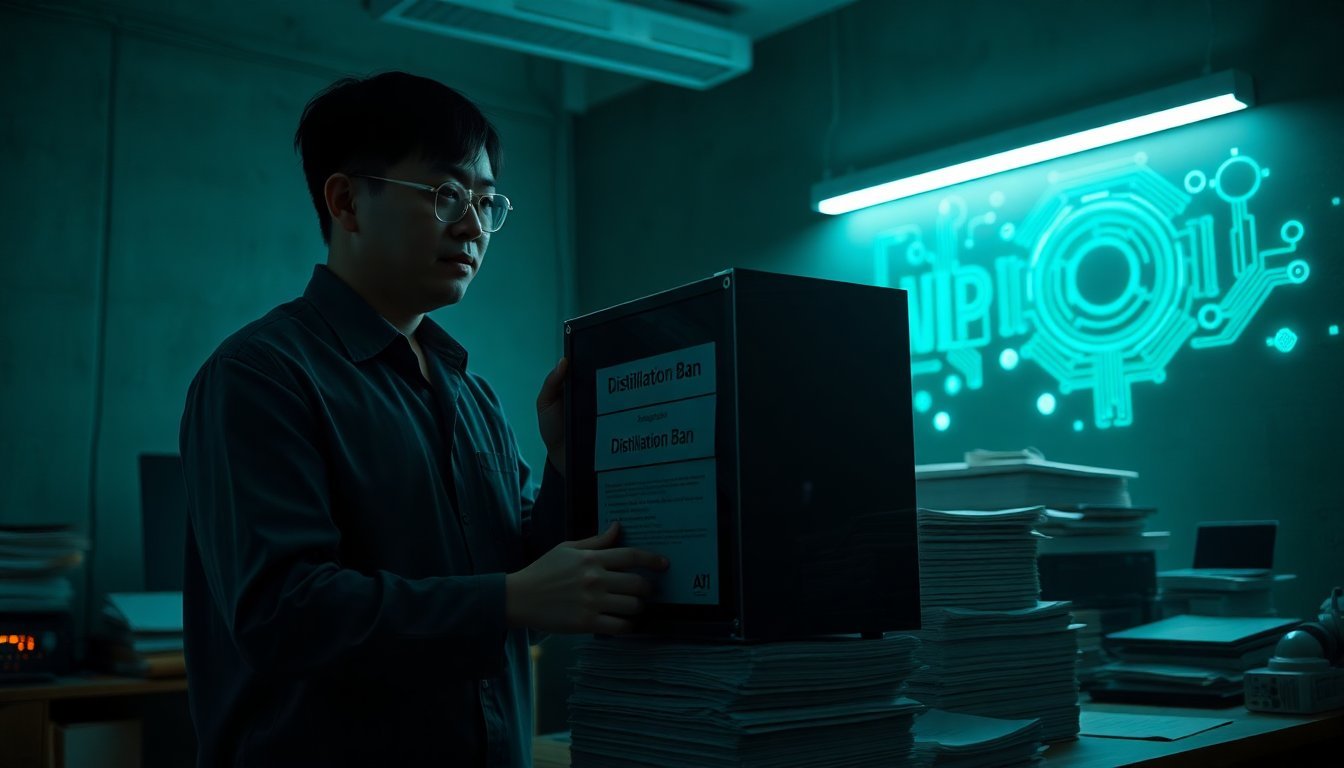
Distillation Ban: Washington's AI Trap for China May Backfire
Washington is considering new restrictions on 'adversarial distillation' after warnings from Anthropic and OpenAI. This analysis argues the move will likely fail to stop Chinese AI progress and instead accelerate a technological decoupling that hurts US AI companies long-term.
Anthropic and OpenAI have publicly warned Washington about 'adversarial distillation'—a technique where Chinese entities use US AI models to train their own cheaper competitors. This has reignited a decade-old Silicon Valley debate about openness versus security, but the proposed cure may be worse than the disease.
- What happened: Anthropic and OpenAI issued warnings to US policymakers about 'adversarial distillation,' a process where Chinese firms use outputs from US frontier models to train their own high-performing but cheaper models.
- Why it matters: This has revived the foundational Silicon Valley debate between open AI access and national security, with Washington now considering export controls on model outputs, not just hardware.
- The key tension: Restricting distillation could protect US intellectual property but also risks accelerating China's drive for full AI self-sufficiency, potentially creating two incompatible global AI ecosystems.
What Exactly Is 'Adversarial Distillation' and Why Is It a National Security Issue Now?
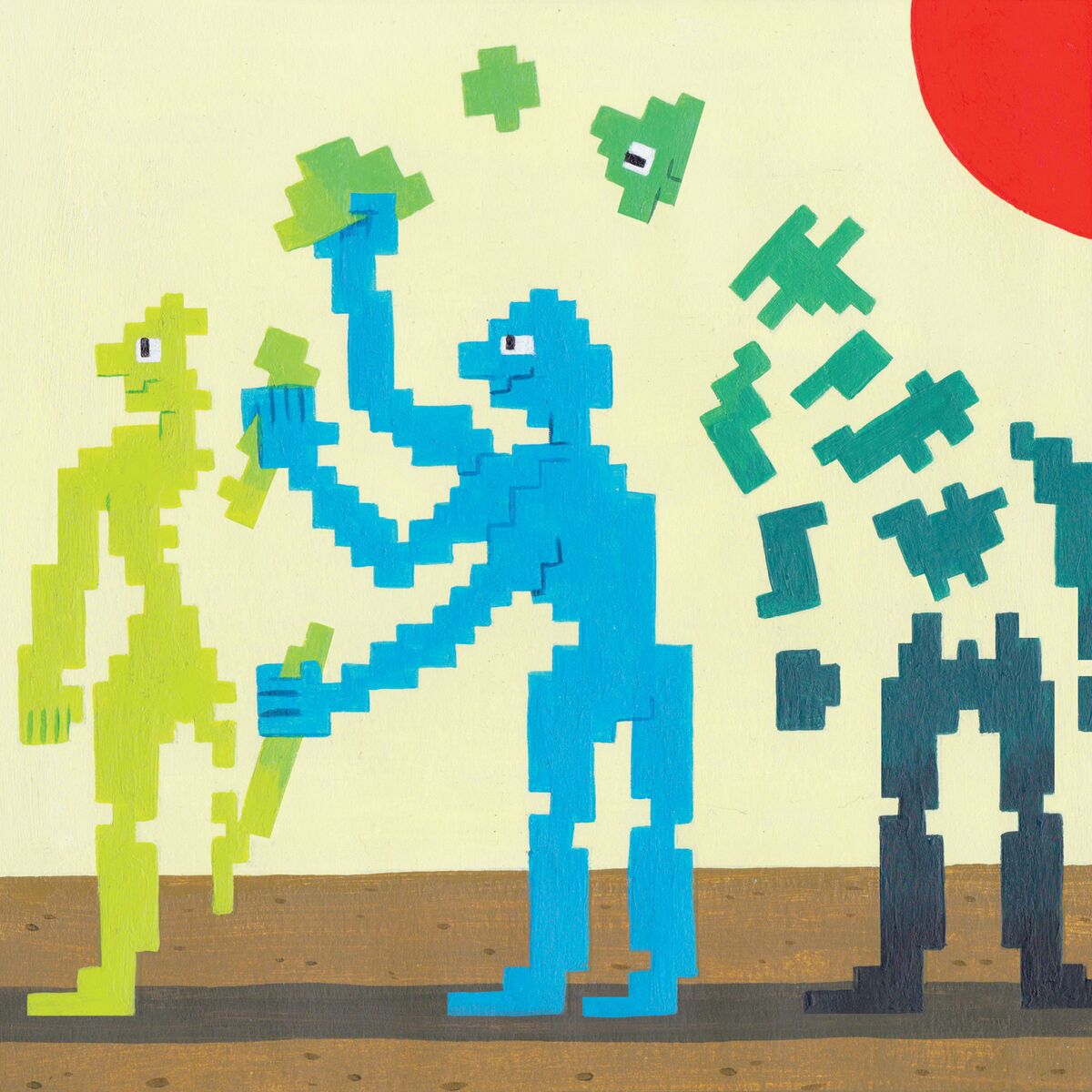
According to Anthropic's policy team, adversarial distillation is a technique where a user systematically queries a frontier AI model—like Anthropic's Claude or OpenAI's GPT-5—and uses the responses to train a smaller, cheaper student model. 'The student model can achieve similar performance on specific tasks at a fraction of the cost,' Anthropic said in a July 2026 briefing to policymakers. The company argued this effectively allows Chinese entities to 'steal' the expensive reasoning developed by US firms without paying for the underlying compute or R&D.
Bloomberg reported that OpenAI's government affairs team echoed these concerns, stating that distillation 'undermines the economic viability of US frontier AI development' and could allow China to leapfrog US capabilities. The timing is critical: as of mid-2026, US export controls on advanced semiconductors (like NVIDIA's H200 and B200) have made it harder for China to train frontier models from scratch. Distillation offers a workaround—use a US model's intelligence without needing the same hardware.
My take: This is a legitimate technical concern, but the framing is convenient. Both Anthropic and OpenAI have commercial interests in limiting free access to their APIs. The national security angle gives them cover to raise prices or restrict usage without appearing anti-open-source.
Will Restrictions on Distillation Actually Slow Down China's AI Progress?
History suggests no. According to a 2025 study by the Center for Security and Emerging Technology (CSET), Chinese AI labs have demonstrated remarkable adaptability to US export controls. When NVIDIA's A100 chips were restricted, Chinese firms like Huawei and Cambricon developed domestic alternatives within 18 months. The pattern repeats: restriction breeds innovation.
Furthermore, distillation is not the only path to model improvement. Chinese researchers have published extensively on 'self-play' reinforcement learning and synthetic data generation—techniques that don't require a teacher model. DeepSeek's R1 model, released in early 2026, showed competitive performance on math and coding benchmarks without relying on distillation from US models, according to independent benchmarks from EvalPlus.
My take: I believe Washington is overestimating the leverage it has. If the goal is to maintain US AI leadership, restricting distillation may be counterproductive. It will push Chinese labs to invest more heavily in foundational research, potentially leading to novel architectures that US companies will then have to catch up to.
| Dimension | US Approach (Restrict Distillation) | China's Likely Response |
|---|---|---|
| Immediate Impact | Slows Chinese model improvement for 6-12 months | Accelerates domestic R&D investment |
| Cost to US AI Firms | Short-term API revenue protection | Long-term loss of global market share |
| Innovation Trajectory | Defensive, protectionist | Offensive, forced self-sufficiency |
| Open Source Ecosystem | Fragmented, US-centric | Chinese open-source models gain traction globally |
| Geopolitical Outcome | Bifurcated AI standards | China becomes independent AI superpower |
| Verdict | Short-term win for US incumbents | Long-term win for Chinese ecosystem |
Who Benefits Most From This Debate—Anthropic, OpenAI, or Chinese Labs?
The clear short-term beneficiaries are Anthropic and OpenAI. By framing distillation as a national security threat, they can justify stricter API terms, higher pricing, and potentially government subsidies to offset 'losses' from adversarial use. Bloomberg noted that both companies have been lobbying for a 'National AI Security Framework' that would include mandatory API monitoring for suspicious query patterns.
However, the long-term beneficiary is likely the Chinese AI ecosystem. If US models are walled off, Chinese developers will have no choice but to build their own frontier models—and they have the talent, capital, and government support to do so. Baidu's Ernie 4.5 and Alibaba's Qwen 2.5 are already competitive in many benchmarks. A distillation ban could be the catalyst that pushes China from 'fast follower' to 'independent innovator.'
My take: This is a classic case of short-term thinking. Anthropic and OpenAI are protecting their moats today, but they may be creating a more formidable competitor tomorrow. The real winner could be the global open-source community, which will likely develop distillation-resistant models that make the entire debate moot.
My Analysis: The Distillation Debate Is a Distraction from the Real Issue—Cost.
The core thesis of this article is that the adversarial distillation debate is a strategic smokescreen. The real battle is over who controls the cost and access to frontier AI inference. In the short term (next 12 months), expect US regulators to impose API monitoring requirements that increase costs for all users, not just Chinese entities. This will hurt startups and researchers who rely on cheap API access. In the long term (24-36 months), Chinese labs will achieve parity or superiority in specific domains (e.g., code generation, mathematical reasoning) without relying on US models. The biggest loser will be US AI companies that over-index on protectionism instead of innovation. My concrete prediction: By Q3 2028, at least one Chinese frontier model will outperform GPT-5 on the MMLU-Pro benchmark, and it will have been trained without any distillation from US models.
What Are the Unintended Consequences for the Global AI Ecosystem?
According to a July 2026 analysis by the Information Technology and Innovation Foundation (ITIF), a US-based think tank, restricting distillation could fragment the global AI market. 'We risk creating two incompatible AI ecosystems—one centered on US models and one on Chinese models—with different safety standards, evaluation benchmarks, and data practices,' the ITIF report stated. This would harm multinational companies that need consistent AI capabilities across markets.
Furthermore, the open-source community could rebel. Many popular open-source models (like Meta's Llama 4 and Mistral's Mixtral 8x22B) are fine-tuned using distillation from larger proprietary models. If the US government restricts this practice, it could chill legitimate research and development in academia and startups worldwide.
My take: The unintended consequence is a regulatory overreach that hurts the very ecosystem US policymakers claim to protect. The best defense against Chinese AI progress is not to build walls, but to build better models faster. That requires an open, collaborative global community—not a fortress.
- By Q1 2028: The US Department of Commerce will implement API-level monitoring for 'suspicious query patterns' on frontier AI models, impacting all enterprise users.
- By Q4 2028: A Chinese AI lab (likely DeepSeek or Baidu) will release a model that surpasses GPT-5 on the MATH-500 benchmark, trained entirely without distillation from US models.
- By Q2 2029: The EU AI Office will reject US-style distillation restrictions, positioning Europe as the 'neutral ground' for global AI development, attracting talent and investment from both the US and China.
- July 2026Anthropic and OpenAI warn Washington
Both companies issue policy briefings on adversarial distillation as a national security threat.
- Early 2026DeepSeek R1 released
Chinese AI lab DeepSeek releases R1 model showing competitive performance without US model distillation.
- 2025CSET study on Chinese adaptability
Center for Security and Emerging Technology publishes study showing Chinese labs adapt to export controls within 18 months.
- Q1 2028 (predicted)US implements API monitoring
Department of Commerce expected to require API-level monitoring for suspicious query patterns.
- Distillation is a tactic, not a technology—restricting it won't stop Chinese AI progress, it will just change the path.
- The real winner of this debate is the Chinese AI ecosystem, which will be forced to achieve true self-sufficiency.
- Anthropic and OpenAI are using national security fears to protect commercial moats, but this may backfire long-term.
- The global AI market will bifurcate into US and Chinese standards, harming multinationals and open-source communities.
- Regulatory overreach on distillation could chill legitimate research worldwide, making the entire AI field less innovative.
Source and attribution
Bloomberg Technology
Washington Is Looking to Keep China From Training Its AI on US Models






Discussion
Add a comment