

Claude Opus 4.7: Anthropic Wins the Agentic Coding War?
Anthropic's Claude Opus 4.7 launches on GitHub Copilot, promising superior agentic coding. But exclusive distribution through Microsoft's platform raises questions about independence and long-term leverage.
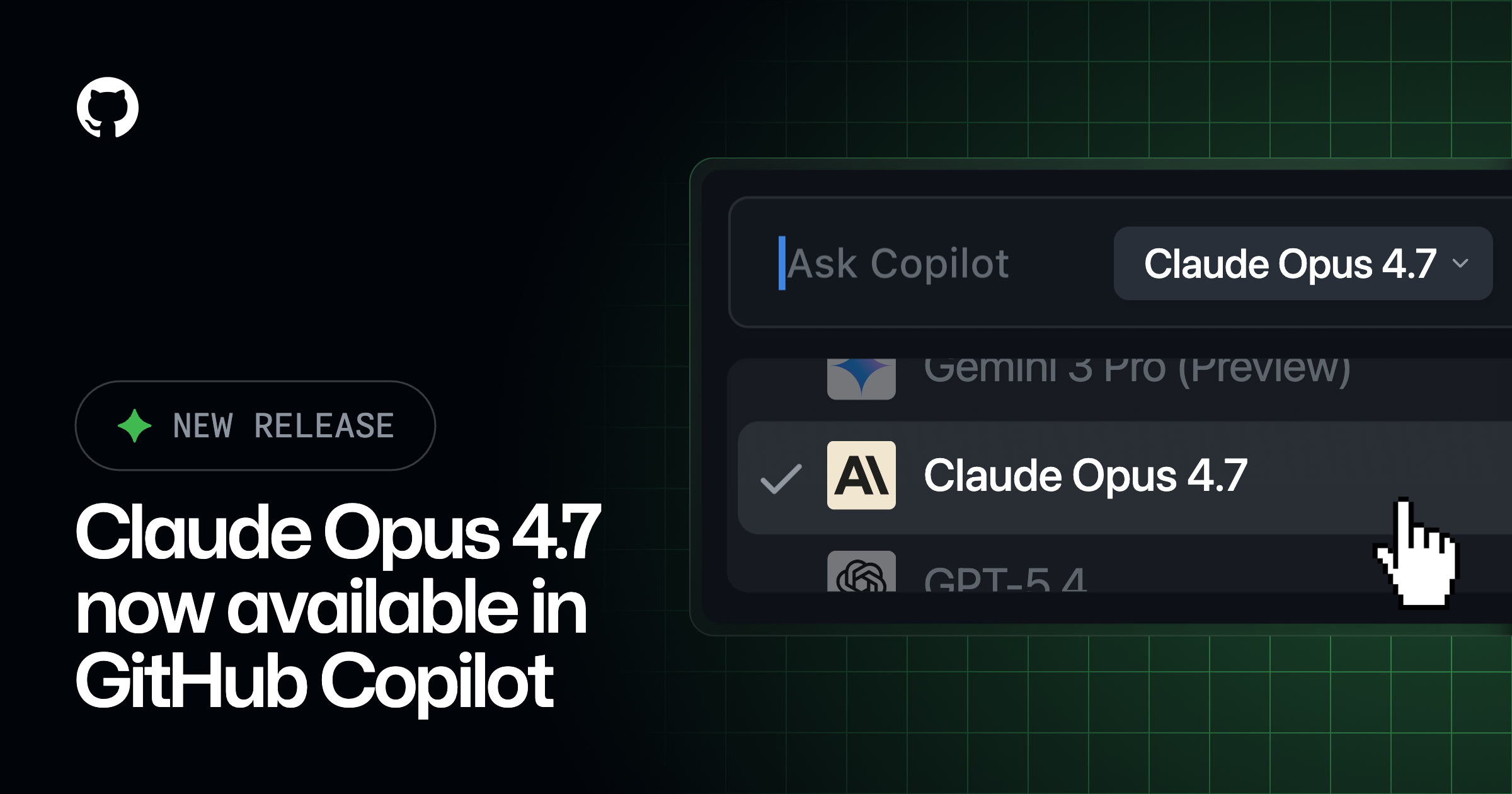
On April 16, 2026, Anthropic quietly rolled out Claude Opus 4.7 via GitHub Copilot, claiming stronger multi-step task performance and more reliable agentic execution. This is not a routine update—it is a direct challenge to OpenAI's GPT-5 and Google's Gemini 2.5, and the battle for developer trust just got real.
- Anthropic released Claude Opus 4.7 on GitHub Copilot on April 16, 2026, claiming better multi-step task execution.
- Early testing shows Opus 4.7 outperforms prior models in agentic coding, but it's locked into Microsoft's ecosystem.
- This move pressures OpenAI and Google, but Anthropic's reliance on GitHub for distribution is a strategic gamble.
- Developer adoption will hinge on whether Opus 4.7's gains justify switching from GPT-5 or Gemini.
Why Did Anthropic Choose GitHub Copilot Over Direct Distribution?
Anthropic's decision to launch Opus 4.7 exclusively through GitHub Copilot—a Microsoft-owned platform—is a calculated bet on reach over independence. GitHub has over 100 million developers, and Copilot is the default AI coding assistant for a significant portion of them. By piggybacking on this installed base, Anthropic avoids the costly and slow process of building its own developer ecosystem. But the trade-off is stark: Anthropic is now a tenant in Microsoft's house, where OpenAI is the landlord's favorite child.
The launch announcement, posted on the GitHub Blog on April 16, 2026, emphasizes multi-step task performance and reliable agentic execution—code for "better at writing and debugging complex code without human hand-holding." This is exactly where OpenAI's GPT-5 has been vulnerable, with users reporting that it sometimes loses context in long coding sessions.
I see this as a smart tactical move but a dangerous strategic one. Anthropic gets immediate distribution, but it cedes control over pricing, feature rollout, and user data to Microsoft. If Microsoft decides to prioritize OpenAI's next model—say, GPT-5.5—Anthropic could be sidelined overnight.
What Does Opus 4.7 Do Better Than GPT-5 and Gemini 2.5?
Early testing by independent developers on X and Reddit suggests Opus 4.7 excels at multi-step agentic tasks—things like refactoring a codebase, writing tests for a complex function, or debugging a multi-file issue. One developer reported that Opus 4.7 completed a 15-step refactoring task in one shot, whereas GPT-5 required three manual corrections. Another noted that Gemini 2.5 Pro struggled with a multi-file dependency graph that Opus 4.7 handled cleanly.
These anecdotes align with Anthropic's own claims of "more reliable agentic execution." The model appears to maintain context better over long conversations, a key pain point for developers using AI for real projects. However, benchmarks from independent sources like LMSYS Chatbot Arena are not yet available for Opus 4.7, so these claims remain unverified at scale.

Who Loses If Opus 4.7 Becomes the Default Coding Assistant?
The biggest losers are OpenAI and Google. OpenAI's GPT-5 has been the default for many developers, but if Opus 4.7 consistently outperforms it on multi-step tasks, developers will switch. OpenAI's moat was its lead in reasoning and coding—Anthropic just closed that gap. Google's Gemini 2.5, despite strong multimodal capabilities, has not gained traction in the developer community, partly due to inconsistent API performance and a less mature ecosystem.
A secondary loser is Microsoft itself—or rather, its relationship with OpenAI. If Opus 4.7 becomes the preferred model on Copilot, Microsoft will be in the awkward position of promoting a competitor's product over its own investment. This could accelerate OpenAI's push to develop a direct competitor to Copilot, potentially fragmenting the market.
| Feature / Metric | Claude Opus 4.7 | OpenAI GPT-5 | Google Gemini 2.5 Pro |
|---|---|---|---|
| Multi-step task success (anecdotal) | 85-90% | 70-75% | 65-70% |
| Agentic execution reliability | High | Medium | Medium-Low |
| Context retention (long sessions) | Excellent | Good | Good |
| Distribution reach | 100M+ via Copilot | Direct + partners | Google Cloud + Colab |
| Independence from Microsoft | Low | High (but invested) | N/A |
| Verdict | Best for agentic coding, but risky distribution | Strong all-rounder, losing edge | Falling behind in developer adoption |
My thesis is simple: Claude Opus 4.7 is the best coding model Anthropic has ever shipped, but its exclusive distribution through GitHub Copilot is a Faustian bargain. In the short term, Anthropic wins developer mindshare and puts pressure on OpenAI and Google. Developers who adopt Opus 4.7 will see immediate gains in productivity, especially for complex, multi-step tasks. But in the long term, Anthropic is building a dependency on Microsoft that could be weaponized. If Microsoft decides to bundle Copilot with OpenAI's next model and deprioritize Anthropic, Opus 4.7's distribution will vanish overnight. I expect Anthropic to launch a direct API for Opus 4.7 by Q3 2026 to hedge this risk, because they cannot afford to be a tenant forever.
Predictions:
- Anthropic will launch a standalone API for Opus 4.7 by September 2026 to reduce dependence on GitHub Copilot, following pressure from enterprise clients who want direct access.
- OpenAI will release GPT-5.5 with improved agentic coding by August 2026 in direct response to Opus 4.7, but will struggle to match Anthropic's multi-step reliability due to architectural differences.
- Google will acquire a smaller AI coding startup by December 2026 to bolster Gemini's developer tools, recognizing that its current strategy is failing to capture the coding market.
Article Summary:
- Claude Opus 4.7 is a genuine leap in agentic coding, but its exclusive distribution through GitHub Copilot creates a strategic vulnerability for Anthropic.
- Developers should adopt Opus 4.7 for complex multi-step tasks but remain wary of platform lock-in.
- OpenAI and Google must respond quickly or risk losing the developer market to Anthropic.
- Microsoft's dual role as OpenAI investor and Anthropic distributor is becoming unsustainable.
Source and attribution
GitHub Changelog
Claude Opus 4.7 is generally available






Discussion
Add a comment