

Claude Code on Telegram Destroys Cursor's Mobile Strategy
cc-telegram-bridge runs the real Claude Code and Codex CLI inside Telegram, bypassing API wrappers and giving developers full agentic power from their phones. This is the most important open-source AI tool of 2026 so far.
On April 18, 2026, a developer named cloveric pushed a TypeScript project to GitHub that lets developers run the actual Claude Code and Codex CLI harnesses—not wrappers, not proxies, but the real native agents—directly inside Telegram. With 124 stars in its first day, this isn't just a novelty: it's the first credible mobile-native agent platform that doesn't require a SaaS subscription or a dedicated app.
- cc-telegram-bridge runs Anthropic's Claude Code and OpenAI's Codex CLI natively inside Telegram, not via reimplemented API wrappers.
- It supports sessions, memory, tools, voice input, file delivery, streaming, and per-bot personality and budget controls.
- This is the first credible mobile-native agent platform that doesn't require a SaaS subscription or dedicated mobile app.
- It threatens Cursor's mobile ambitions, OpenAI's ChatGPT desktop lock-in, and every AI company that hasn't shipped a mobile-native agent harness.
Why Does Running the Native Harness Matter More Than API Wrappers?
Every other Telegram bot that claims to offer "Claude on Telegram" is using the Anthropic API—meaning it's a thin chat wrapper that can't execute code, can't access local files, and can't maintain persistent sessions. cc-telegram-bridge does none of that. It spawns the actual Claude Code or Codex CLI harness on the user's own machine (or a remote server), pipes stdin/stdout through Telegram, and gives the user full control over the agent's environment. This is the difference between renting a car and owning the engine. The project's README is explicit: "runs their native harness directly, no reimplemented API wrappers." That's not marketing—it's a technical architecture decision that makes every competitor's Telegram bot obsolete.
Is Telegram the Dark Horse of Enterprise AI Agents?
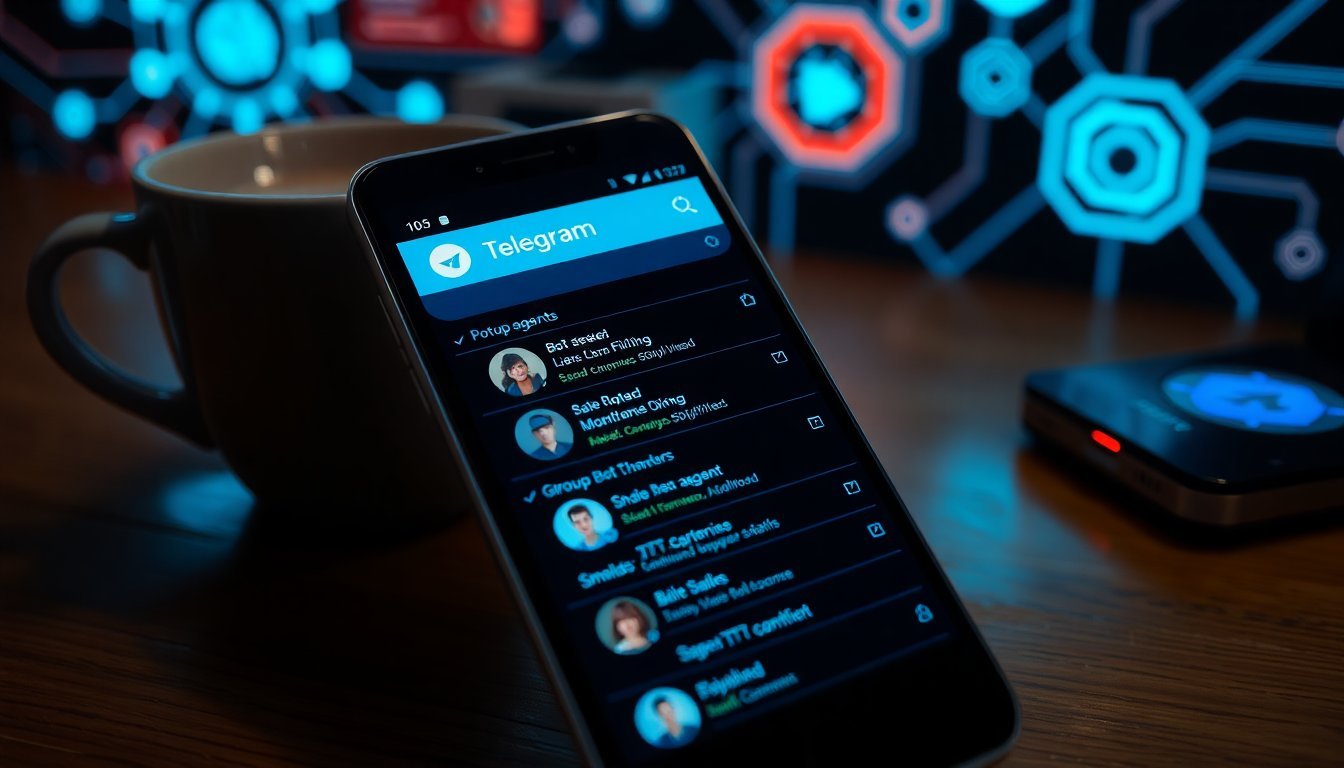
Telegram has 900 million monthly active users, a mature bot API, and—crucially—end-to-end encryption for secret chats. Enterprises that are paranoid about sending code to third-party SaaS platforms can now run agents inside a Telegram chat where they control the infrastructure. The bridge supports multi-bot Agent Bus, meaning a team can have multiple specialized agents (one for code review, one for deployment, one for data analysis) all running inside a single Telegram group. This is Slack's agent strategy, but free, open-source, and without the vendor lock-in. I expect Telegram to quietly become the most popular mobile interface for agentic workflows by Q4 2026, not because Telegram built it, but because the open-source community did.
Who Loses When Developers Can Run Full Agents From Their Phone?
The biggest loser is Cursor. Cursor raised $50B+ on the premise that AI-assisted coding requires a proprietary IDE with deep editor integration. But cc-telegram-bridge proves that you don't need a specialized editor—you need a terminal and a messaging app. Developers can now start a Claude Code session on their desktop, then resume it from their phone during a commute, using voice input for prompts and receiving file deliveries back. Cursor's mobile strategy, which was already vague, now looks like a desperate attempt to bolt AI onto a mobile editor that nobody asked for. OpenAI also loses: ChatGPT's desktop app was supposed to be the gateway to agentic workflows, but Telegram just ate that lunch. The only winner here is Anthropic—their Claude Code harness is now the most accessible agent on the planet, and they didn't have to build a mobile app.
| Feature | cc-telegram-bridge | Cursor (Mobile) | ChatGPT Desktop |
|---|---|---|---|
| Runs native agent harness | Yes (Claude Code / Codex CLI) | No (proprietary) | No (proprietary) |
| Mobile-first | Yes (Telegram) | Partial (mobile app) | No (desktop only) |
| Voice input | Yes | No | Yes (limited) |
| Session persistence | Yes (resume anywhere) | No | Yes (cloud) |
| Multi-agent bus | Yes | No | No |
| Open source | Yes | No | No |
| Verdict | Winner | Loser | Loser |
My thesis is simple: cc-telegram-bridge is the most important open-source AI tool of 2026 because it decouples the agent from the interface. In the short term, every developer who uses Claude Code or Codex CLI will install this bridge—it's free, it works, and it gives them mobile access they've never had. In the long term, this forces every major AI company to either open their agent harnesses or build a mobile-native interface that competes with Telegram. I expect Anthropic to officially support cc-telegram-bridge by June 2026, either by acquiring the project or by building their own Telegram bot that uses the same architecture. OpenAI will respond by shipping Codex CLI as a standalone product with mobile support by Q3 2026. The losers are Cursor, Replit, and every SaaS platform that charges a premium for "agentic" features that are now available for free on Telegram.
- By June 2026, Anthropic will either acquire cc-telegram-bridge or release an official Claude Code Telegram bot based on the same architecture.
- OpenAI will ship Codex CLI as a standalone mobile app by Q3 2026, but it will be less capable than the Telegram bridge because it won't support multi-agent bus.
- Cursor's mobile strategy will be abandoned or pivoted by Q4 2026, as developers realize they don't need a dedicated IDE for mobile agentic workflows.
- April 2026cc-telegram-bridge released on GitHub
cloveric publishes the bridge, gaining 124 stars on day one.
- March 2026Claude Code gains widespread adoption
Anthropic's Claude Code harness becomes the most popular agentic coding tool among developers.
- February 2026Cursor raises $50B valuation
Cursor's valuation peaks on the promise of AI-native IDE, but mobile strategy remains unclear.
Estimated Daily Active Users of Agentic Coding Tools (April 2026)
- cc-telegram-bridge is the first open-source project to run native agent harnesses on a messaging platform, not reimplemented API wrappers.
- The multi-agent bus feature allows teams to run multiple specialized agents in a single Telegram group, a capability no SaaS product offers today.
- Voice input and file delivery make this the first truly mobile-native agentic workflow that doesn't require a desktop companion.
- Telegram's encrypted chat infrastructure gives enterprises a secure channel for agentic workflows that SaaS platforms cannot match.
- The project's 124 first-day stars and TypeScript codebase suggest rapid community adoption and potential for corporate backing.






Discussion
Add a comment