
China's $295B AI Bet: A Data Center Gold Rush or Boondoggle?
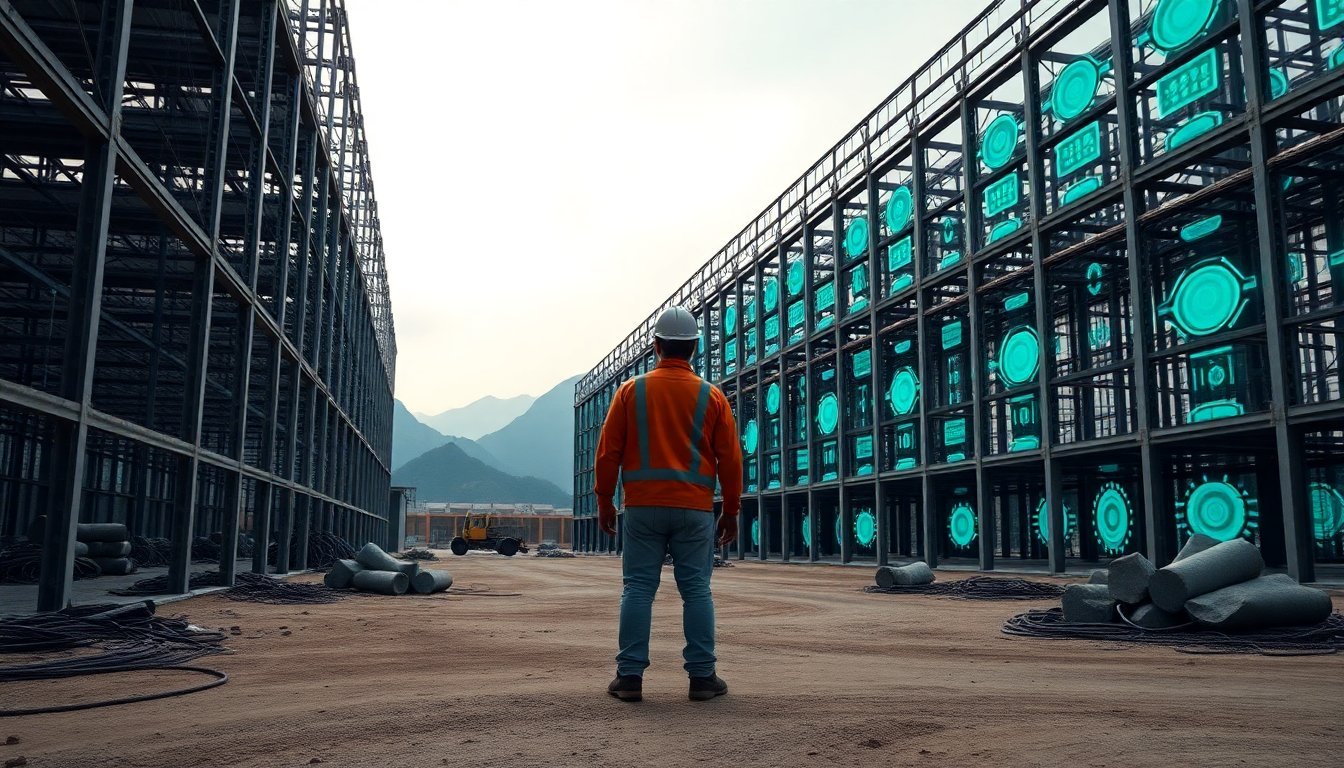
China is committing $295 billion to a five-year data center buildout, aiming to overtake the US in AI. The plan's success hinges on securing advanced chips and avoiding the inefficiencies of past state-led tech initiatives.
On June 9, 2026, Bloomberg reported that China is preparing to allocate approximately 2 trillion yuan ($295 billion) over five years to build a nationwide network of AI-optimized data centers. This move, confirmed by sources familiar with the plan, represents Beijing's most aggressive attempt yet to close the AI compute gap with the US, directly challenging the dominance of American hyperscalers like Amazon Web Services (AWS) and Microsoft Azure.
- China plans to spend 2 trillion yuan ($295 billion) over five years on AI data centers, as reported by Bloomberg on June 9, 2026.
- The initiative is designed to fuel domestic AI development and surpass the US in the global AI race.
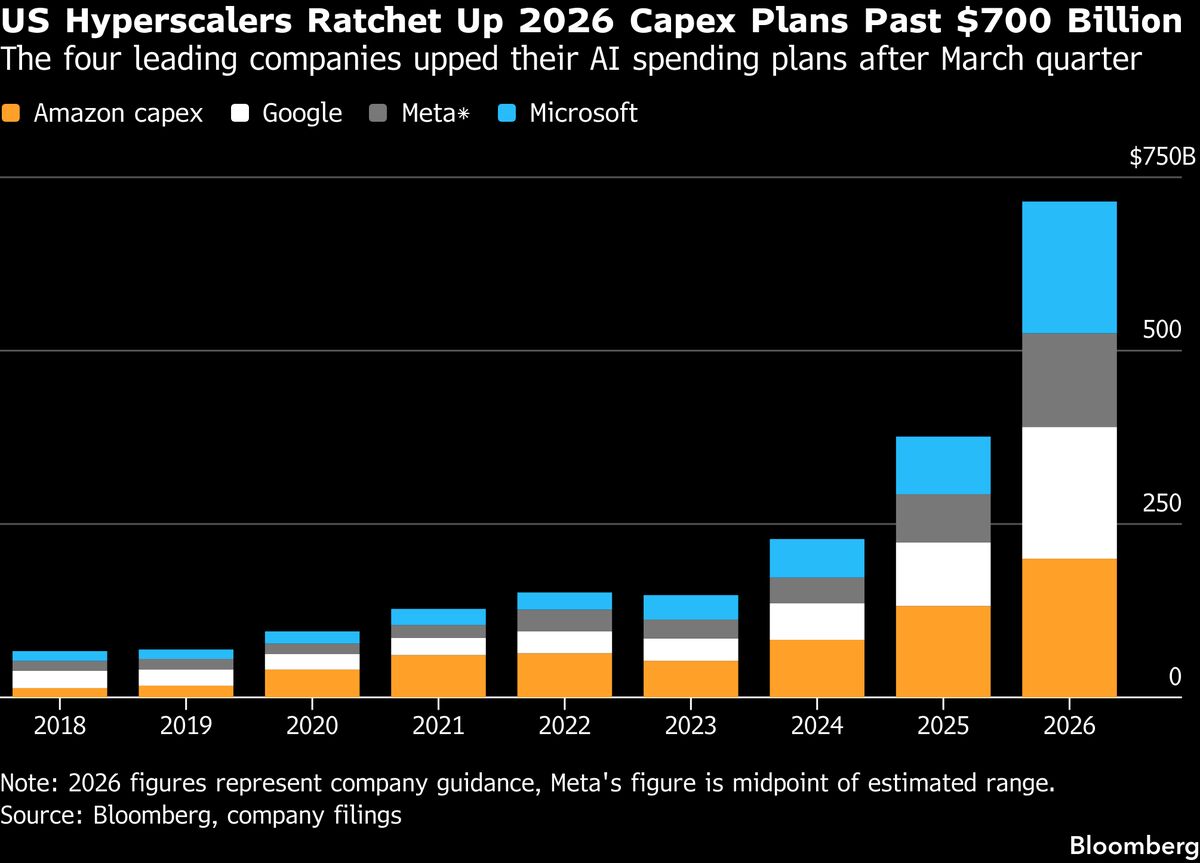
- Key challenges include securing a stable supply of advanced GPUs (despite US export controls) and preventing overcapacity reminiscent of the 2020-2022 semiconductor bubble.
Why Is China Pouring $295 Billion Into Data Centers Now?
According to Bloomberg, the plan is driven by Beijing's ambition to 'propel the domestic AI sector and surpass the US in a potentially game-changing technology.' The timing is critical: Chinese AI models like Baidu's Ernie Bot and Alibaba's Tongyi Qianwen have shown remarkable progress but remain compute-constrained compared to their US rivals. By building a national compute infrastructure, the Chinese government aims to provide a 'public good' that no single company could afford, effectively subsidizing the next generation of AI startups. This mirrors the US approach with the National AI Research Resource but at a scale that dwarfs any Western initiative.

How Will China Avoid the Chip Supply Trap?
This is the central tension. The US export controls, tightened in 2023 and 2024, have severely restricted China's access to NVIDIA's H100 and B200 GPUs. However, as Reuters reported in a separate analysis, Chinese firms have stockpiled billions of dollars worth of chips before the latest restrictions, and domestic alternatives from Huawei (Ascend 910B) and Cambricon are improving. The data center plan likely assumes a hybrid supply: imported chips for flagship centers and domestic chips for regional hubs. The risk is that domestic chips are still 2-3 years behind in performance per watt, meaning China could end up with more data centers but less effective compute.
Who Wins and Who Loses From This Buildout?
| Stakeholder | Win/Loss | Reasoning |
|---|---|---|
| NVIDIA | Win (short-term) | Despite sanctions, gray market and pre-sanction stockpiles mean NVIDIA chips will power many of these centers. Long-term loss if China scales domestic alternatives. |
| Huawei (Ascend) | Win | As the primary domestic GPU supplier, Huawei stands to gain massive orders and real-world validation for its AI chips. |
| Chinese AI Startups | Win | Access to subsidized compute could unlock a wave of innovation, similar to how AWS credits fueled early AI companies. |
| US Hyperscalers (AWS, Azure, GCP) | Loss | China's closed ecosystem will deny these companies a massive market for AI cloud services, reinforcing technological decoupling. |
| Global AI Competition | Uncertain | This could accelerate AI progress globally, but also create two incompatible AI ecosystems (Western vs. Chinese), raising costs for everyone. |
| Verdict | Short-term win for Chinese AI, long-term risk of overcapacity and inefficiency | The plan's success is not guaranteed; it depends on execution and chip supply. |
What Evidence Supports This Being a Realistic Plan?
Bloomberg's report is based on 'people familiar with the matter,' a standard but credible sourcing for Chinese policy leaks. The figure of 2 trillion yuan is consistent with China's past mega-projects, such as the $300 billion+ Belt and Road Initiative. Furthermore, the Chinese government has already begun pilot projects: in early 2026, the city of Guiyang announced a 50 billion yuan AI data center park. The plan is also backed by state-owned banks and policy funds, meaning the financing is credible. However, the timeline of 'five years' is ambitious. According to a McKinsey analysis cited by Reuters, building a single hyperscale data center takes 2-3 years, meaning the first major wave of capacity won't come online until 2028-2029.
My Analysis: This is a classic Chinese state-capitalist play: massive, top-down, and high-risk. The thesis is that compute, not algorithms, is the bottleneck. I agree with that premise. However, I see a real danger of 'compute malinvestment' — building data centers in the wrong regions, with the wrong chips, or for the wrong workloads. The US learned this lesson during the dot-com bubble. China's past state-led tech initiatives, like the semiconductor self-sufficiency push, have often resulted in overcapacity and low utilization rates. The winners here are clear: Huawei and the state-owned construction firms. The losers, if the plan is mismanaged, will be the Chinese taxpayers and the AI startups that become dependent on a single, state-controlled compute provider. In the short term (2026-2028), expect a surge in demand for NVIDIA chips via gray markets, straining US export controls. In the long term (2029+), China could achieve AI compute self-sufficiency, but only if Huawei's chips close the performance gap. My concrete prediction: By Q4 2028, at least two Chinese AI models will achieve GPT-4-level performance on key benchmarks, directly crediting this data center initiative.
Predictions
- By Q4 2028, at least two Chinese AI labs (likely Baidu and Alibaba) will publish results matching GPT-4 on MMLU and HumanEval, citing the national data center network as a key enabler.
- NVIDIA's revenue from China (including gray market) will peak in FY2027, then decline by 40% year-over-year as domestic alternatives from Huawei and Cambricon gain traction.
- The US government will respond with a new round of export controls specifically targeting data center construction equipment and cooling systems, not just chips, by mid-2027.
Timeline
- June 2026Bloomberg Reports Data Center Plan
China prepares $295 billion, five-year plan to build nationwide AI data centers.
- Late 2026First Funding Tranche
Initial funding allocated; construction begins on 10 national AI compute hubs.
- 2027US Tightens Export Controls
US expands export controls to include data center construction equipment.
- 2028First Data Centers Online
Major capacity comes online; Chinese AI models reach GPT-4 parity.
- 2030AI Self-Sufficiency Target
China aims to achieve full AI compute self-sufficiency.
- June 2026: Bloomberg reports China's $295 billion AI data center plan.
- Late 2026: First tranche of funding allocated to provincial governments; construction begins on 10 'national AI compute hubs.'
- 2027: US tightens export controls on data center equipment; Huawei announces 3nm-class Ascend chip.
- 2028: First major data centers come online; Chinese AI model performance reaches parity with GPT-4.
- 2030: China achieves stated goal of AI compute self-sufficiency; global AI market is fully bifurcated.
Article Summary
- China's $295 billion plan is the largest single government investment in AI infrastructure ever, dwarfing all US federal AI spending.
- The plan's success is contingent on solving the chip supply problem, which remains the single biggest vulnerability.
- This move will accelerate the bifurcation of the global AI ecosystem into a US-led and China-led sphere, with significant implications for standards, data flows, and talent migration.
- Investors should watch Huawei's chip roadmap as a leading indicator of the plan's viability.
- The risk of overcapacity and inefficient resource allocation is real, and could mirror the failures of China's previous tech mega-projects.
Source and attribution
Bloomberg Technology
China Prepares $295 Billion Plan to Fund Nationwide AI Buildout






Discussion
Add a comment