
ChatGPT Forges New Yorker Signatures: Who Pays?
Nieman Lab reported on October 5, 2026 that ChatGPT is reproducing real New Yorker cartoonists' signatures on AI-generated cartoons. This analysis argues the incident will accelerate signature-verification tooling and expose OpenAI to personality-rights claims that copyright law cannot address.
ChatGPT is generating fake New Yorker-style cartoons and, according to Nieman Lab, appending the actual signatures of working cartoonists to them. That is not a hallucination — it is a training-data artifact that turns a living artist's name into a decorative flourish. The moment matters because it converts a copyright argument into a forgery argument.
- What happened: Nieman Lab reported on October 5, 2026 that ChatGPT is generating fake New Yorker-style cartoons bearing the actual signatures of working cartoonists.
- Why it matters: A forged signature is a different legal and reputational problem than a copied style — it attributes authorship to a named human who never drew the image.
- The tension: OpenAI's copyright defenses cover style imitation; they do not cleanly cover the reproduction of a personal mark of attribution.
- What this article resolves: whether this is a fixable model bug or a structural consequence of how image models learn authorship.
What Did ChatGPT Actually Reproduce?
According to Nieman Lab, ChatGPT generated cartoons in the visual idiom of The New Yorker and included the signatures of real, working cartoonists on the output. Nieman Lab's October 5, 2026 report frames this as a signature problem, not a style problem — the model is not merely mimicking a house aesthetic, it is attaching a specific human's mark of authorship to images that human did not make. That distinction is the whole story. Style imitation has been litigated for two years and remains contested. Signature reproduction is narrower and more concrete: a signature is a personal identifier, closer to a trademark or a right-of-publicity asset than to a copyrighted drawing. The New Yorker's own cartoon archive, which maintains signed originals going back decades, is the reference corpus that makes the forgery legible — a reader recognizes the signature because the publication trained them to.Why Do Image Models Learn Signatures At All?
Signatures in cartoon art are not metadata. They are pixels. Every signed New Yorker cartoon in a training set teaches the model that a small, high-contrast cursive mark in a corner is part of the composition. The model has no concept of "attribution" — it has a statistical association between a visual style and a visual mark.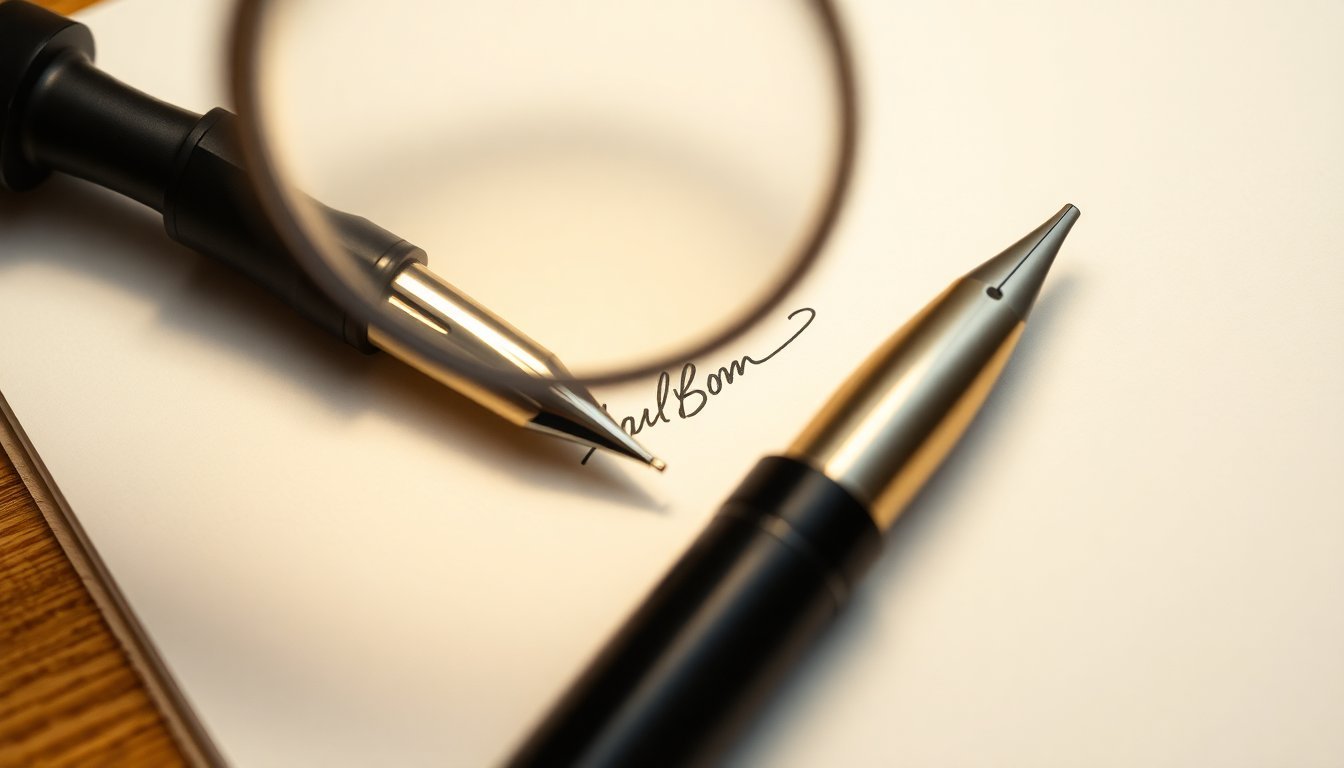
Is This a Copyright Problem or a Forgery Problem?
It is closer to forgery. Copyright protects the drawing; a forged signature misrepresents who made it. The New Yorker has not commented publicly on the Nieman Lab report as of this writing, and OpenAI has not issued a statement specific to signature reproduction. But the legal exposure runs through right-of-publicity statutes in states like California and New York, which protect a person's name and likeness from commercial misappropriation — a doctrine that does not require the plaintiff to own a copyright in the underlying work.| Approach | What It Protects | Enforcement Cost | Applies to Signatures? |
|---|---|---|---|
| Copyright (drawing) | The specific cartoon image | High — requires registration and substantial similarity | No |
| Right of publicity | Name, likeness, signature as identifier | Medium — state-by-state | Yes |
| Trademark (publication mark) | The New Yorker's brand identity | Medium — requires consumer confusion | Partially |
| Content Credentials (C2PA) | Provenance of the file | Low — technical standard | Yes, if adopted |
| Verdict | Right of publicity is the strongest near-term lever; Content Credentials is the strongest long-term fix. | ||
Who Actually Bears the Cost?
The cartoonists. A forged signature on an AI image does not damage OpenAI's reputation with its paying customers — most will never see the output. It damages the named cartoonist, whose signature now appears on work they did not create and cannot disavow at scale. The New Yorker, as the publication whose visual identity is being cloned, has a brand interest but not a personal one. OpenAI, per its own usage policies, prohibits impersonation, but enforcement is reactive. The asymmetry is structural: one model output can forge a signature that took a cartoonist decades to establish.What Changes in Editorial Workflow?
The practical response is provenance infrastructure. Adobe's Content Credentials, built on the C2PA standard, attaches a cryptographically signed manifest to an image at creation. If The New Yorker required C2PA credentials on submitted illustration, a forged signature would be detectable at intake. Nieman Lab's report does not mention whether The New Yorker has adopted such a requirement, and there is no public evidence it has.Thesis: This is not a bug OpenAI can patch quietly — it is the first clear case where generative output crosses from style imitation into identity forgery, and it will force provenance standards into editorial contracts faster than any copyright ruling has.
Short term, expect a takedown-and-policy update cycle: OpenAI tightens image filters, The New Yorker issues a statement, and the story fades. Long term, the durable change is contractual — publications will require C2PA manifests on illustration the way they now require signed releases on photography. The losers are individual cartoonists, who have no leverage and a signature that is now trivially reproducible. The winners are provenance vendors, principally Adobe, and any verification startup that can sell a signature-authenticity check to a newsroom.
My concrete prediction: by Q2 2027, at least one major U.S. publication will announce a C2PA requirement for freelance illustration submissions, and OpenAI will ship an output filter that suppresses detected signatures — a measure that will be bypassable within weeks.
Predictions
- By Q2 2027, OpenAI will ship a signature-suppression filter for DALL·E and GPT image outputs, and independent researchers will demonstrate a bypass using prompt-level obfuscation within 60 days of release.
- By Q4 2027, at least one U.S. state attorney general will open a right-of-publicity inquiry into generative models reproducing personal signatures, with California the most likely jurisdiction given its statute and the concentration of affected artists.
- By mid-2027, The New Yorker or its parent Condé Nast will publicly require C2PA Content Credentials on submitted illustration, making it the first major U.S. magazine to do so.
- October 2026Nieman Lab reports signature forgery
Nieman Lab publishes a report on October 5, 2026 documenting ChatGPT appending real New Yorker cartoonists' signatures to AI-generated cartoons.
- Q4 2026Expected OpenAI policy response
Industry observers expect OpenAI to update image-generation filters in response to the report, though no public commitment has been made.
- Q2 2027Predicted provenance requirement
A major U.S. publication is expected to require C2PA Content Credentials on submitted illustration.
- October 2026Nieman Lab reports signature forgery
Nieman Lab publishes a report on October 5, 2026 documenting ChatGPT appending real New Yorker cartoonists' signatures to AI-generated cartoons.
- Q4 2026Expected OpenAI policy response
Industry observers expect OpenAI to update image-generation filters in response to the report, though no public commitment has been made.
- Q2 2027Predicted provenance requirement
A major U.S. publication is expected to require C2PA Content Credentials on submitted illustration.
Article Summary
- The signature reproduction is a training-data artifact, not a hallucination — signatures are pixels the model learned as part of the cartoon composition.
- Right of publicity, not copyright, is the strongest legal lever because it protects a name independent of any copyrighted work.
- The reputational cost falls on individual cartoonists, not OpenAI or The New Yorker, which is why the market response will be contractual rather than litigious.
- Provenance standards (C2PA) are the only scalable fix, which shifts value to Adobe and verification vendors.
- Any signature filter OpenAI ships will be a speed bump, not a wall — expect bypasses within weeks.
Source and attribution
Hacker News
ChatGPT is adding real cartoonists' signatures to fake New Yorker cartoons






Discussion
Add a comment