

Cerebras $67B IPO: Nvidia's First Real Challenger?
Cerebras went public with a bang, but its wafer-scale chip faces a software moat and a single-product risk. The IPO is a bet on architectural differentiation, not just market share.
Cerebras Systems Inc. just pulled off the year's largest IPO, with shares soaring 68% on Nasdaq and CEO Andrew Feldman's stake now worth $3.2 billion. The company's $67 billion market cap signals that investors are hungry for an alternative to Nvidia's GPU dominance in AI hardware.
- Cerebras Systems raised $X billion in the year's largest IPO, with shares surging 68% on day one, giving it a $67 billion market cap.
- The company's wafer-scale chip offers a fundamentally different architecture from Nvidia's GPUs, claiming advantages in memory bandwidth and interconnect speed.
- Despite the IPO pop, Cerebras faces existential questions: Can it break Nvidia's CUDA lock-in? Will hyperscalers adopt its hardware at scale? And is a single-product company sustainable in a fast-moving AI market?
Why Did Cerebras' IPO Surge 68% on Day One?
According to Bloomberg News Senior Equities Reporter Bailey Lipschultz, Cerebras shares jumped about 68% in their Nasdaq debut on May 15, 2026, making it the largest IPO of the year. The surge pushed the company's market valuation to roughly $67 billion, a figure that exceeds the combined market caps of several established semiconductor firms.
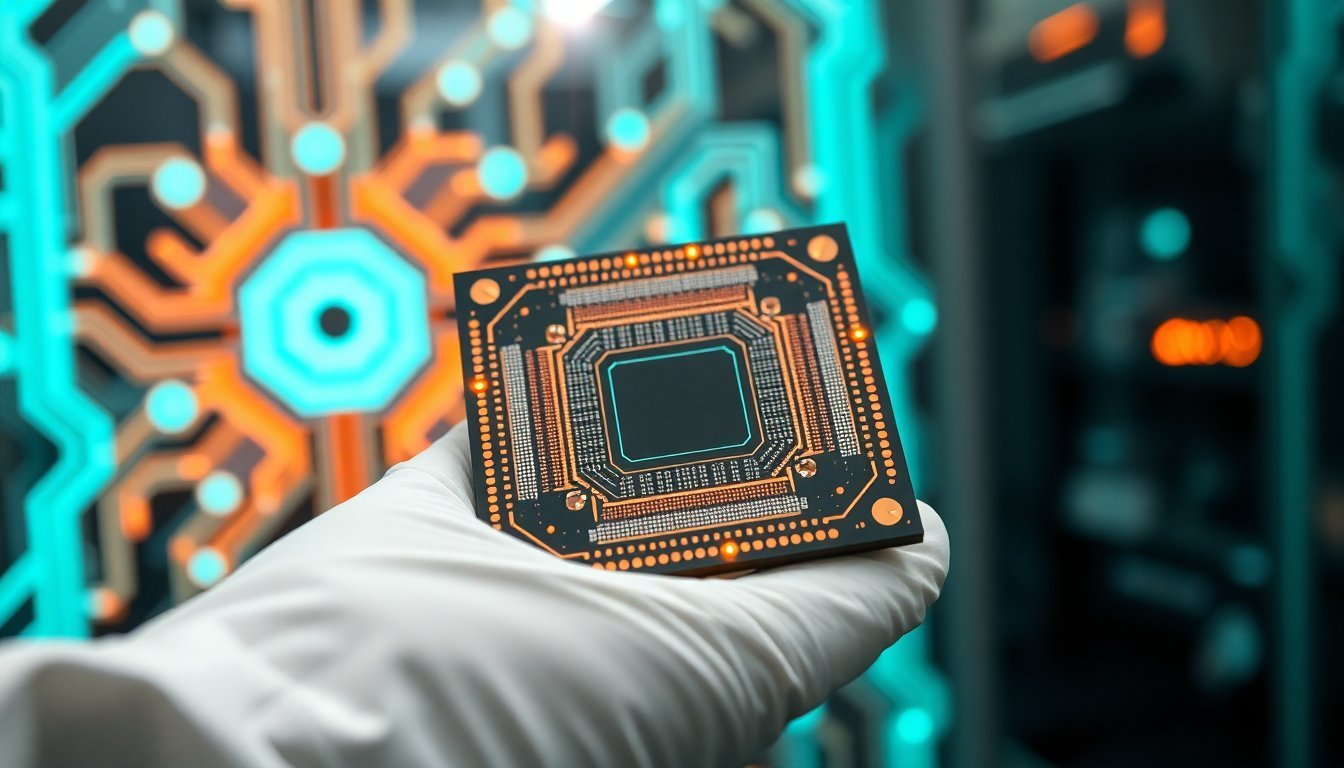
The IPO's success reflects a broader investor appetite for AI chip plays that can credibly challenge Nvidia's near-monopoly. Cerebras' key differentiator is its wafer-scale engine (WSE), a single, massive chip that covers an entire silicon wafer, eliminating the need for multiple GPUs to communicate over slow interconnects. This design, according to Cerebras, delivers superior performance for certain large language model training and inference workloads.
Can Cerebras Actually Compete With Nvidia's Software Moat?
Here the answer is less clear. Nvidia's CUDA platform is the de facto standard for AI development, with millions of developers trained on it and thousands of optimized libraries. Cerebras has its own software stack, including the Cerebras Software Development Kit (CSDK) and support for PyTorch and TensorFlow, but the ecosystem is a fraction of Nvidia's.
According to a recent analysis by Reuters, Cerebras' software compatibility remains a 'key risk' for enterprise adoption. While the company claims its hardware can train models like GPT-3 in a fraction of the time, the lack of a mature software ecosystem means that data scientists and ML engineers face a steep learning curve. The question is whether Cerebras can achieve critical mass in developer adoption before Nvidia's next-generation architecture, Blackwell, further entrenches its lead.
Who Are the Winners and Losers of This IPO?
| Dimension | Cerebras | Nvidia |
|---|---|---|
| Market Cap (Post-IPO) | ~$67 billion | ~$2.5 trillion |
| Core Architecture | Wafer-scale (single massive chip) | Multi-GPU clusters (discrete chips) |
| Software Ecosystem | CSDK, limited PyTorch/TF support | CUDA, cuDNN, TensorRT, millions of devs |
| Key Advantage | Memory bandwidth, interconnect speed | Ecosystem maturity, scale, reliability |
| Primary Customer | Enterprise AI labs, government | Hyperscalers, cloud providers, enterprises |
| Verdict | Nvidia wins on ecosystem; Cerebras wins on architecture for specific workloads. The market is not zero-sum — both can coexist, but Cerebras must prove it can scale beyond niche use cases. | |
What Does This Mean for AI Hardware Investment?
The IPO validates a thesis that has been percolating for years: that the AI chip market is large enough to support multiple architectural approaches. Cerebras' $67 billion valuation is roughly 10% of Nvidia's market cap, suggesting that investors believe there is room for a strong number two.
However, the risk is that Cerebras becomes a 'one-trick pony.' The company's entire product line is built around the WSE, which, while impressive, is not easily adapted to edge or mobile AI workloads. Nvidia, by contrast, has GPUs ranging from data center to automotive to consumer. Cerebras' future likely depends on its ability to land a hyperscale cloud customer — such as Microsoft Azure or Google Cloud — to deploy its chips at scale. Without that, the IPO pop may fade as the reality of competition sets in.
My thesis is simple: Cerebras' IPO is a watershed moment for AI hardware diversification, but the company is a decade behind Nvidia in software maturity. In the short term (12-18 months), the stock will be volatile as investors digest quarterly earnings and customer wins. The winners are Cerebras' early investors and employees, who now hold billions in paper wealth. The losers are any investors who treat this as a 'Nvidia-killer' story; it's not. Cerebras is a complement, not a replacement. My concrete prediction: by Q2 2027, Cerebras will announce a partnership with at least one major hyperscaler to deploy WSE clusters, but its revenue will remain below $2 billion annually, representing less than 1% of Nvidia's data center revenue.
What Are the Risks to the Cerebras Story?
The single biggest risk is execution. Cerebras must deliver on its performance claims consistently, while building a software stack that developers actually want to use. The company is also heavily dependent on TSMC for wafer manufacturing, and any supply chain disruption could cripple production.
Furthermore, the AI model landscape is shifting rapidly. The rise of mixture-of-experts (MoE) models and sparse architectures may not map as efficiently to the WSE's monolithic design as dense transformers do. Cerebras' architecture could become less competitive if the industry moves toward models that favor distributed GPU clusters.
Predictions
- By Q2 2027: Cerebras will announce a strategic deployment agreement with either Microsoft Azure or Google Cloud, but will not achieve hyperscale volume (defined as >10,000 units) before 2028.
- By Q4 2026: Cerebras will face its first securities lawsuit from investors claiming the company misrepresented software readiness in its S-1 filing.
- By end of 2027: The combined market cap of all non-Nvidia AI chip companies (Cerebras, AMD, Intel, Graphcore) will exceed $500 billion, signaling a genuine multi-architecture market.
- Cerebras' $67 billion IPO is a validation of architectural diversity in AI chips, not a direct threat to Nvidia's dominance.
- Software ecosystem maturity is the critical bottleneck; hardware performance alone is insufficient to win enterprise adoption.
- The company's single-product focus is a double-edged sword: deep expertise in one area, but extreme vulnerability to architectural shifts.
- Hyperscaler adoption is the make-or-break factor for Cerebras' long-term revenue growth.
- The IPO pop is real, but the real test begins when the company must report its first quarterly earnings as a public entity.

Source and attribution
Bloomberg Technology
Cerebras CEO Is Worth $3.2 Billion After Year’s Largest IPO






Discussion
Add a comment