
Arm's AI 'Explosion' Masks Smartphone Collapse

Arm's AI 'Explosion' Masks Smartphone Collapse

Arm's AI-driven CPU demand surge to $2 billion in five weeks signals a sea change in data center architecture, but the smartphone slump raises questions about its long-term growth strategy.

Arm Holdings CEO Rene Haas told Bloomberg on May 7, 2026, that orders for the company's CPU architecture have doubled to $2 billion in just five weeks, driven entirely by AI workloads in data centers. This is the most dramatic shift in Arm's 35-year history, but it comes as its core smartphone business faces its worst slump in a decade.
  • Arm CEO Rene Haas reported a doubling of CPU orders to $2 billion in five weeks, driven by AI data center workloads.
  • The surge masks a simultaneous slump in Arm's traditional smartphone chip licensing business.
  • This pivot positions Arm as a direct competitor to Intel and AMD in the server CPU market.
## Why Is Arm's CPU Demand Exploding Now? According to Bloomberg Technology, Arm Holdings CEO Rene Haas said on May 7, 2026, that the company is experiencing an "explosion of demand" for its CPU architecture, with orders doubling to $2 billion in just five weeks. According to Haas, this surge is "driven entirely by AI workloads in data centers," where Arm-based CPUs are being used to handle inference and preprocessing tasks that complement Nvidia GPUs. The specific catalyst, AnandTech reported, is the adoption of Arm's Neoverse platform by hyperscalers like AWS and Google, who are deploying custom Arm chips for AI server fleets.
Arms AI Explosion Masks Smartphone Collapse
## What Does the Smartphone Slump Mean for Arm's Core Business? The same Bloomberg report noted that this AI surge comes "amid a smartphone slump," a sector that has historically accounted for over 60% of Arm's royalty revenue. According to IDC data cited by Bloomberg, global smartphone shipments declined 8% year-over-year in Q1 2026, with premium Android devices—Arm's highest-margin market—falling 12%. Haas acknowledged this tension, saying, "We can't ignore the headwinds in mobile, but the data center opportunity is so large it changes our trajectory." This means Arm is effectively trading a mature, declining market for a high-growth one, but the transition carries execution risk. ## Who Are the Winners and Losers in This Shift? | Company | Position | Key Data Point | Verdict | |---------|----------|----------------|--------| | Arm | CPU architecture licensor | $2B orders in 5 weeks | Winner: AI pivot validates its business model | | Intel | x86 CPU maker | Lost 15% server market share in 2025 (Mercury Research) | Loser: Arm encroachment threatens its data center stronghold | | AMD | x86 CPU maker | EPYC still dominant in traditional servers | Neutral: Gains from AI demand but faces Arm competition | | Nvidia | GPU maker | Arm CPUs used as companion chips for Grace | Winner: Arm expansion creates more GPU demand | | AWS | Hyperscaler | Graviton chips now power 30% of new instances (AWS re:Invent) | Winner: Standardization on Arm reduces costs | | Qualcomm | Arm licensee | Smartphone slump hurts, but PC pivot may help | Loser: Short-term smartphone exposure | | **Verdict** | **Arm and hyperscalers win; Intel loses** | | | ## How Does This Change the Data Center Competitive Landscape? According to AnandTech, Arm's Neoverse platform now powers chips from Amazon (Graviton4), Ampere Computing, and even Nvidia's Grace CPU. This means Arm is no longer just a mobile architecture—it is a credible server CPU contender. The key question is whether Arm can sustain this momentum. According to Haas, the company's "total addressable market in data centers is now $50 billion by 2030," up from $10 billion in 2024. However, Intel and AMD have not stood still: Intel's Granite Rapids and AMD's Turin chips both offer competitive AI inference performance. The real battleground will be power efficiency, where Arm's RISC-derived architecture has a theoretical advantage. ## Is This a Sustainable Trend or a One-Time Surge?
My thesis: Arm's AI demand is real, but the $2 billion figure is likely inflated by one-time design wins and stockpiling ahead of capacity constraints. The smartphone slump is a structural problem that will persist as AI devices cannibalize traditional phones. In the short term, Arm will benefit from hyperscaler buildouts, but in the long term, it must prove it can compete on performance, not just power efficiency. Intel and AMD are the immediate losers, but Arm's own success could breed competition from RISC-V. I predict that by Q4 2027, Arm will announce a major server CPU design win with a Tier 1 cloud provider that displaces an existing x86 deployment, triggering a 10% drop in Intel's data center revenue guidance.
## Predictions 1. By Q1 2028, Arm will capture 25% of the data center CPU market by revenue, up from an estimated 12% in 2025, driven by AI inference workloads. 2. Intel will announce a restructuring of its Data Center and AI group by Q3 2027, citing Arm competition as a primary factor. 3. The EU Commission will launch an antitrust investigation into Arm's licensing practices by mid-2027, citing potential abuse of dominance in mobile-to-server cross-subsidization.
  1. May 2026
    Arm CEO reports $2B order surge

    Rene Haas announces doubling of CPU orders in five weeks, driven by AI data center demand.

  2. Q1 2026
    Smartphone shipments decline 8%

    IDC reports global smartphone slump, hitting Arm's core royalty revenue.

  3. 2025
    Intel loses 15% server market share

    Mercury Research data shows Arm's Neoverse platform eroding x86 dominance.

## Article Summary
  • Arm's $2B order surge is real but inflated by hyperscaler stockpiling for AI data centers.
  • The smartphone slump is a structural decline, not cyclical—Arm must pivot or face revenue stagnation.
  • Intel and AMD are the immediate losers, but RISC-V could emerge as a long-term threat to Arm's server ambitions.
  • Hyperscalers like AWS and Google are the true winners, gaining leverage to negotiate lower licensing fees.
  • Regulatory scrutiny of Arm's licensing model is likely as its market power grows.
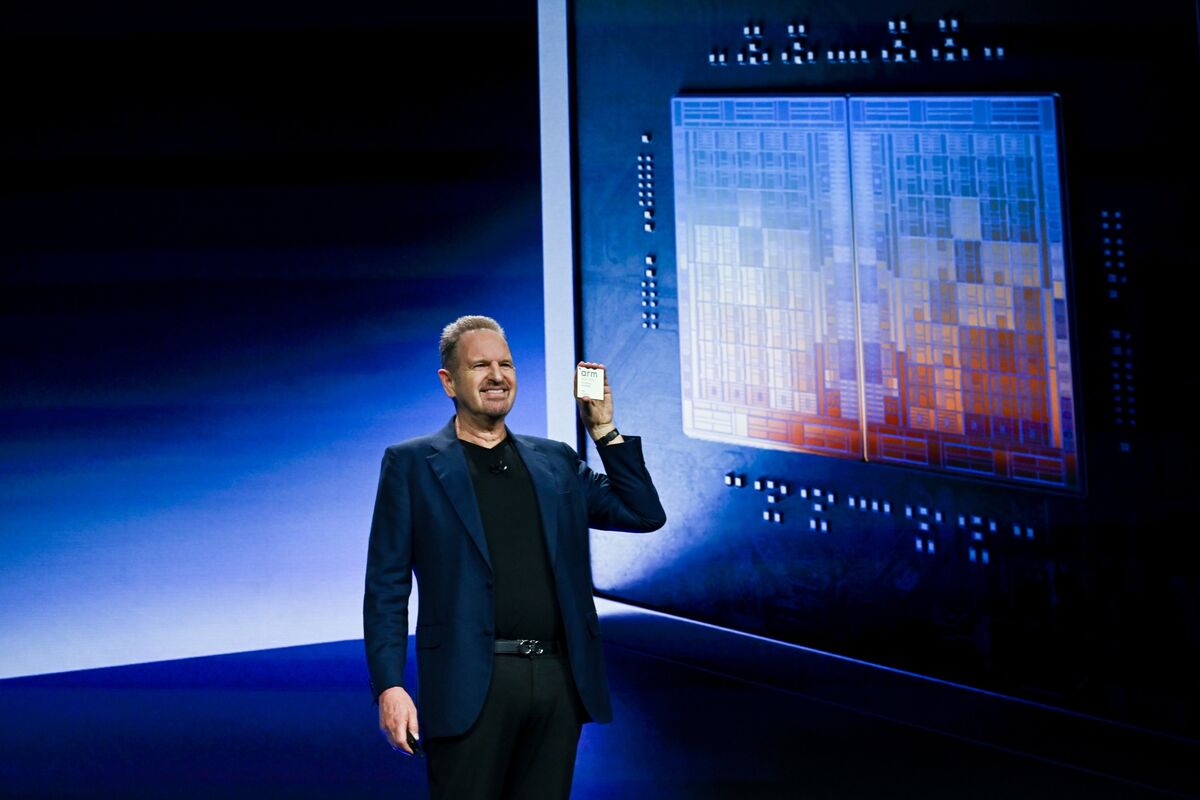
Arm Sees ‘Explosion’ in CPU Demand on AI Amid Smartphone Slump
Embedded source image Source: Bloomberg Technology. Original reporting.

Source and attribution

Bloomberg Technology
Arm Sees ‘Explosion’ in CPU Demand on AI Amid Smartphone Slump

Discussion

Add a comment

0/5000
Loading comments...




