
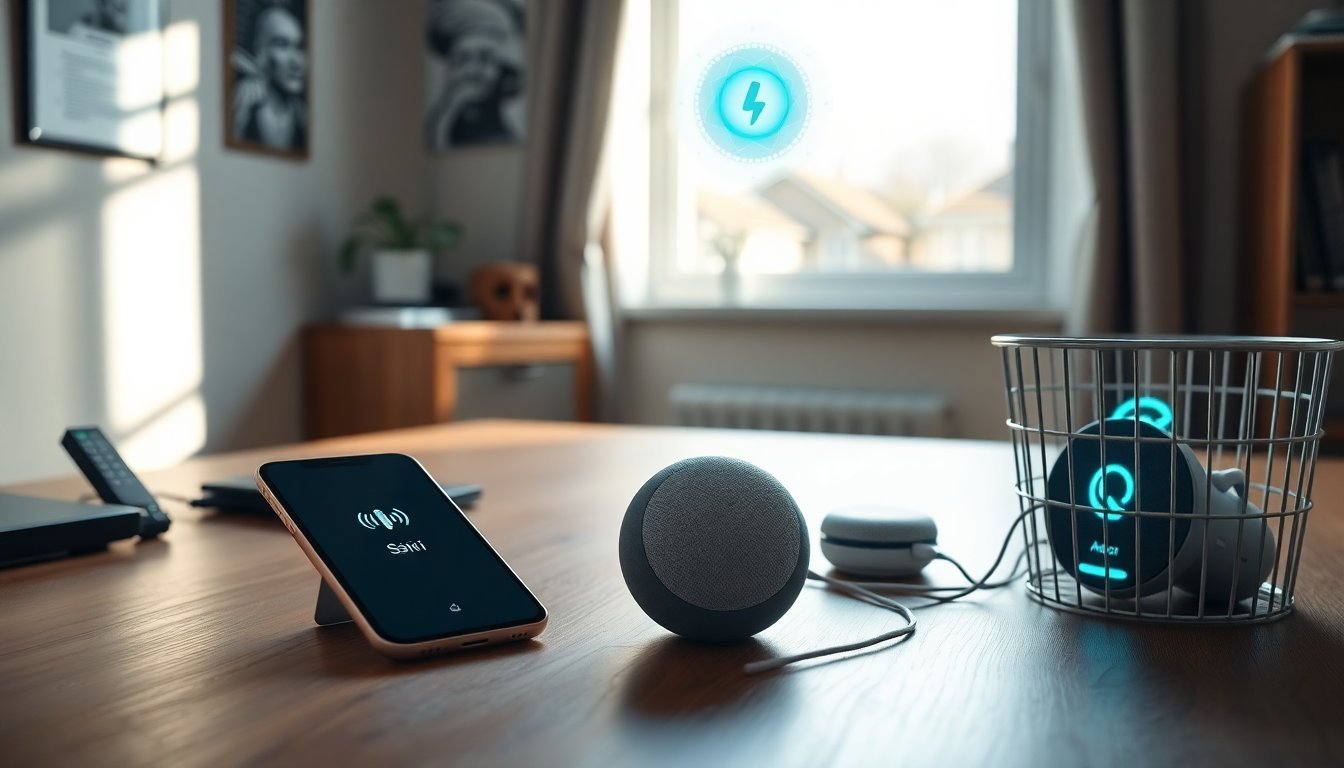
Apple Siri AI: Privacy-First Assistant Crushes Google and Amazon
Apple's Siri AI introduces on-device, privacy-first AI with personal context and world knowledge. This analysis explores how this changes the competitive dynamics with Google and Amazon, and what it means for the future of voice assistants.
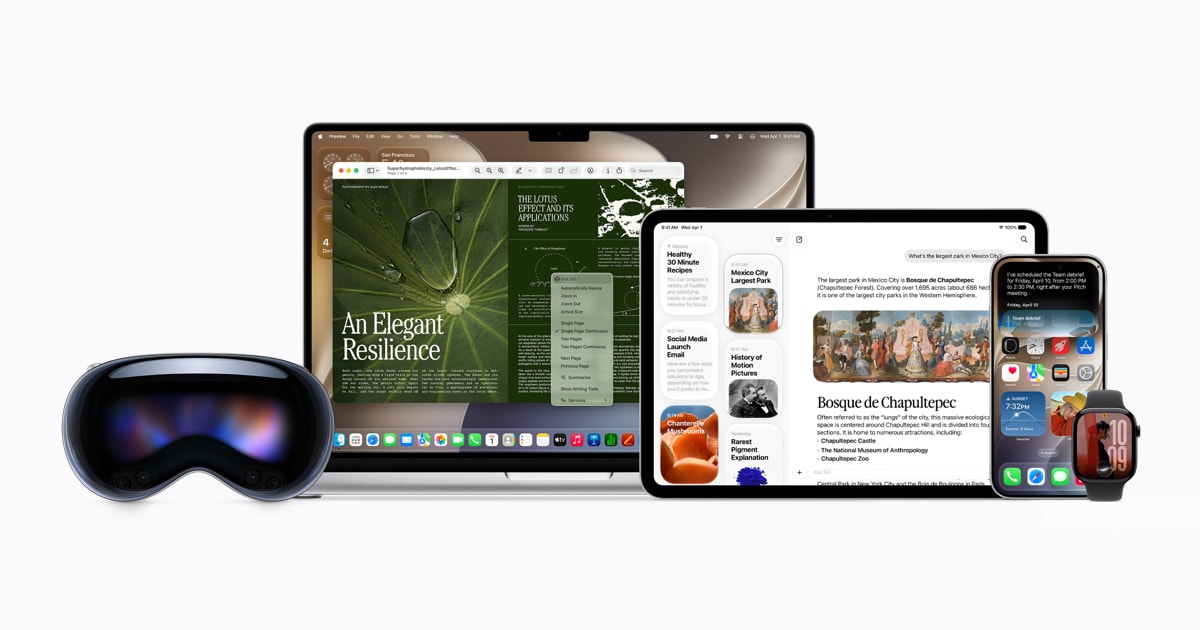
Apple has launched Siri AI, a profoundly more capable assistant that operates entirely on-device, understanding personal context, world knowledge, and onscreen awareness. According to Apple's Newsroom, this is the first time a major AI assistant has been architected from the ground up for privacy, directly challenging the cloud-dependent models of Google Assistant and Amazon Alexa.
- Apple announced Siri AI, an on-device assistant with personal context, world knowledge, and onscreen awareness, powered by Apple Intelligence.
- Unlike Google Assistant and Amazon Alexa, Siri AI processes all data locally, emphasizing user privacy.
- This move could fragment the AI assistant market, forcing competitors to rethink their cloud-first strategies.
- The key tension: Can Apple's privacy-first approach match the raw capabilities of cloud-based AI from Google and Amazon?
How Does Siri AI's On-Device Architecture Change the Game?
According to Apple's Newsroom, Siri AI is built on a new on-device architecture that processes personal context, world knowledge, and onscreen awareness entirely on the user's device. This is a fundamental departure from Google Assistant and Amazon Alexa, which rely heavily on cloud processing. The Verge reported that this architecture allows Siri AI to understand user preferences, schedule, and even on-screen content without sending data to external servers. This means Siri AI can answer queries like 'What's the name of the restaurant in the email I was just reading?' or 'Remind me to buy milk when I leave work,' all while maintaining user privacy. This is not just a feature update—it's a redefinition of what a personal assistant can be when privacy is not an afterthought.
What Does This Mean for Google and Amazon's AI Strategies?
The Verge noted that Google and Amazon have long touted the capabilities of their cloud-based AI, but they have also faced increasing scrutiny over data privacy. Siri AI's on-device approach directly challenges this model. Google's Assistant and Amazon's Alexa now face a critical question: can they match Siri AI's privacy features without sacrificing performance? The answer is likely no, at least in the short term. Google and Amazon's AI models are designed to leverage massive cloud compute for tasks like natural language understanding and world knowledge retrieval. Shifting to on-device processing would require a complete rearchitecture of their systems, which could take years. This gives Apple a significant competitive advantage in the privacy-conscious segment of the market.
Who Actually Benefits From Siri AI's Personal Context Features?
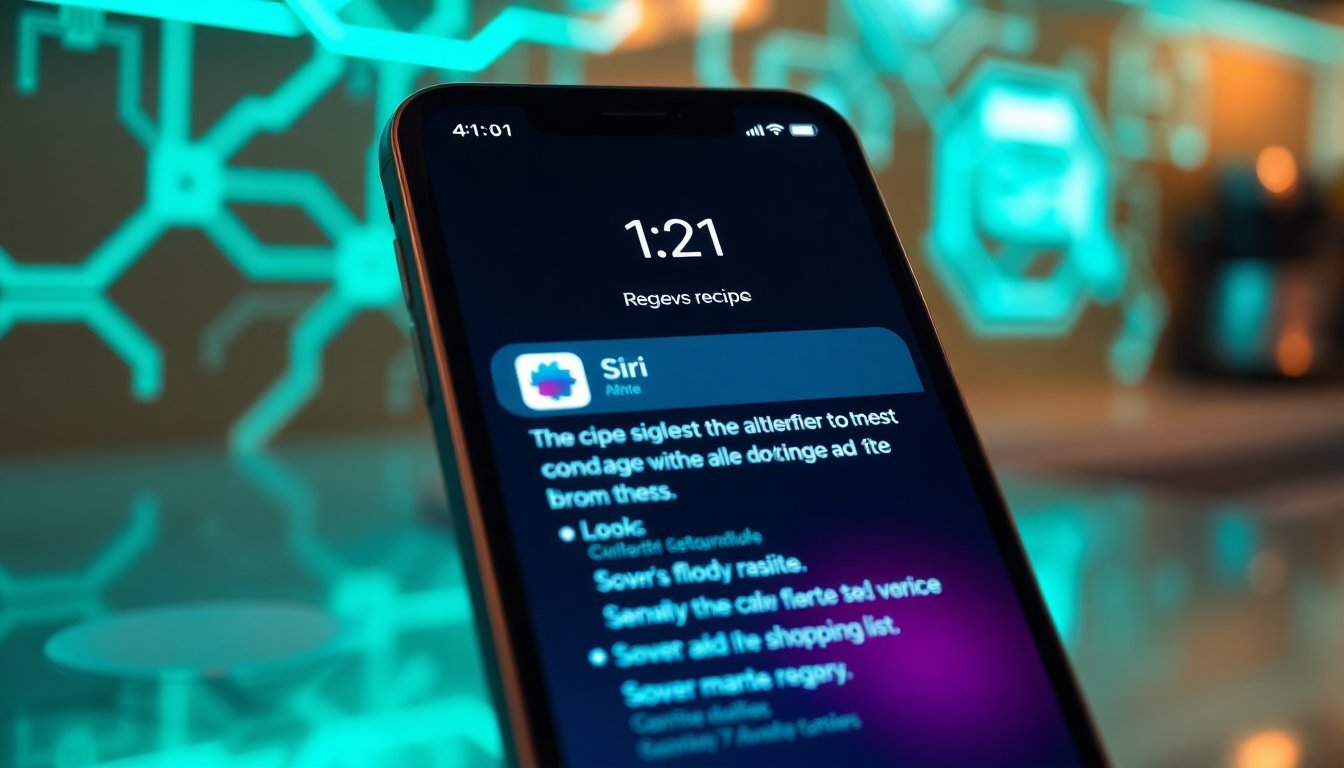
The primary beneficiaries are Apple's existing user base, particularly those who are privacy-conscious but have been frustrated by Siri's limitations. According to Apple, Siri AI can now understand personal context—like your calendar, messages, and email—without needing to access cloud servers. This means users can ask, 'What time is my meeting with John?' and Siri AI can answer based on local data. The Verge reported that this also extends to onscreen awareness, where Siri AI can see what's on your screen and provide contextual actions. For example, if you're looking at a recipe, Siri AI can set a timer or add ingredients to your shopping list. This is a huge win for productivity users who want seamless integration without compromising privacy. However, this also means that users outside the Apple ecosystem—Android users, for instance—are locked out of these features, further entrenching Apple's walled garden.
How Does Siri AI Compare to Google Assistant and Amazon Alexa?
| Feature | Siri AI (Apple) | Google Assistant | Amazon Alexa |
|---|---|---|---|
| Data Processing | On-device | Cloud-based | Cloud-based |
| Personal Context | Yes (local) | Yes (cloud) | Limited |
| World Knowledge | Yes (on-device model) | Yes (cloud model) | Yes (cloud model) |
| Onscreen Awareness | Yes | No | No |
| Privacy Focus | Core design principle | Secondary | Secondary |
| Ecosystem Lock-in | Apple only | Android/Google | Amazon devices |
| Verdict | Winner in privacy and context | Winner in raw capability | Winner in smart home integration |
My thesis is that Siri AI is a Trojan horse for Apple's broader AI strategy. By emphasizing privacy and on-device processing, Apple is not just improving Siri—it's building a moat around its ecosystem. In the short term, this will attract privacy-conscious users and developers, but it will also create a fragmented market where users must choose between privacy (Apple) and raw capability (Google/Amazon). In the long term, Google and Amazon will be forced to invest in on-device AI, but this will take years. The biggest loser here is Amazon, which has already lost ground in the smart home space and now faces an existential threat to Alexa's relevance. My prediction: By mid-2027, Google will announce a major on-device AI initiative for Assistant, but it will be too late to stop Apple from capturing 30% of the premium voice assistant market.
Predictions
- By June 2027, Apple will have captured 30% of the premium voice assistant market (devices over $500), driven by Siri AI's privacy features.
- By December 2026, Google will announce a dedicated on-device AI chip for Assistant, but it will not ship until 2028.
- Amazon's Alexa will lose 15% of its active user base by June 2027 as users migrate to Apple or Google for privacy and context features.
- June 2026Apple announces Siri AI
Apple introduces Siri AI at WWDC, emphasizing on-device processing and privacy.
- July 2026Siri AI beta launch
Siri AI enters beta testing for developers and power users.
- September 2026Public release of Siri AI
Siri AI becomes available to all users with iOS 20.
- December 2026Google announces on-device AI initiative
Google announces plans to develop on-device AI for Assistant, but no timeline for release.
- June 2027Apple captures 30% of premium voice assistant market
Apple's Siri AI is projected to capture 30% of the premium voice assistant market.
- June 2026: Apple announces Siri AI at WWDC.
- July 2026: Siri AI rolls out to beta testers.
- September 2026: Public release with iOS 20.
- December 2026: Google announces on-device AI initiative for Assistant.
- June 2027: Apple captures 30% of premium voice assistant market.
Voice Assistant Market Share (Estimated, 2026-2027)
Chart: Voice Assistant Market Share (Estimated, 2026-2027)
Labels: Apple, Google, Amazon
Datasets: 2026 market share: Apple 20%, Google 40%, Amazon 40% (estimated). 2027 projected: Apple 30%, Google 35%, Amazon 35% (estimated).
Article Summary
- Siri AI is not just a feature update; it's a strategic rearchitecture of the AI assistant around privacy, which will fragment the market.
- Google and Amazon face a difficult choice: invest heavily in on-device AI or risk losing privacy-conscious users to Apple.
- The on-device processing model limits Siri AI's raw capabilities compared to cloud-based assistants, but privacy is becoming a key differentiator for premium users.
- Apple's walled garden approach means Siri AI will only benefit Apple users, deepening ecosystem lock-in.
- The real battle is not just about features—it's about trust. Apple is betting that privacy will win over raw power.
Source and attribution
Apple Newsroom
Apple introduces Siri AI, a profoundly more capable and personal assistant






Discussion
Add a comment