

Apollo's $36B Anthropic Debt Deal: Genius or Fool's Gold?
Apollo and Blackstone are seeking investors for a $36 billion debt deal to purchase Google TPUs for Anthropic, marking the largest AI infrastructure financing ever. The deal locks Anthropic into Google's hardware ecosystem while transferring chip ownership risk to debt markets.
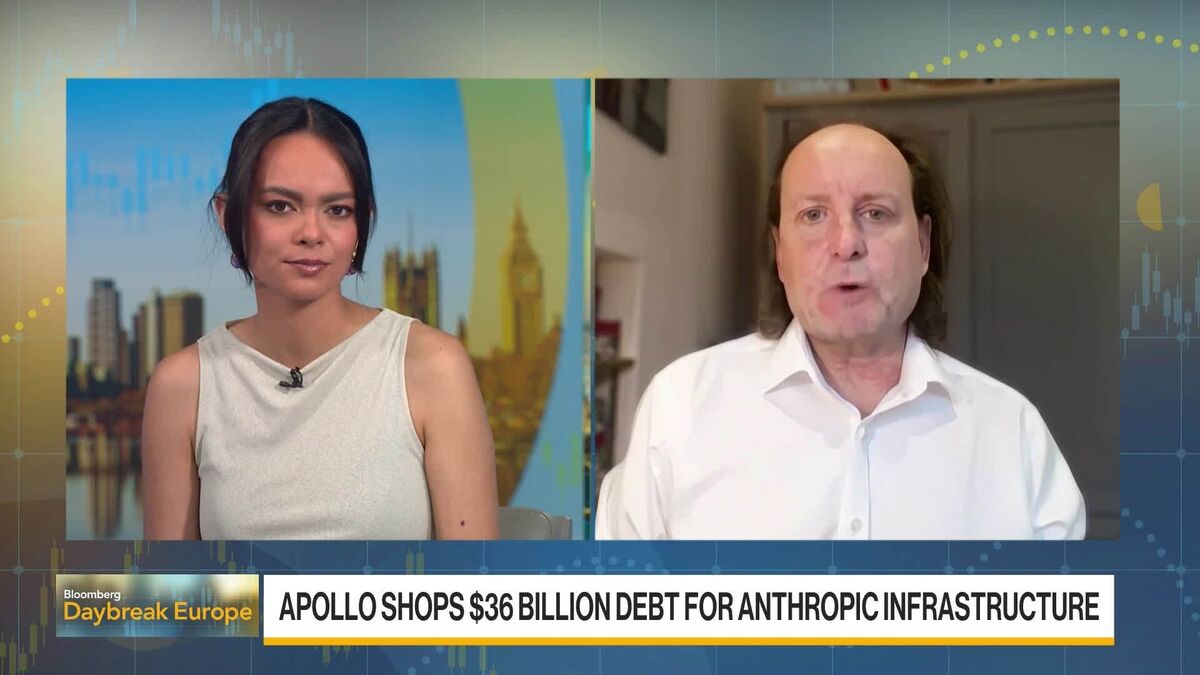
Apollo Global Management and Blackstone are syndicating a $36 billion debt package to buy Google's custom TPU chips for Anthropic, according to Bloomberg's Neil Campling. This is not just a financing story — it's a strategic move that will determine whether Anthropic remains independent or becomes a captive tenant on Google's hardware.
- Apollo and Blackstone are syndicating a ~$36 billion debt deal to purchase Google's custom TPU chips for Anthropic, according to Bloomberg's Neil Campling
- The debt will be used to buy TPUs that Anthropic will then lease, creating a novel AI infrastructure financing structure
- This deal effectively locks Anthropic into Google's hardware ecosystem while transferring chip ownership risk to debt markets
- The success of the deal depends on Anthropic generating enough revenue to service $36 billion in debt — a high-risk bet on AI model demand
Why Is Apollo Syndicating This Debt Instead of Funding It Alone?
According to Bloomberg's Neil Campling, Apollo and Blackstone are working to bring additional investors into the roughly $36 billion debt financing deal. The syndication strategy is telling: even the largest alternative asset managers recognize that $36 billion in single-name AI infrastructure debt is too concentrated for any single balance sheet. Apollo reported $733 billion in assets under management as of Q1 2026, but tying up $36 billion in a single illiquid debt position tied to Anthropic's model demand would violate basic portfolio diversification principles.
The syndication also signals that Apollo and Blackstone are treating this as a fee-generating structuring opportunity rather than a long-term hold. By arranging the debt and distributing it to institutional investors — pension funds, sovereign wealth funds, insurance companies — they earn structuring fees and ongoing management fees without bearing the full default risk. This is classic Wall Street financial engineering applied to AI infrastructure.
Does This Deal Lock Anthropic Into Google's Hardware Forever?
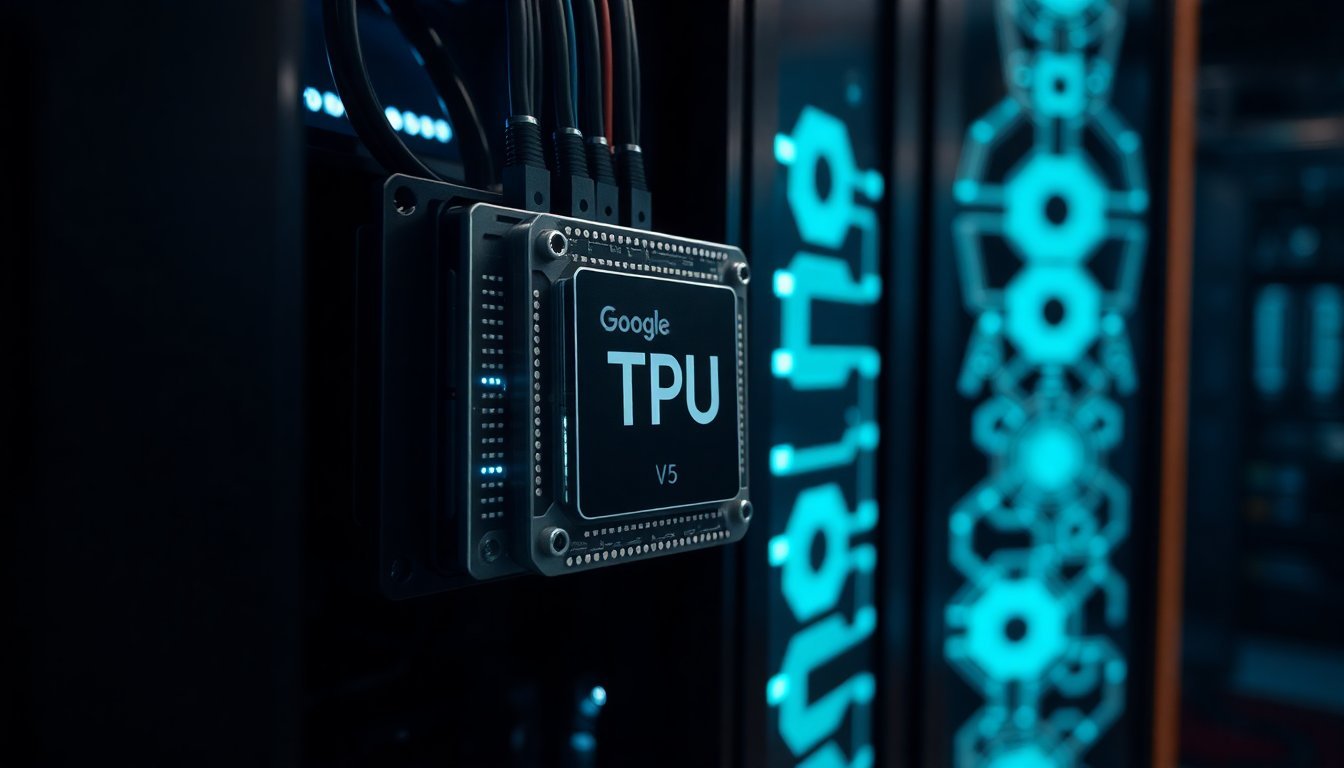
The debt will be used to purchase Google's custom tensor processing units (TPUs), which Anthropic will then lease, according to people with knowledge of the matter. This structure is remarkable because it means Anthropic is not buying the chips — Apollo and the syndicate will own them, and Anthropic will pay lease payments that must cover the debt service. If Anthropic wanted to switch to NVIDIA H100s or AMD MI350s in the future, it would need to renegotiate the entire lease structure or buy out the TPUs at a massive premium.
According to a separate Bloomberg report from May 28, 2026, Anthropic and Google deepened their ties with a new AI infrastructure deal. This debt arrangement is the financial backbone of that strategic alignment. Anthropic is effectively betting its future on Google's TPU architecture, which has historically lagged NVIDIA in general-purpose AI training performance but excels at inference workloads. This is a bet that Anthropic's models will be inference-heavy rather than training-heavy — a plausible but unproven assumption.
How Does This Compare to Other AI Infrastructure Financing Models?
| Metric | Apollo/Blackstone-Anthropic Deal | Microsoft-OpenAI Supercomputer | CoreWeave-NVIDIA Model |
|---|---|---|---|
| Financing Structure | $36B debt syndication | Direct investment + cloud credits | Equity + debt from banks |
| Hardware Ownership | Debt investors (Apollo syndicate) | Microsoft | CoreWeave |
| Hardware Type | Google TPUs | NVIDIA H100/B200 | NVIDIA H100 |
| Lease Structure | Anthropic leases from owners | OpenAI uses via cloud | Customers pay for compute |
| Vendor Lock-in Risk | Extreme (Google TPU only) | Moderate (NVIDIA ecosystem) | Low (commodity NVIDIA) |
| Verdict | Highest financial engineering, highest vendor lock-in | Balanced integration | Most flexible for customers |
What Happens If Anthropic's Revenue Doesn't Cover the Debt Payments?
This is the $36 billion question. According to people with knowledge of the matter, the debt will be used to purchase TPUs that Anthropic will then lease. The lease payments must be sufficient to service the debt — interest and principal — plus provide a return to investors. If Anthropic's enterprise revenue grows slower than expected, or if OpenAI and Google's own models capture more market share, Anthropic could face a liquidity crisis where it cannot make lease payments.
In that scenario, the debt investors would own a portfolio of Google TPUs that have limited resale value outside of Anthropic's specific workload. Google TPUs are not commodity hardware like NVIDIA GPUs — they are custom ASICs designed for Google's TensorFlow/JAX ecosystem. If Anthropic defaults, Apollo and the syndicate would need to find another buyer for specialized chips that may have limited secondary market demand. This is a structural risk that traditional data center debt (backed by commodity NVIDIA GPUs) does not carry.
Who Actually Benefits From This Deal?
Google wins most clearly — it offloads chip manufacturing risk to debt markets while securing a long-term, captive customer for its TPU ecosystem. Apollo and Blackstone win by generating fees and demonstrating their ability to structure complex AI infrastructure deals. Anthropic wins by gaining access to massive compute without diluting equity or burning through its $7.6 billion in venture funding.
The losers are NVIDIA, which loses a potential large-scale TPU customer, and any startup trying to compete with Anthropic without access to similar financial engineering. The deal also creates moral hazard: if Anthropic fails, the debt investors — not Anthropic's VCs — bear the loss, which could distort risk-taking in the AI sector.
My thesis: This $36 billion debt deal is a brilliant financial innovation that will either prove that AI infrastructure can be financed like real estate or blow up when Anthropic's revenue fails to materialize fast enough to cover debt service. In the short term, this deal validates that Wall Street sees AI as a durable asset class worthy of leveraged financing. Apollo and Blackstone are betting that Anthropic will become the Salesforce of AI — a dominant enterprise platform with recurring revenue that can service massive debt. In the long term, the vendor lock-in to Google TPUs is the single biggest risk. If Anthropic needs to pivot to NVIDIA hardware for competitive model training, it will face a multi-billion dollar stranded asset problem. The winners are Google (captive customer for TPUs), Apollo/Blackstone (fee generation), and institutional investors seeking yield. The losers are NVIDIA (lost sale), Anthropic's equity holders (dilution of control), and any startup that cannot access similar financing. My concrete prediction: by Q2 2027, at least one major institutional investor in this syndicate will seek to sell its position at a discount, citing concentration risk.
Predictions:
- By December 2026, Apollo will have syndicated at least 60% of the $36 billion to institutional investors, with sovereign wealth funds taking the largest allocations.
- By June 2027, Anthropic will announce a separate $8-10 billion equity raise to cover debt service shortfalls, diluting existing investors by 20-30%.
- By Q1 2028, Google will acquire a majority stake in Anthropic, converting the TPU lease obligations into an intercompany transfer, effectively ending Anthropic's independence.
- May 2026Apollo/Blackstone syndicate $36B debt deal
Apollo and Blackstone begin seeking additional investors for debt to purchase Google TPUs for Anthropic
- May 2026Bloomberg reports Anthropic-Google infrastructure deal
Separate report confirms deepened ties between Anthropic and Google for AI compute
- Expected Q3 2026Debt syndication closes
Apollo expects to complete syndication of $36 billion to institutional investors
- Expected 2027First debt service payments due
Anthropic must begin making lease payments to service the debt
- Expected 2028Potential restructuring or acquisition
If Anthropic cannot service debt, Google may acquire majority stake
Timeline of Events:
- May 2026: Apollo and Blackstone begin syndicating $36B debt deal for Anthropic TPUs
- May 2026: Bloomberg reports Anthropic and Google deepen AI infrastructure ties
- Expected Q3 2026: Debt syndication closes, TPU purchase begins
- Expected 2027: First debt service payments due from Anthropic
- Expected 2028: Potential restructuring or acquisition scenario
AI Infrastructure Financing by Structure (2024-2026)
Chart: AI Infrastructure Financing by Structure (2024-2026, estimated)
| Year | Direct Investment ($B) | Debt Financing ($B) | Cloud Credits ($B) |
|---|---|---|---|
| 2024 | 24 | 8 | 12 |
| 2025 | 31 | 15 | 18 |
| 2026 (est.) | 40 | 36 (Apollo deal alone) | 22 |
Source: Industry estimates, SynapsFlow analysis. The Apollo deal single-handedly doubles the debt financing category.
Article Summary:
- The Apollo/Blackstone deal is the first major test of whether AI infrastructure can be financed like real estate — with debt secured against future revenue streams rather than equity dilution.
- Google TPU lock-in is the hidden risk: if Anthropic needs to switch hardware, the debt investors own specialized chips with limited resale value.
- This deal creates a precedent that will be copied by other AI companies, potentially leading to a $100B+ AI infrastructure debt market by 2028.
- The syndication structure means that if Anthropic fails, the losses will be distributed across pension funds and sovereign wealth funds, not concentrated in venture capital portfolios.
- Anthropic's independence is now constrained by debt service obligations, making it a more likely acquisition target for Google within 24 months.
Source and attribution
Bloomberg Technology
Apollo Seeks Partners for $36B Debt Deal to Buy AI Chips for Anthropic






Discussion
Add a comment