

Anthropic's IPO Tests Whether Safety Warnings Survive a $100B Revenue Target
Anthropic's expected $100 billion annualized revenue and pending IPO collide with CEO Dario Amodei's public calls to slow frontier model development. This analysis examines what the filing will force Anthropic to disclose, who gains, and what a public Anthropic does to the safety-first brand.
Anthropic is preparing an IPO while its chief executive, Dario Amodei, publicly calls for slowing down development of some advanced A.I. models. The NYTimes Technology reported on September 18, 2026 that the company is expected to generate $100 billion in annualized revenue this year. That pairing — a safety-first founder and a public-market revenue target — is the whole story.
- Anthropic is pursuing an IPO while CEO Dario Amodei publicly urges slowing development of some advanced A.I. models, according to NYTimes Technology.
- The company is expected to generate $100 billion in annualized revenue this year, per the same report.
- The core tension: safety warnings that function as brand differentiation in private markets become legal disclosure risk in public ones.
- This article resolves whether Anthropic's safety posture is a product strategy or a liability shield — and what the prospectus will reveal.
What exactly did Anthropic signal about its revenue and its safety stance?
According to NYTimes Technology, Anthropic is expected to generate $100 billion in annualized revenue this year, and the company is pursuing an IPO even as chief executive Dario Amodei calls for slowing down development of some advanced A.I. models. The report, published September 18, 2026, frames the two facts as a tension rather than a contradiction. That framing matters. A $100 billion annualized run rate would place Anthropic in the top tier of enterprise software companies by revenue, a scale that historically forces disclosure discipline. Amodei's public position — slowing some frontier development — has been consistent enough to function as a brand asset. The question is whether it survives SEC scrutiny and quarterly earnings calls.Why does an IPO change the meaning of a safety warning?
In private markets, a safety warning is a differentiator. Anthropic can tell enterprise buyers and researchers that it will not ship a model it cannot characterize, and that restraint becomes a selling point against faster-moving competitors. In public markets, the same warning becomes a forward-looking statement with legal weight. The NYTimes Technology report does not specify what Anthropic's prospectus will say about model release cadence. That gap is the story. If the S-1 discloses that Anthropic may slow or pause releases for safety reasons, it creates a material risk factor that could spook growth investors. If it does not, Amodei's public warnings look like marketing.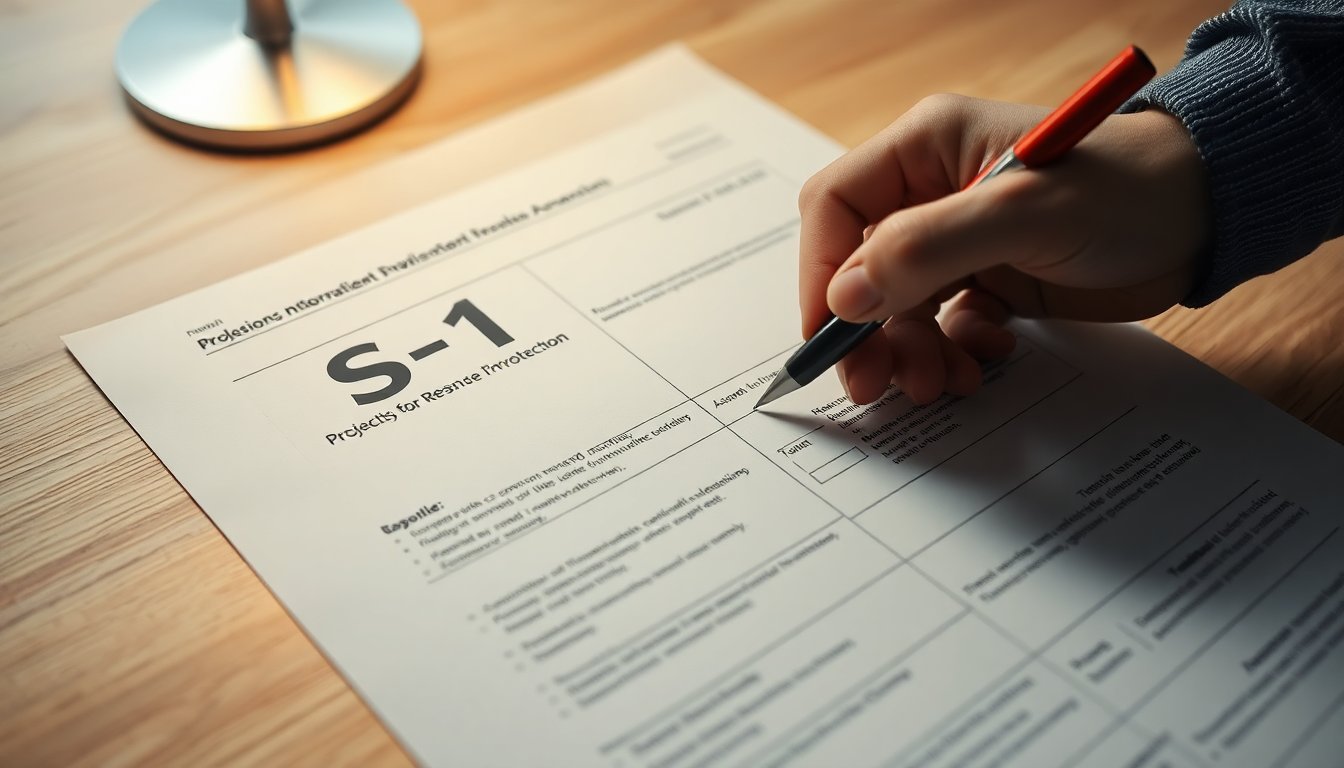
Who wins and who loses if Anthropic goes public?
Winners are Anthropic's early investors and employees holding equity, who get liquidity at a $100 billion-revenue valuation. Enterprise buyers may also win short-term, because a public Anthropic has stronger incentives to keep uptime and support contracts stable. Losers are harder to name but more interesting. OpenAI and Google DeepMind gain a rhetorical weapon: any softening of Anthropic's safety language in the S-1 becomes evidence that safety-first positioning was always a fundraising strategy. Anthropic's own safety researchers lose internal leverage, because public-company priorities are set by revenue guidance, not research ethics memos. The comparison below captures the strategic divergence.| Dimension | Anthropic (pre-IPO posture) | OpenAI (private, capped-profit) | Google DeepMind (subsidiary) |
|---|---|---|---|
| Revenue scale (2026) | $100B annualized (expected, per NYTimes) | Not disclosed publicly at same scale | Bundled into Alphabet cloud and ads |
| Safety messaging | CEO publicly calls for slowing some frontier models | Mixed; safety team turnover reported | Internal review boards, less public CEO advocacy |
| Capital structure | Moving to public markets | Private, capped-profit with Microsoft partnership | Wholly owned by Alphabet |
| Disclosure obligation | SEC risk factors, quarterly guidance | Limited; investor updates only | Alphabet 10-K, segment reporting |
| Safety as strategy | Brand asset pre-IPO, disclosure risk post-IPO | Contested internally | Subordinate to product roadmap |
| Verdict | Anthropic faces the sharpest tradeoff: its safety brand is worth most before the filing, least after. | OpenAI avoids the disclosure test but forfeits public-market credibility | DeepMind never had a standalone safety brand to lose |
What will the S-1 actually reveal?
The prospectus is the only document that matters. NYTimes Technology reported the revenue expectation and the IPO pursuit but did not detail the risk-factor language. That means the specific disclosure — how Anthropic describes model release pacing, safety review, and Amodei's public advocacy — is the verifiable unknown. I would expect three things in the filing: a risk factor acknowledging that safety-motivated delays could harm competitive position; a governance section describing how safety decisions are made; and a use-of-proceeds section that funds compute, not safety research. If all three appear, the safety-first brand survives as a compliance function. If the risk factor is absent, the brand was always marketing.Does the $100 billion figure change the competitive math?
Yes, because it reframes Anthropic from challenger to incumbent. A $100 billion annualized run rate, as reported by NYTimes Technology, puts Anthropic in a position where slowing down is expensive in a way it was not at $1 billion. Every quarter of delayed frontier release is now a guidance miss. That is the structural trap. Amodei's warnings were cheap when Anthropic was private and small. At public-company scale, they become a cost center with a stock price attached.
My thesis: Anthropic's safety warnings were always a pre-IPO asset, and the filing will convert them into a post-IPO liability that the company manages rather than honors.
Short term, this is a win. The IPO raises capital, rewards employees, and gives Anthropic the balance sheet to compete on compute. Amodei keeps making safety speeches because they cost nothing before the roadshow.
Long term, the incentives invert. Public shareholders do not pay premiums for restraint. By the first or second earnings call after listing, Anthropic will face analyst questions about release cadence that treat safety pauses as execution risk. The company will either soften the language or accept a valuation discount.
Who gains: early investors, employees with equity, and enterprise buyers who get a more stable vendor. Who loses: safety researchers inside Anthropic who lose internal veto power, and the broader safety-first brand that competitors will now cite as a cautionary tale.
One concrete prediction: Anthropic's S-1, expected to be filed within two quarters of this report, will include a risk factor linking safety-motivated release delays to competitive harm — and Amodei will not repeat his 'slow down' language in any public earnings call during Anthropic's first year as a public company.
Predictions
1. Anthropic's S-1 will include a risk factor tying safety-motivated model release delays to competitive and revenue harm, filed within two quarters of the September 18, 2026 NYTimes report. 2. OpenAI will publicly contrast its own release cadence with Anthropic's post-IPO disclosures within 12 months of Anthropic's listing, using the S-1 language as evidence. 3. At least one institutional investor will cite Anthropic's safety-review governance as a valuation discount factor in a public note within two quarters of the IPO.- September 2026NYTimes reports Anthropic IPO pursuit
NYTimes Technology reports Anthropic is pursuing an IPO and is expected to generate $100 billion in annualized revenue this year, while CEO Dario Amodei calls for slowing some advanced A.I. development.
- Q4 2026 (expected)S-1 filing window
Anthropic is expected to file its S-1 within two quarters, disclosing risk factors that will reveal how it reconciles safety messaging with public-market revenue guidance.
- 2027 (projected)First post-IPO earnings call
Analyst questions on release cadence will test whether Amodei's safety language survives quarterly guidance pressure.
- September 2026NYTimes reports Anthropic IPO pursuit
NYTimes Technology reports Anthropic is pursuing an IPO and is expected to generate $100 billion in annualized revenue this year, while CEO Dario Amodei calls for slowing some advanced A.I. development.
- Q4 2026 (expected)S-1 filing window
Anthropic is expected to file its S-1 within two quarters, disclosing risk factors that will reveal how it reconciles safety messaging with public-market revenue guidance.
- 2027 (projected)First post-IPO earnings call
Analyst questions on release cadence will test whether Amodei's safety language survives quarterly guidance pressure.
Article summary
- Anthropic's $100 billion annualized revenue expectation, reported by NYTimes Technology, makes its safety warnings expensive in a way they were not at private-market scale.
- The IPO converts Amodei's public safety advocacy from a brand asset into a disclosure obligation with legal and valuation consequences.
- OpenAI and Google DeepMind gain a rhetorical advantage if Anthropic's S-1 softens its safety language.
- The S-1 risk factors, not Amodei's speeches, will determine whether Anthropic's safety-first identity survives public ownership.
- Watch the first post-IPO earnings call: if safety pauses are framed as execution risk by analysts, the brand has already been repriced.

Source and attribution
NYTimes Technology
Anthropic Pursues IPO Despite Its A.I. Safety Warnings






Discussion
Add a comment