

Anthropic's $30B Surrender to Google's TPU Empire
Anthropic's expanded compute partnership with Google and Broadcom reveals the brutal economics of frontier AI. While the company boasts $30 billion in run-rate revenue, its deepening dependence on Google's TPU ecosystem signals a fundamental power shift in the AI stack.
Anthropic just tripled down on its dependency on Google Cloud and Broadcom's custom chips, revealing a $30 billion run-rate revenue that's built on borrowed infrastructure. This isn't just another cloud deal—it's the moment Anthropic admitted it can't compete at the hardware layer and willingly became Google's most valuable AI tenant.
- Anthropic significantly expanded its compute agreement with Google Cloud and Broadcom to meet skyrocketing demand for Claude models
- The company's run-rate revenue has surged to $30 billion, creating unprecedented compute requirements
- The deal represents a strategic choice to deepen dependence on Google's TPU infrastructure rather than build independent capacity
- This arrangement reveals the fundamental power imbalance between AI model developers and infrastructure providers
Why Did Anthropic Triple Down on Google Instead of Building Its Own Infrastructure?
Anthropic's decision to expand its Google Cloud deal rather than pursue vertical integration represents a calculated surrender. With $30 billion in run-rate revenue (TechCrunch, April 2026), the company theoretically has the capital to invest in custom infrastructure. Yet it chose to deepen its dependence on Google's TPU ecosystem. This reveals a brutal truth: building competitive AI infrastructure requires expertise and scale that even well-funded model companies can't match. Google has spent over a decade developing its TPU architecture and has the data center footprint to deploy at global scale. Anthropic's choice suggests that even with massive revenue, the capital expenditure and time required to build competitive infrastructure would cripple its model development pace.
What Does This Deal Reveal About the True Economics of Frontier AI?
The $30 billion run-rate revenue figure (TechCrunch, April 2026) masks a dangerous dependency. While impressive on its face, this revenue comes with massive infrastructure costs that flow directly to Google and Broadcom. Industry analysts estimate that compute costs for frontier models consume 40-60% of revenue. By locking into Google's TPU ecosystem, Anthropic is trading margin for scale—accepting lower profitability in exchange for guaranteed capacity. This creates a classic platform dependency where Google captures increasing value as Anthropic grows. The deal structure likely includes volume discounts, but more importantly, it gives Google visibility into Anthropic's most sensitive scaling requirements and technical challenges.
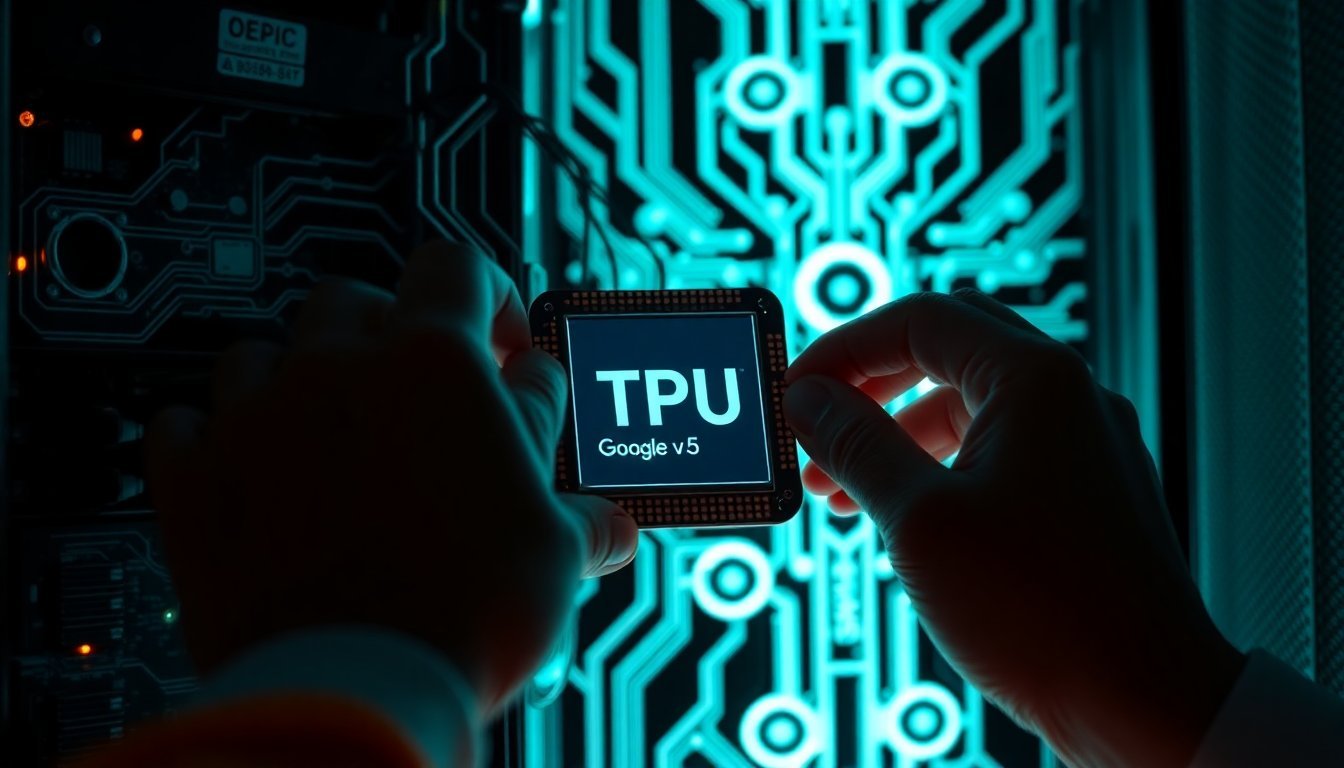
Who Wins and Loses in This Three-Way Partnership?
Google emerges as the clear strategic winner. The company secures its largest AI workload while validating its TPU architecture against Nvidia's dominance. Broadcom gains a guaranteed revenue stream for its custom chip designs, though it remains a subcontractor to Google's ecosystem. Anthropic gets guaranteed capacity but sacrifices long-term independence and margin. The biggest loser is Nvidia, whose GPU hegemony faces direct challenge from vertically integrated hyperscalers. Smaller AI companies lose too—they now compete against an Anthropic that has preferential access to Google's best infrastructure at scale pricing they can't match.
How Does This Reshape the Competitive Landscape Against OpenAI?
This deal creates a fundamental asymmetry in the OpenAI vs. Anthropic rivalry. While both companies boast massive revenues, their infrastructure strategies diverge dramatically. OpenAI maintains a multi-cloud approach with significant Microsoft Azure investment but retains flexibility. Anthropic is now effectively locked into Google's ecosystem. This gives Google unprecedented influence over Anthropic's roadmap—TPU architecture decisions will directly shape what Anthropic can build. The partnership creates a tighter integration than Microsoft's relationship with OpenAI, potentially giving Anthropic technical advantages but at the cost of strategic independence.
| Dimension | Anthropic-Google Partnership | OpenAI-Microsoft Relationship |
|---|---|---|
| Infrastructure Control | Google controls entire stack (TPUs, data centers) | Microsoft provides Azure capacity but OpenAI uses multiple clouds |
| Strategic Independence | Low - Deeply integrated into Google ecosystem | Medium - Multi-cloud approach maintains options |
| Technical Advantage | High - Custom TPU optimizations possible | Medium - Standard GPU infrastructure |
| Margin Impact | Negative - Google captures infrastructure margin | Mixed - Pay market rates but maintain flexibility |
| Scale Guarantee | High - Priority access to Google's capacity | Medium - Competing with other Azure customers |
| Verdict | Google wins strategically - Gains control over a frontier AI developer while Microsoft maintains a more balanced partnership with OpenAI | |
What Are the Long-Term Consequences for AI Market Structure?
This deal accelerates the consolidation of AI power into three layers: infrastructure giants (Google, Microsoft, Amazon), model developers (Anthropic, OpenAI), and application builders. The middle layer—model developers—is becoming increasingly dependent on the infrastructure layer for competitive advantage. We're witnessing the emergence of AI "company towns" where model developers become permanent tenants of cloud providers. This creates systemic risk: if Google's TPU roadmap diverges from Anthropic's needs, or if pricing terms change, Anthropic has limited alternatives. The deal also raises antitrust concerns—Google now has both the infrastructure and a leading model developer in its ecosystem.
Anthropic's expanded Google deal represents a strategic failure disguised as a scaling success. I believe the company has traded long-term independence for short-term capacity, creating a dependency that will haunt it within 18 months. While the $30 billion revenue figure (TechCrunch, April 2026) sounds impressive, it's built on infrastructure margins that flow to Google. In the short term, Anthropic gets the compute it needs to compete with OpenAI. But in the long term, Google gains control over a critical AI developer while locking out competitors from accessing similar-scale infrastructure. The real winner isn't Anthropic or even Google shareholders—it's Sundar Pichai, who has successfully turned Google Cloud from an also-ran into the essential infrastructure for frontier AI. I expect Anthropic's next funding round to include explicit provisions for infrastructure independence by Q4 2027, as investors realize the company has become a high-margin tenant rather than a true platform.
The implications are stark: Google wins by securing a trillion-dollar AI workload and validating its TPU architecture. Broadcom wins with guaranteed design revenue. Anthropic loses strategic optionality and margin. Nvidia loses as hyperscalers vertically integrate. Developers lose as AI infrastructure consolidates into walled gardens. This deal isn't about partnership—it's about power, and Google just claimed most of it.
Predictions
- Google will launch a "TPU-as-a-Service" offering for enterprise AI developers by Q3 2027, using Anthropic as the reference customer to challenge Nvidia's cloud GPU dominance.
- Anthropic's next major funding round (expected 2027) will include a $5+ billion earmark for independent infrastructure development as investors demand reduced Google dependency.
- The European Commission will open an antitrust investigation into Google's AI infrastructure dominance by Q2 2027, specifically examining whether TPU access terms disadvantage competing model developers.
- April 2026Deal Expansion Announced
Anthropic announces expanded compute agreement with Google Cloud and Broadcom amid $30B run-rate revenue
- 2025Initial Partnership Formed
Anthropic and Google establish initial compute partnership for Claude model training
- 2024TPU v5 Launch
Google launches fifth-generation TPU architecture, providing foundation for expanded AI workloads
- Q4 2027 (Predicted)Independence Push
Anthropic seeks funding for independent infrastructure to reduce Google dependency
Estimated Infrastructure Cost Allocation for $30B AI Revenue
Article Summary
- Anthropic's $30 billion revenue is built on infrastructure it doesn't control, creating a dangerous long-term dependency
- Google emerges as the true winner, securing both revenue and strategic control over a frontier AI developer
- The deal validates hyperscaler vertical integration as the dominant AI infrastructure model, threatening Nvidia's position
- Anthropic sacrificed strategic independence for scaling capacity—a tradeoff that will limit its options within 18 months
- This partnership accelerates AI market consolidation into walled gardens, raising antitrust concerns for regulators

Source and attribution
TechCrunch AI
Anthropic ups compute deal with Google and Broadcom amid skyrocketing demand






Discussion
Add a comment