

Anthropic Says Moonshot Routed Users Through Claude
Anthropic's public accusation against Moonshot AI reframes model access as a national-security boundary, not a customer relationship. The article argues this is a trust-collapse event that will accelerate API verification, reshape how US labs sell access abroad, and hand Moonshot's domestic rivals a rare opening.
On September 10, 2026, Anthropic PBC publicly accused Moonshot AI, China's most-hyped foundation-model startup, of covertly routing thousands of user requests through Anthropic's Claude models and presenting the outputs as Moonshot's own. That is not a licensing dispute. It is an accusation that a Chinese AI champion built part of its product surface on top of a US competitor's weights without asking, and it lands at the worst possible moment for cross-border AI trust.
- Anthropic PBC accused Moonshot AI of covertly routing thousands of user requests through Claude and passing off the responses as its own, according to Bloomberg Technology.
- The accusation is not a licensing dispute — it is a claim that a Chinese AI champion built product surface on a US competitor's models without disclosure.
- The core tension: US labs have treated API access as a commercial relationship, but this story suggests it must now be treated as a verifiable security boundary.
What Exactly Is Anthropic Alleging?
According to Bloomberg Technology, Anthropic PBC accused Moonshot AI of covertly routing thousands of user requests to Anthropic's Claude models and passing off the responses as its own product. The report, published September 10, 2026, frames the conduct as an attempt to "gain an edge in the AI race" rather than a technical accident. The word "covertly" is doing enormous work here. Anthropic is not alleging that Moonshot used an authorized API key and exceeded a quota — that would be a billing dispute. The allegation is that Moonshot concealed the origin of the traffic, which implies misrepresentation to Anthropic's systems, to Moonshot's own users, or both. Bloomberg Technology did not publish the technical evidence behind the claim, and Anthropic has not released logs publicly. That evidentiary gap matters. Without request-level proof, this remains an accusation, not a finding. But the specificity of "thousands of user requests" suggests Anthropic believes it has traceable telemetry — likely request fingerprints, timing patterns, or account behavior that does not match normal consumer usage.Why Does API Provenance Suddenly Matter So Much?
For most of the commercial AI era, API access has been treated as a plumbing decision: you pay, you get tokens, nobody asks where the tokens go. Anthropic's accusation breaks that assumption. If a competitor can route user traffic through Claude and rebrand the output, then every model provider's API is a potential laundering channel for a rival's product. Anthropic's usage policy already prohibits using its services to "build a competing model" and requires accurate disclosure of use cases, though the company has not historically enforced this at the request level. The Moonshot accusation implies Anthropic now believes request-level enforcement is necessary.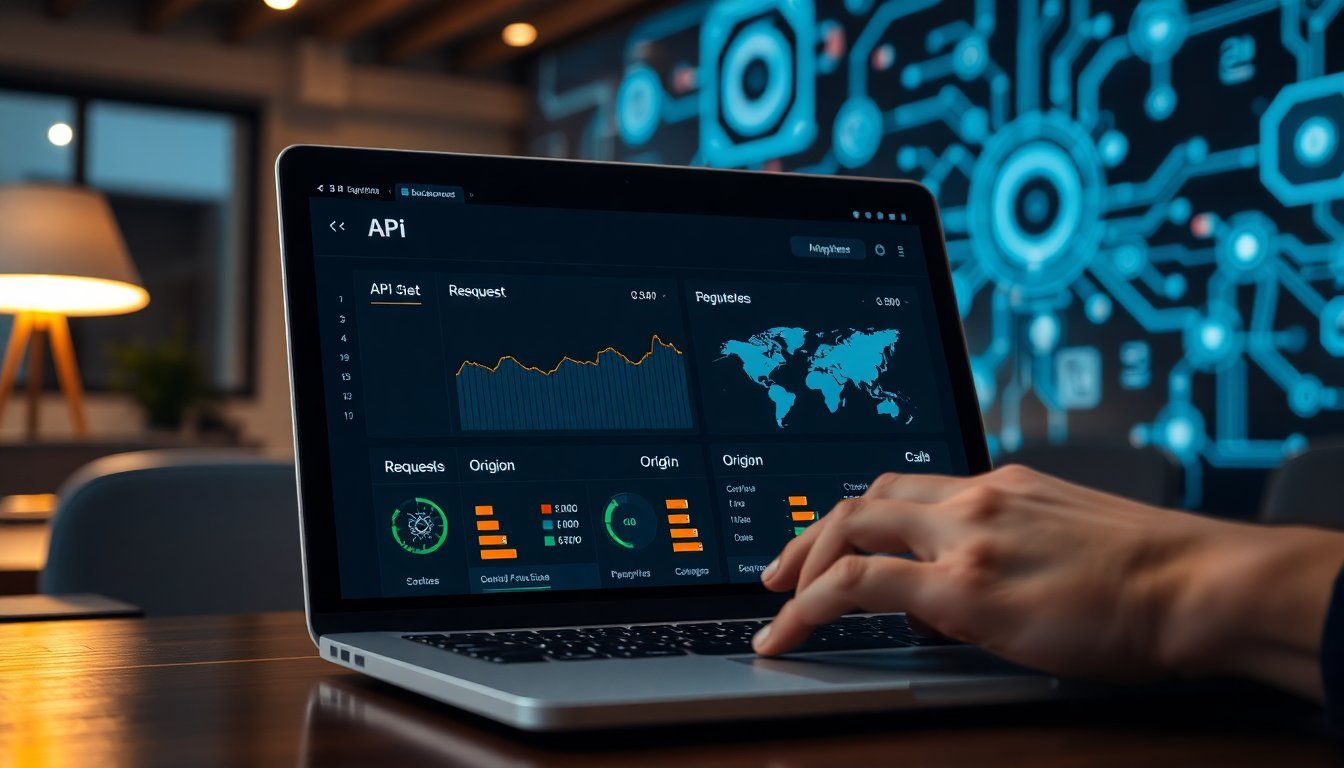
Who Wins and Who Loses From This Accusation?
Moonshot loses the most if the allegation sticks. Its entire pitch as China's AI champion depends on the claim that its models are genuinely competitive. If a meaningful share of its responses were Claude outputs, that pitch collapses — not just internationally, but inside China, where self-reliance is a political requirement. Anthropic gains leverage but also exposure. It gains a public justification for tighter access controls, geofencing, and verification requirements that it can sell to US policymakers as national-security hygiene. It is exposed because the same accusation invites scrutiny of Anthropic's own detection capabilities: if Moonshot routed thousands of requests undetected, how many other customers are doing the same thing? US enterprise buyers gain a reason to demand provenance guarantees from every vendor. Chinese rivals to Moonshot — Zhipu, Alibaba's Qwen team, DeepSeek — gain a reputational opening at home, where "we built it ourselves" is now a sharper differentiator.| Dimension | Anthropic | Moonshot AI |
|---|---|---|
| Public position | Accuser; frames issue as misuse of its models | Has not issued a detailed public rebuttal in the source material |
| Immediate risk | Must prove detection capability and enforcement | Reputational damage to "self-built model" claim |
| Strategic upside | Justifies stricter API verification and access controls | None visible from this accusation |
| Regulatory exposure | Could gain US policy support for export-style controls | Faces scrutiny from both US and Chinese regulators |
| Verdict | Short-term winner on leverage, long-term winner only if evidence holds | Short-term loser regardless of outcome |
Does This Change How US Labs Sell AI Abroad?
Yes, and that is the real story. Anthropic's accusation, as reported by Bloomberg Technology, gives every US frontier lab a template: treat cross-border API usage as a counterintelligence problem, not a customer-success problem. Expect request fingerprinting, jurisdiction-aware rate limits, and contractual language that makes covert routing a terminable offense. The harder question is whether this is enforceable. Model outputs are hard to watermark reliably, and a determined reseller can proxy traffic through third-party clouds. Anthropic's claim that it detected "thousands" of requests suggests detection is possible at some scale — but scale is exactly what makes it hard.What Should Enterprise Buyers Take From This?
If you buy AI capability, the lesson is that model provenance is now a supply-chain risk. A vendor that cannot explain which model produced a given output is a vendor that cannot be audited. That is not a hypothetical after September 10, 2026 — it is the baseline question.Thesis: Anthropic's accusation against Moonshot is a trust-collapse event that will force US labs to convert API access from a commercial relationship into a verifiable security boundary — and Moonshot will pay for it whether or not the allegation is ever proven in court.
In the short term, Anthropic wins the narrative. By going public rather than quietly terminating an account, it converts a compliance incident into a geopolitical argument, which is exactly the argument US labs need to justify tighter controls on who can call their models and from where. Moonshot, by contrast, cannot easily disprove the claim without exposing its own infrastructure, which is a lose-lose.
In the long term, the bigger loser is the assumption that AI capability can flow across borders as a neutral commodity. If US labs begin treating API traffic as a security surface, Chinese labs will accelerate domestic substitution — not because they want to, but because access becomes unreliable. That dynamic hurts everyone's margins and slows global model diffusion.
My concrete prediction: within 90 days of this accusation, at least one major US frontier lab — most likely Anthropic itself — will announce jurisdiction-based API verification requirements that explicitly prohibit routing through third-party intermediaries without disclosure.
Predictions
- Anthropic will publish a formal API usage-verification policy by Q1 2027 that requires customers to disclose intermediary routing and permits request-level auditing.
- At least one Chinese foundation-model lab (Zhipu, DeepSeek, or Alibaba's Qwen team) will publicly cite the Moonshot accusation in marketing materials positioning itself as fully self-built within six months.
- The US Commerce Department will open a public comment period on AI model API export controls before the end of 2027, using this incident as a cited rationale.
- September 2026Anthropic goes public
Anthropic PBC publicly accuses Moonshot AI of covertly routing thousands of user requests through Claude models, according to Bloomberg Technology.
- Q1 2027Expected policy response
Predicted window for Anthropic to formalize API usage-verification requirements for intermediary routing.
- September 2026Anthropic goes public
Anthropic PBC publicly accuses Moonshot AI of covertly routing thousands of user requests through Claude models, according to Bloomberg Technology.
- Q1 2027Expected policy response
Predicted window for Anthropic to formalize API usage-verification requirements for intermediary routing.
Article Summary
- Anthropic's accusation is strategically timed and strategically framed: it converts a compliance incident into a national-security argument for tighter API controls.
- The evidentiary burden now sits with Anthropic — without published request-level proof, this remains an allegation, not a finding.
- Moonshot loses reputationally regardless of outcome, because its core claim is self-built capability.
- Enterprise buyers should treat model provenance as a supply-chain risk and demand auditability from every vendor.
- The long-term casualty is cross-border AI diffusion, as US labs move toward jurisdiction-aware access controls.
Source and attribution
Bloomberg Technology
Moonshot Secretly Routed User Requests Through Claude, Anthropic Says






Discussion
Add a comment