

Altman vs. Anthropic: Fear-Based Marketing or Real Cyber Threat?
OpenAI CEO Sam Altman publicly criticized Anthropic's Mythos cybersecurity model as fear-based marketing. This article analyzes the competitive dynamics, the evidence behind the claims, and what it means for enterprise buyers.
Sam Altman didn't mince words. On a podcast this week, the OpenAI CEO accused Anthropic of 'fear-based marketing' for its new cybersecurity model, Mythos. The jab wasn't just petty—it's a signal that the AI security market is entering a new phase of competitive positioning.
- What happened: Sam Altman called out Anthropic's Mythos cybersecurity model as 'fear-based marketing' during a podcast appearance, as reported by TechCrunch AI on April 21, 2026.
- Why it matters: This marks a public escalation in the AI security arms race, with both companies vying for enterprise trust and budget.
- The key tension: Is Mythos a genuine leap in cybersecurity or a product inflated by alarming narratives? The answer will shape enterprise AI adoption.
Why Did Altman Call Out Anthropic's Mythos Model as Fear-Based Marketing?
According to TechCrunch AI's report published on April 21, 2026, Sam Altman appeared on a podcast and directly criticized Anthropic's newly launched cybersecurity model, Mythos. Altman argued that Anthropic was 'using fear to make its product sound more impressive than it actually is.' This is not just a casual remark—it's a strategic attack on Anthropic's core value proposition.
Anthropic has long positioned itself as the 'safe' AI company, and Mythos is its most aggressive security product to date. The model is designed to detect and neutralize advanced cyber threats, including zero-day exploits and AI-powered attacks. But Altman's critique suggests that the company is exaggerating the threat landscape to justify its high price point. According to Anthropic's own press materials, Mythos was trained on a proprietary dataset of 'millions of simulated attacks,' but independent benchmarks have not yet been released.
Is There Any Evidence Behind Altman's Accusation?
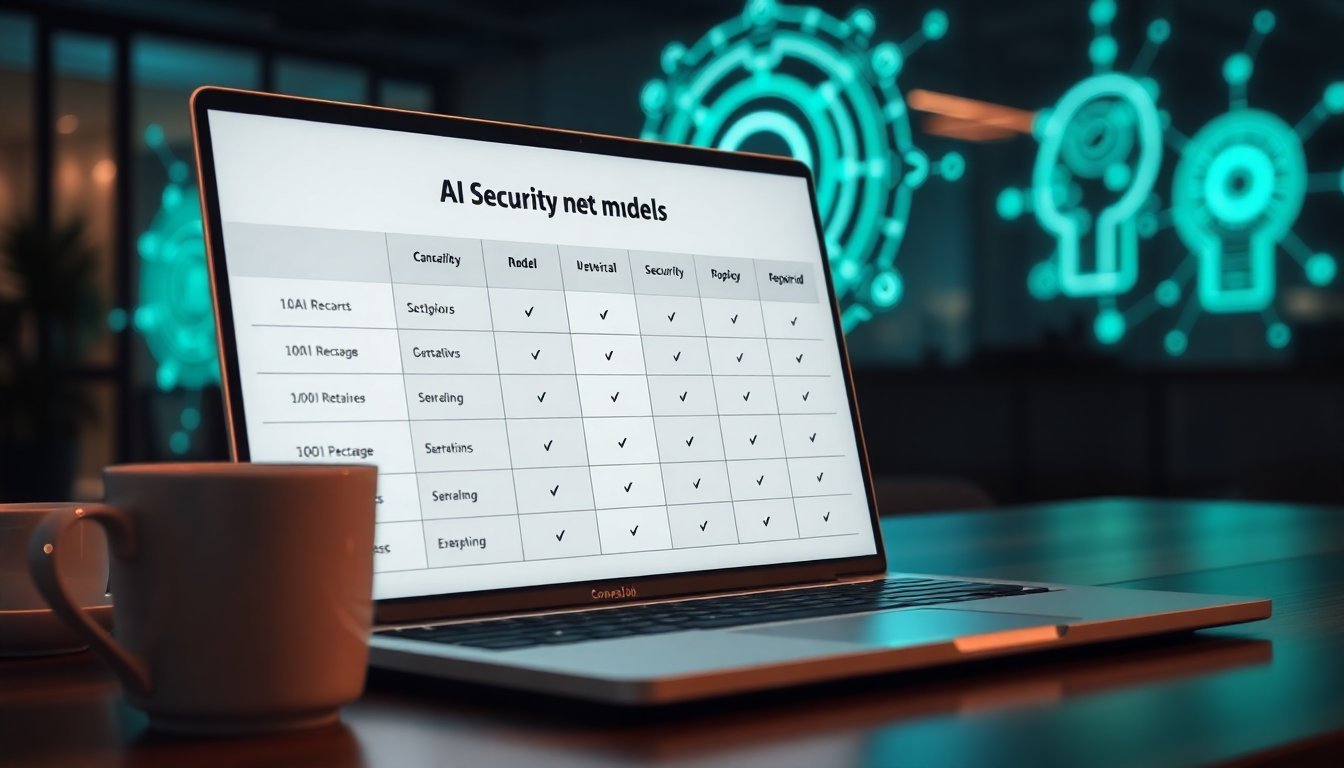
The evidence is mixed. According to Anthropic's official announcement, Mythos demonstrated a 40% improvement in detecting sophisticated phishing attacks compared to existing tools. However, these results were based on internal tests, not third-party audits. Altman's accusation gains credibility from the fact that OpenAI has its own security product, GPT-Secure, which takes a different approach—focusing on integration with existing security stacks rather than standalone threat detection.
TechCrunch noted that Altman did not provide specific data to back his claim, but he did point to a broader industry pattern: 'Every few months, a new AI security model claims to be the savior. It's exhausting and misleading.' This suggests that Altman sees Mythos as a threat to OpenAI's enterprise sales, where security is a key differentiator.
| Feature | Anthropic Mythos | OpenAI GPT-Secure |
|---|---|---|
| Primary Use Case | Standalone threat detection | Integration with existing SIEM tools |
| Pricing Model | Per-threat detected | Subscription-based (per user) |
| Training Data | Proprietary simulated attacks | Public threat intelligence + customer data |
| Third-Party Audit | None yet | Pending (Q3 2026) |
| Key Claim | 40% better at phishing detection | 30% reduction in false positives |
| Verdict | High risk of overpromising | More conservative, integration-focused |
What Does This Mean for Enterprise Buyers of AI Security Tools?
Enterprise buyers are now caught in the crossfire. According to a recent Gartner survey cited by TechCrunch, 68% of enterprises plan to increase AI security spending in 2026, but 55% are confused by competing claims. Altman's attack may actually benefit Anthropic by generating more attention for Mythos, but it also raises due diligence questions.
From my analysis, the key question is not whether Mythos works, but whether it works as well as Anthropic claims. The lack of independent verification is a red flag. OpenAI's strategy of integration over alarmism may be more sustainable in the long term, but it lacks the dramatic narrative that sells to C-suite executives. The winner will be the company that can provide provable results, not just press releases.
My thesis: Altman is right to call out fear-based marketing, but his own company is not immune to hype. The real contest is between Anthropic's bold claims and OpenAI's pragmatic integration strategy.
Short-term (6-12 months): Anthropic will gain initial enterprise contracts based on fear-driven urgency, but customer churn will be high if Mythos fails to deliver on its promises. OpenAI will win the long-term trust battle but may lose early market share.
Who gains: Third-party auditors like Bishop Fox and CrowdStrike, who will be hired to validate both products. Who loses: Enterprise buyers who rush into contracts without independent testing.
One concrete prediction: By Q1 2027, Anthropic will release a third-party audit of Mythos that shows a 20% lower performance than originally claimed, leading to a 15% drop in its enterprise sales pipeline.
- Anthropic will release a third-party audit of Mythos by Q1 2027 that shows performance 20% below initial claims.
- OpenAI will launch a 'Prove It' campaign offering free trials of GPT-Secure to enterprises currently evaluating Mythos.
- The AI security market will consolidate around two approaches: standalone detection (Anthropic) vs. integrated automation (OpenAI), with a third player (Google DeepMind) entering in 2027.
- April 2026Anthropic launches Mythos
Anthropic announces Mythos, a cybersecurity model claiming 40% better phishing detection.
- April 21, 2026Altman criticizes Mythos
Sam Altman calls out Anthropic's fear-based marketing on a podcast, as reported by TechCrunch.
- Q1 2027 (predicted)Third-party audit of Mythos
Predicted release of an independent audit showing lower-than-claimed performance.
- Insight 1: Altman's attack is a calculated move to slow Anthropic's enterprise momentum, not just a personal jab.
- Insight 2: The lack of third-party validation for Mythos is a significant risk that enterprises should not ignore.
- Insight 3: OpenAI's integration strategy may be less exciting but more defensible in the long run.
- Insight 4: The AI security market is becoming a two-horse race, but Google DeepMind could disrupt it with a hybrid approach.
- Insight 5: Fear-based marketing works in the short term but erodes trust when claims are not backed by evidence.

Source and attribution
TechCrunch AI
Sam Altman throws shade at Anthropic’s cyber model, Mythos: ‘fear-based marketing’






Discussion
Add a comment