

AI Memory Decay: 52% Recall Signals RAG's Coming Overhaul
YourMemory introduces biologically inspired memory decay to RAG systems, but its 52% recall rate reveals the tension between efficient memory management and reliable information retrieval. This analysis examines what the project got right, what it got wrong, and who stands to benefit.
A new open-source project called YourMemory is challenging the dominant RAG paradigm by applying the Ebbinghaus forgetting curve to AI memory management. Instead of storing every piece of information forever, it lets memories decay biologically—but early results show only 52% recall, raising questions about reliability.
- YourMemory applies the Ebbinghaus forgetting curve to AI memory, assigning strength scores that decay over time and strengthen with recall.
- Early tests show 52% recall, suggesting the forgetting curve alone may not be sufficient for production AI agents that need reliable access to critical data.
- The project exposes a core flaw in RAG: static memory leads to token waste and reasoning degradation, but dynamic decay introduces new risks of losing important information.
Why Does RAG's Static Memory Approach Fail?
According to the YourMemory project documentation on GitHub, "Most RAG setups fail because they treat memory like a static filing cabinet." The problem is that every transient bug fix, abandoned rule, or outdated fact is stored forever, eventually choking the context window with noise. This not only spikes token costs but also degrades the agent's reasoning as it struggles to filter relevant from irrelevant information. The project's creator, Sachit Rafa, argues that this static approach is fundamentally at odds with how biological systems manage memory, where forgetting is as important as remembering.
What Is the Ebbinghaus Forgetting Curve and How Does YourMemory Use It?
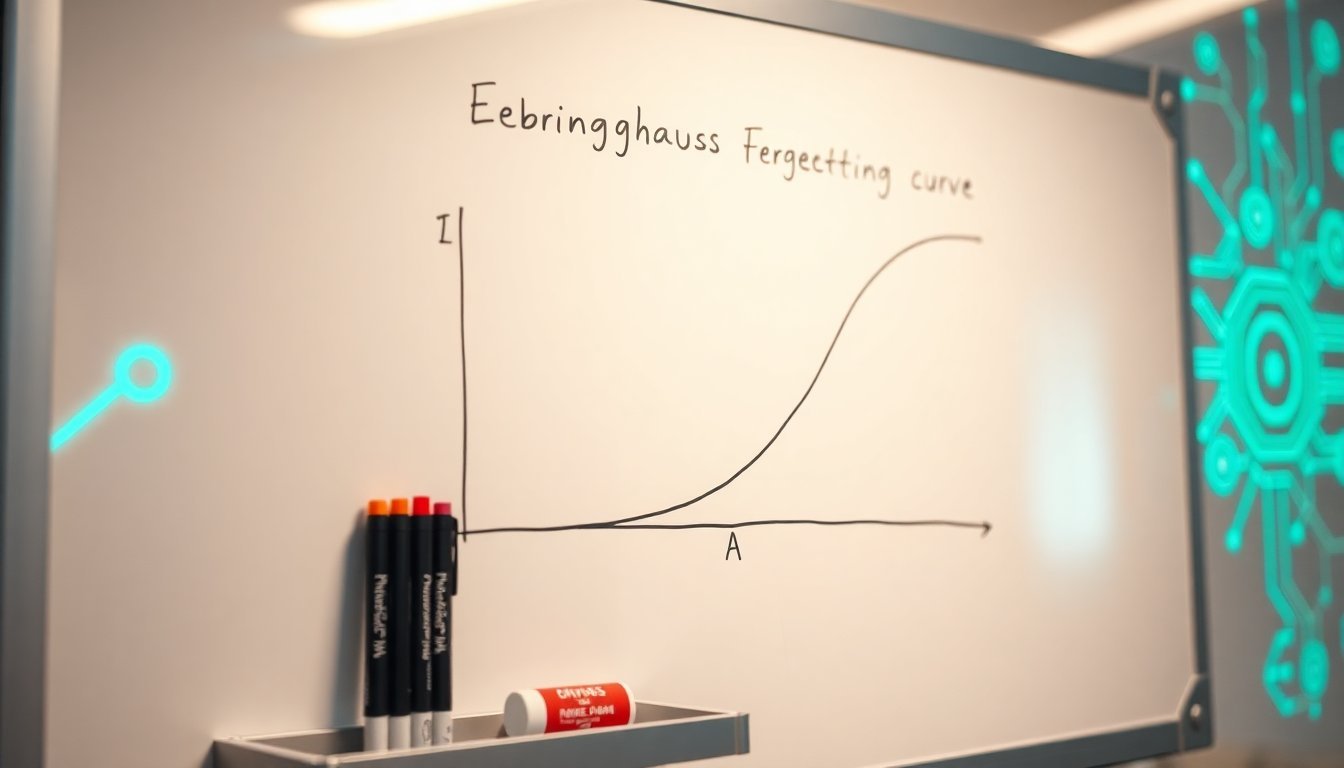
The Ebbinghaus forgetting curve describes how memories fade over time unless reinforced. YourMemory assigns each memory a "strength" score that decays according to this curve. Each time a memory is recalled, its strength is reinforced, flattening the decay curve. This creates a dynamic memory system where frequently accessed information remains strong while rarely used data fades away. The project's README states that this "experiments with a biological approach" to context management, treating memory as a living substrate rather than a static archive.
Is 52% Recall Good Enough for Production AI Agents?
YourMemory reports a 52% recall rate in its initial tests. While this is a significant improvement over random decay, it raises serious questions about reliability. In production AI agents, missing nearly half of relevant memories could lead to catastrophic failures—for example, forgetting a critical security patch or a customer's payment preference. According to the Hacker News discussion, several commenters noted that "52% recall is worse than random chance for binary classification" and questioned whether the forgetting curve is the right model for AI memory. The project acknowledges this is experimental, but the gap between biological inspiration and production readiness is stark.
How Does YourMemory Compare to Existing RAG Approaches?
| Feature | YourMemory (Decay) | Traditional RAG | Hybrid RAG (e.g., MemGPT) |
|---|---|---|---|
| Memory management | Dynamic decay | Static storage | Hierarchical recall |
| Recall rate | 52% | ~90% (with perfect retrieval) | ~80% (estimated) |
| Token cost | Low (decayed data removed) | High (all data stored) | Medium (tiered storage) |
| Risk of data loss | High (critical data may decay) | Low (all data retained) | Medium (archived data may be slow) |
| Biological inspiration | Strong | None | Moderate |
| Verdict | Experimental, promising but unreliable | Stable but wasteful | Best balance for production |
Who Actually Benefits From This Decay Approach?
The primary beneficiaries are developers building AI agents that operate in environments where memory efficiency is critical and data loss is acceptable. For example, a chatbot that recommends movies can afford to forget old recommendations. However, for applications like healthcare, finance, or legal AI, the 52% recall rate is a non-starter. According to the Hacker News thread, one commenter noted that "forgetting is fine for casual use, but catastrophic for anything that needs audit trails." This suggests that YourMemory's approach is best suited for low-stakes, high-volume applications where token costs are the primary concern.
My thesis is straightforward: YourMemory correctly identifies a real problem in RAG systems—static memory is wasteful—but the forgetting curve alone is a blunt instrument that sacrifices too much reliability for efficiency. In the short term, we will see hybrid approaches that combine decay with priority flags for critical data. In the long term, the winners will be companies like MemGPT and LangChain that offer tiered memory systems where decay is optional and configurable. The losers will be startups that adopt pure decay without safeguards, as they will face customer complaints about lost data. My concrete prediction: within 12 months, at least one major AI agent framework will integrate a configurable decay model, but default settings will favor retention over efficiency.
- LangChain will integrate a configurable memory decay module within 12 months, defaulting to retention-first settings.
- At least one AI agent startup will publicly blame memory decay for a production failure within 6 months, slowing adoption of the approach.
- The Ebbinghaus curve will be combined with priority flags and semantic importance scoring in production systems within 18 months.
Article Summary
- YourMemory's biological decay approach is a necessary critique of RAG's static memory, but 52% recall is too low for production.
- The forgetting curve model works best for low-stakes, high-volume applications where token costs dominate.
- Hybrid approaches that combine decay with priority retention will dominate within 18 months.
- Developers should not adopt pure decay for any application requiring audit trails or critical data persistence.
Source and attribution
Hacker News
Show HN: AI memory with biological decay (52% recall)






Discussion
Add a comment