


AI Extinction Talk Is Cheap Without Bioweapons Controls
MIT Technology Review's Roundtables event asked whether AI could kill us all. The honest answer is that the bioweapons angle is the only part with a concrete near-term mechanism — and the least funding.
What you will learn
- Why the AI extinction debate keeps collapsing into a bioweapons debate, and why that's actually useful
- What MIT Technology Review's Roundtables event put on the table, and what it left off
- The difference between model-level guardrails and lab-level biosafety controls — and which one AI companies can actually deliver
- Where the money and policy attention are going, and where they are conspicuously not
- How to read the next wave of 'AI safety' announcements without being fooled by the framing
Why does every AI extinction conversation end up at bioweapons?
You've seen the pattern. A panel convenes to discuss whether AI could end humanity. Someone raises paperclips or recursive self-improvement. The room gets uncomfortable. Then somebody says 'bioweapons' and everyone exhales, because at least that's a concrete mechanism with a concrete actor and a concrete failure mode.
That's roughly what happened at MIT Technology Review's live Roundtables event on Wednesday, according to the publication's own write-up in The Download. The newsletter framed the session around the question 'could AI really kill us all?' — a question MIT Technology Review said 'many seem to be asking right now.' The framing is telling. When a mainstream tech publication puts extinction risk and bioweapons threat in the same headline, it is not making a philosophical point. It is telling you where the reporting leads.
MIT Technology Review reported that the event was structured as a Q&A-style roundtable, which is the right format for this topic and also the hardest one to do well. Extinction risk invites grand abstraction. Bioweapons invite specifics: which models, which pathogens, which screening regimes, which labs. The specifics are where the argument actually lives, and they're where most AI safety commentary refuses to go.
What is the actual bioweapons threat model?
Here's the version of the argument that survives contact with reality. Large models are good at synthesizing publicly available technical information. Much of the information relevant to pathogen research is already public, already dual-use, and already scattered across journals, theses, and lab protocols. The marginal uplift from a model is therefore not 'zero to pathogen' — it's 'months of expert literature review to weeks of guided synthesis.' That's a real risk, and it's a risk that scales with model capability rather than with any single jailbreak.
According to MIT Technology Review's coverage, the Roundtables discussion treated biosecurity as one of the concrete channels through which AI risk becomes physical. That's the correct framing, and it's also the least commercially convenient one for the labs. A model that can help you design a protein is a model that can help you design the wrong protein. The same capability that makes AlphaFold-style tools valuable makes the bioweapons channel real. You cannot separate them at the product level.
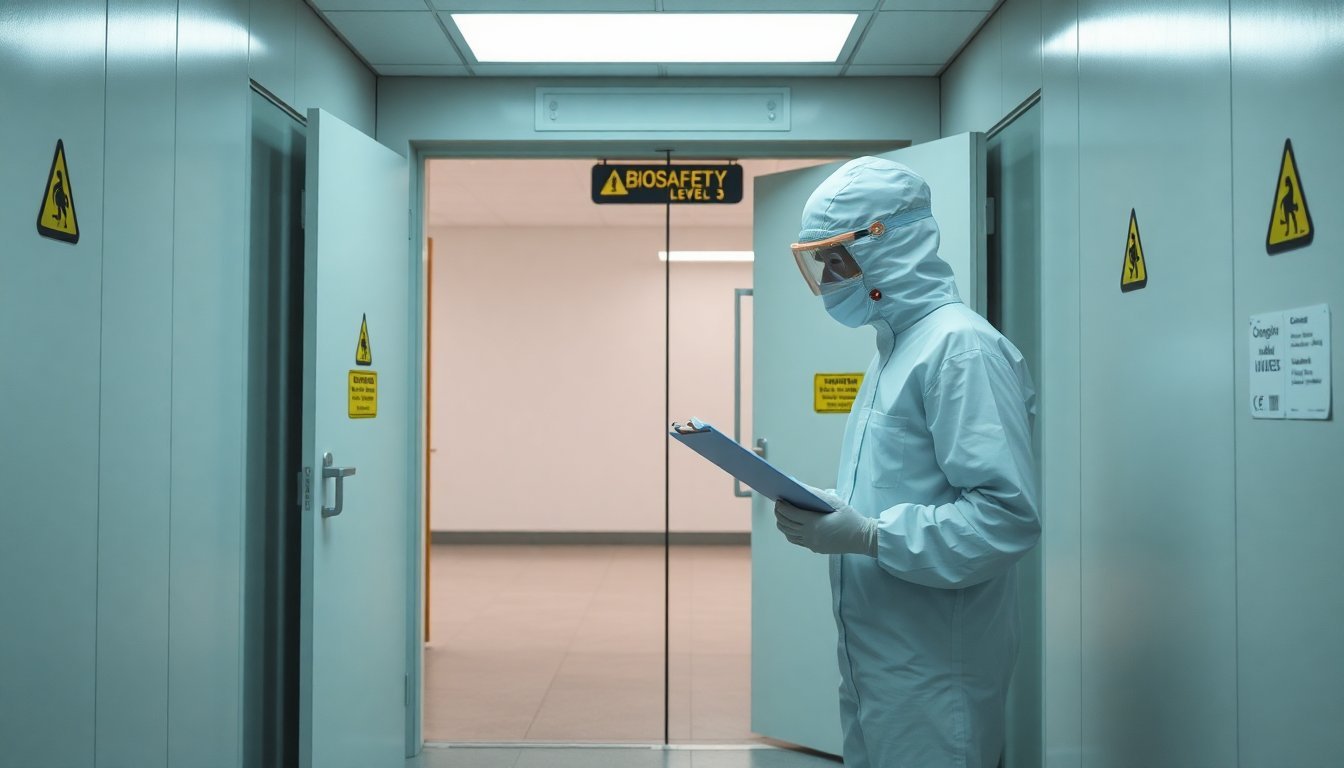
This is why the 'extinction' framing is both useful and misleading. Useful because it forces the question of severity. Misleading because it implies a single catastrophic event rather than a distributed capability diffusion. The bioweapons channel is not one lab building one thing. It is thousands of researchers, some of them careless, some of them malicious, all of them with access to increasingly capable models. The governance problem is a diffusion problem, not a doomsday problem.
What can AI companies actually control?
Less than they claim and more than critics admit. The concrete levers are model-level: refusal training, threat screening on inputs and outputs, know-your-customer for API access, and usage monitoring for sequences that look like pathogen design. These are real controls. They are also trivially bypassable by anyone willing to run an open-weight model locally. That's not a reason to skip them; it's a reason to stop pretending they're sufficient.
MIT Technology Review's event reportedly included discussion of the gap between what labs can enforce and what the broader ecosystem can enforce. That gap is the whole story. Closed labs can screen. Open-weight releases cannot be un-released. Once a model with meaningful bio-uplift is on Hugging Face, the screening regime is advisory. This is the same structural problem the open-weight debate has been circling for two years, and it's the reason Tan's distillation gambit matters beyond licensing: capability diffusion is the default, and control is the exception.
The honest position is that AI companies can meaningfully raise the floor. They cannot raise the ceiling. Any safety announcement that doesn't say which side of that line it's on is marketing.
Where is the policy attention actually going?
Not toward biosecurity, mostly. The policy energy of the past two years has gone into model evaluations, licensing regimes, and compute thresholds — all of which are easier to legislate than lab biosafety. Screening DNA synthesis orders is unglamorous. Updating BSL-3 facility inspections is unglamorous. Funding epidemiology capacity in low-resource settings is unglamorous. None of it produces a press release with a CEO in it.
MIT Technology Review's newsletter is a useful signal here precisely because it is a general-interest tech publication, not a biosecurity outlet. When The Download leads with bioweapons, it means the topic has crossed from specialist concern into mainstream tech discourse. That's progress. It's also a warning: mainstream attention tends to produce mainstream solutions, which means more model cards and fewer lab inspections.
You can see the same pattern in how the industry handles adjacent risks. AIUC's push to insure rogue agents is a market mechanism for a market-shaped risk. Bioweapons risk is not market-shaped. It is a public-health and dual-use-research problem that predates AI and will outlast it. Treating it as an AI product-safety issue is a category error, and a convenient one.
What should you actually watch?
Three things, in order of signal value. First, whether any major lab publishes a bio-uplift evaluation methodology rather than a bio-uplift evaluation result. Methodology is the hard part; results are the easy part. Second, whether open-weight releases above a certain capability threshold come with any enforceable use restrictions — not licenses, restrictions. Third, whether biosecurity funding lines in national budgets grow at the same rate as AI safety funding lines. If they don't, the rhetoric is ahead of the resources.
MIT Technology Review's Roundtables event asked the right question. The follow-up is the one that matters: not 'could AI kill us all?' but 'who is paying for the boring parts of prevention?' The answer, right now, is almost nobody. That's the story behind the story, and it's the one you should be reading next. If you want to see how the industry handles the adjacent governance questions, the Amodei slowdown letter and OpenAI's air-gapped training response are the two most instructive recent cases. Both are about control. Neither is about bioweapons. That gap is the point.

Source and attribution
MIT Technology Review
The Download: AI’s extinction risk and bioweapons threat





Discussion
Add a comment