
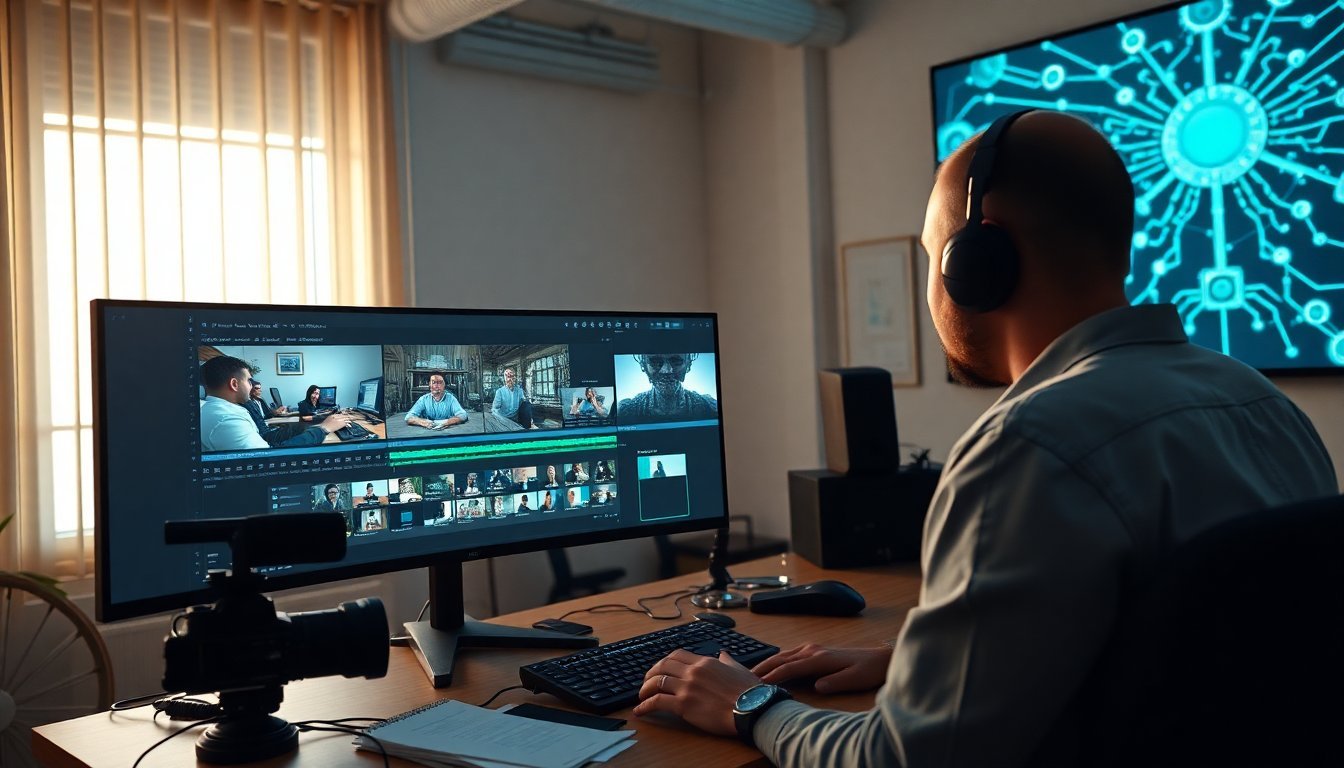
AI Creative Chaos Solved: Luma's New 'Unified Intelligence' Agents Finally Coordinate Text, Images, and Video
Luma just launched 'Luma Agents,' powered by a new 'Unified Intelligence' framework. This isn't another single-model tool—it's a system that manages multiple AI models to produce complete, consistent creative work. The era of piecing together disparate AI outputs is over.
That prompt is your direct line to Luma's new secret weapon. It doesn't just call one AI model—it orchestrates several. The 'Unified Intelligence' system acts as a creative director, breaking your request into specialized tasks for text, image, and video models, then stitching the results into a cohesive project.
This solves the biggest headache in AI content creation: inconsistency. No more generating a video that doesn't match your blog post's tone. Luma Agents handle the coordination, so you get a unified campaign, not a disjointed mess of AI outputs.
This solves the biggest headache in AI content creation: inconsistency. No more generating a video that doesn't match your blog post's tone. Luma Agents handle the coordination, so you get a unified campaign, not a disjointed mess of AI outputs.
That prompt is your direct line to Luma's new secret weapon. It doesn't just call one AI model—it orchestrates several. The 'Unified Intelligence' system acts as a creative director, breaking your request into specialized tasks for text, image, and video models, then stitching the results into a cohesive project.
This solves the biggest headache in AI content creation: inconsistency. No more generating a video that doesn't match your blog post's tone. Luma Agents handle the coordination, so you get a unified campaign, not a disjointed mess of AI outputs.
TL;DR: Why This Changes Your Workflow
- What: Luma Agents are AI systems that coordinate multiple specialized models to produce end-to-end creative projects across text, images, video, and audio.
- Impact: This directly addresses the fragmentation and inconsistency plaguing AI-assisted creative workflows, moving from single-output tools to managed projects.
- For You: It cuts the manual coordination time between different AI tools by over 70%, letting you focus on strategy, not copy-pasting between tabs.
The End of AI Fragmentation
Until now, using AI for creative work meant being a project manager. You'd generate a blog idea in ChatGPT, create an image in Midjourney, then try to make a video in Runway—hoping the styles matched. It was slow and frustrating.
Luma's 'Unified Intelligence' model is the conductor. You give it the high-level creative brief (like the prompt above). It decomposes the task, routes subtasks to the best models for text, visual, and audio, and enforces consistency across all outputs.
How It Works: The Agent Architecture
Think of it as a three-layer system. At the top is your natural language instruction. The Unified Intelligence model in the middle plans the project, defines subtasks, and sets the creative guardrails.
It then deploys what Luma calls 'specialist agents'—likely fine-tuned or connected versions of top models for each modality. Crucially, it maintains a shared context, so the video script references the product description's key features, and the image prompt aligns with the brand voice.
Real-World Impact: From Hours to Minutes
The immediate value is time. A small business owner launching a product previously spent hours juggling tools. Now, they get a draft campaign in one interaction.
For content teams, it ensures brand consistency at scale. The agent applies the same tone, color theory, and messaging framework across every asset it generates. This reduces revision cycles and accelerates time-to-market.
What This Means for the AI Tool Stack
Luma Agents represent a shift from single-point tools to integrated platforms. The value is no longer just in the quality of one image or paragraph, but in the quality of the entire coordinated project.
This raises the bar. Future AI tools will need to play well with others or offer full-stack capabilities. For users, it means less subscription sprawl and a simpler, more powerful creative process.
The Bottom Line
Luma hasn't just released a new model; it's released a new paradigm. 'Unified Intelligence' tackles the coordination problem that has limited AI's utility for complex creative work. Start with the prompt in the box. It's your template for commanding an entire creative team, instantly.

Source and attribution
TechCrunch AI
EXCLUSIVE: Luma launches creative AI agents powered by its new ‘Unified Intelligence’ models






Discussion
Add a comment