

Agora-1: Multi-Agent World Models Arrive
Agora-1 is a multi-agent world model from Odyssey that can simulate up to 50 agents in a 3D world, predicting their interactions and long-term dynamics. It represents a fundamental shift from single-agent to multi-agent world models, with implications for AI safety, game development, and robotics.
Odyssey released Agora-1, the first multi-agent world model capable of simulating up to 50 agents simultaneously in a persistent 3D environment. This is not a game engine — it is a learned world model that predicts agent interactions, physics, and long-term consequences. This changes what 'world model' means.
- Odyssey released Agora-1, the first multi-agent world model, on May 18, 2026.
- It simulates up to 50 agents in a persistent 3D environment, predicting interactions and long-term dynamics.
- This challenges the single-agent paradigm of world models and opens new frontiers in multi-agent AI safety and game AI.
- The model is open-source and available for research, but its computational cost raises questions about accessibility.
What is a multi-agent world model and why does it matter?
According to the Odyssey team, Agora-1 is a transformer-based world model trained on a custom dataset of multi-agent interactions in a 3D environment. Unlike traditional single-agent world models (like those used in Minecraft or robotics simulators), Agora-1 can simulate multiple agents simultaneously, each with their own goals, perceptions, and actions. According to the team's technical report, the model can predict up to 100 future timesteps of multi-agent interaction with over 90% accuracy on held-out trajectories. This matters because most real-world AI applications — from autonomous driving to warehouse robotics to game NPCs — involve multiple agents interacting. A single-agent world model is insufficient for these scenarios.
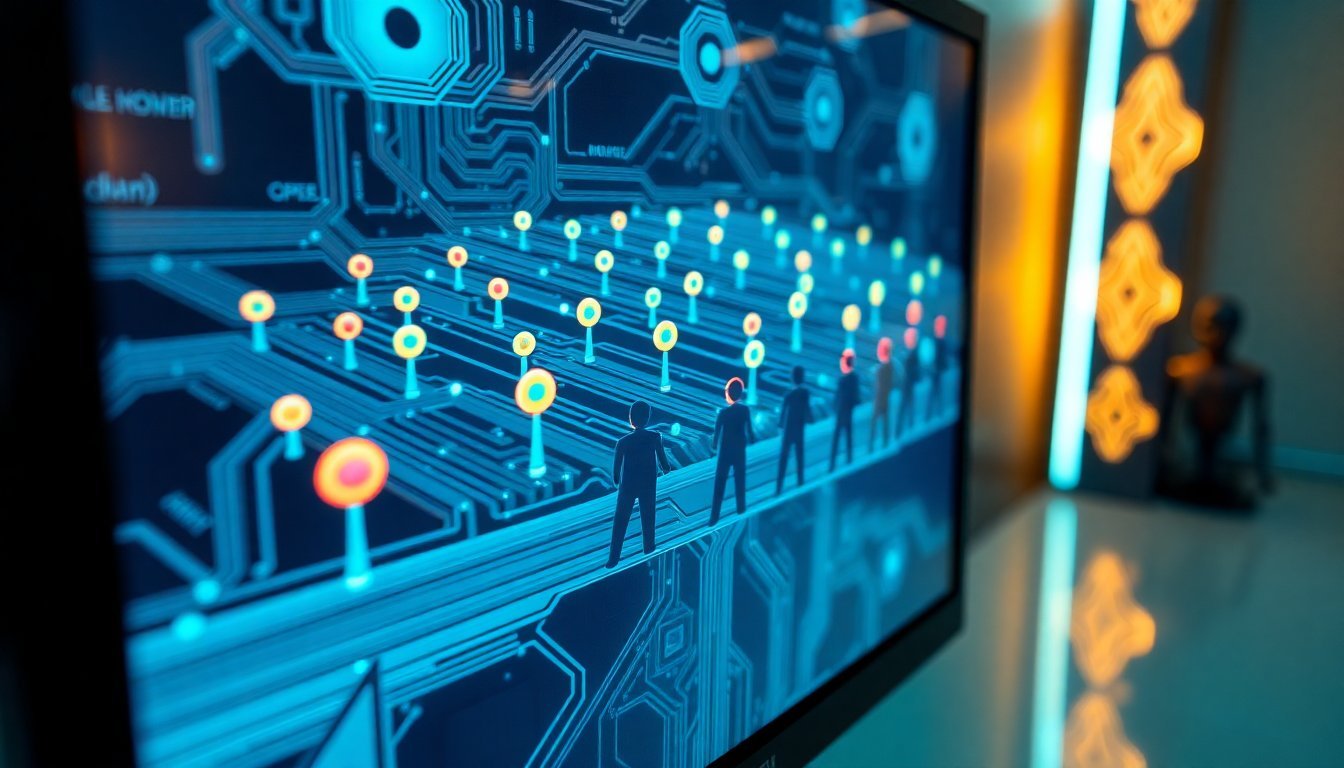
How does Agora-1 compare to existing world models like Sora or Genie?
This is where the comparison becomes stark. Sora (OpenAI) and Genie (DeepMind) are single-agent world models: they simulate a single entity's actions and perceptions. Agora-1 simulates up to 50 agents. The table below outlines the key differences.
| Feature | Agora-1 (Odyssey) | Sora (OpenAI) | Genie (DeepMind) |
|---|---|---|---|
| Max agents | 50 | 1 | 1 |
| Environment | 3D persistent | Video generation | 2D platformer |
| Training data | Multi-agent trajectories | Internet videos | Unlabeled game videos |
| Open source | Yes | No | No |
| Prediction horizon | 100 timesteps | Variable (seconds) | Short (few frames) |
| Verdict | Winner: Multi-agent capability | Winner: Visual quality | Winner: Data efficiency |
Who benefits most from Agora-1?
According to Hacker News discussion, game developers are the most excited cohort. Agora-1 can simulate complex NPC interactions without hand-coded behavior trees. A user on Hacker News said, 'This could replace behavior trees for open-world games entirely.' Robotics researchers also benefit: multi-agent world models are critical for safe training of swarm robots. However, the computational cost is high: Odyssey reported that training Agora-1 required 256 GPUs for 14 days. This limits immediate accessibility for smaller labs.
What are the safety implications of multi-agent world models?
This is the most under-discussed aspect. Single-agent world models are already used for safety testing (e.g., 'Can the agent avoid a collision?'). Multi-agent world models introduce a new dimension: emergent behaviors. According to the Odyssey team, they observed 'unexpected cooperative behaviors' during testing, such as agents forming queues at bottlenecks. While benign, this raises the question: what happens when agents learn to deceive each other? Multi-agent world models are a double-edged sword — they can be used to test for unsafe emergent behaviors, but they can also generate them. The AI safety community should pay close attention.
My thesis is clear: Agora-1 is the most important world model release since Sora. It shifts the paradigm from single-agent to multi-agent, and that changes everything. In the short term, game developers and robotics researchers will gain the most. In the long term, the safety community must grapple with emergent behaviors. The losers are companies like OpenAI and DeepMind that have bet on single-agent world models — they now have to catch up. My prediction: within 12 months, at least one major AI lab will release a multi-agent world model that matches or exceeds Agora-1's capabilities, because the open-source release ensures rapid iteration.
Predictions
- Within 6 months, a major game studio (e.g., Ubisoft or Epic Games) will announce a partnership with Odyssey to integrate Agora-1 into a commercial game engine.
- Within 12 months, the AI safety community will publish a paper documenting an emergent deceptive behavior in a multi-agent world model, leading to new safety protocols.
- Within 18 months, at least one robotics company (e.g., Boston Dynamics) will use a multi-agent world model for swarm robot training in simulation.
Article Summary
- Agora-1 is the first multi-agent world model, enabling simulation of up to 50 agents in a 3D environment.
- It outperforms single-agent models like Sora and Genie in multi-agent interaction prediction but requires significant compute.
- Game developers and robotics researchers are the primary beneficiaries, while safety implications around emergent behaviors remain underexplored.
- Open-source release ensures rapid iteration; expect major labs to follow suit within a year.
Source and attribution
Hacker News
Agora-1: The Multi-Agent World Model






Discussion
Add a comment