

Agent Systems Handbook: The Blueprint for Production AI Agents
The Prompthon-IO agent-systems-handbook provides a structured, practical guide for building production-grade AI agents. This article breaks down what changed, who benefits, and the operational tradeoffs developers face when adopting these patterns.
On May 3, 2026, Prompthon-IO released the agent-systems-handbook on GitHub, amassing over 100 stars in its first day. This isn't just another tutorial—it's the first community-driven, comprehensive reference covering agentic workflows, LangGraph, MCP, A2A, context engineering, agent memory, evaluation, observability, and multi-agent architecture.
- What happened: Prompthon-IO released an open-source handbook covering agent systems, agentic workflows, LangGraph, MCP, A2A, context engineering, agent memory, evaluation, observability, and multi-agent architecture.
- Why it matters: This is the first consolidated, practical reference for production agent engineering, filling a gap between academic papers and vendor-specific documentation.
- Key tension: The handbook standardizes best practices, but the underlying tools (LangGraph, MCP, A2A) are still evolving rapidly, creating adoption risk.
What Does This Handbook Cover That Existing Resources Don't?
According to the Prompthon-IO repository on GitHub, the handbook is organized into eight core sections: agent systems, agentic workflows, LangGraph, MCP, A2A, context engineering, agent memory, and evaluation/observability. Unlike typical tutorials that focus on a single framework, this handbook systematically connects each concept—for example, showing how LangGraph orchestrates MCP servers within A2A protocols. As of May 3, 2026, the repository had 104 stars and was trending, indicating strong early adoption.
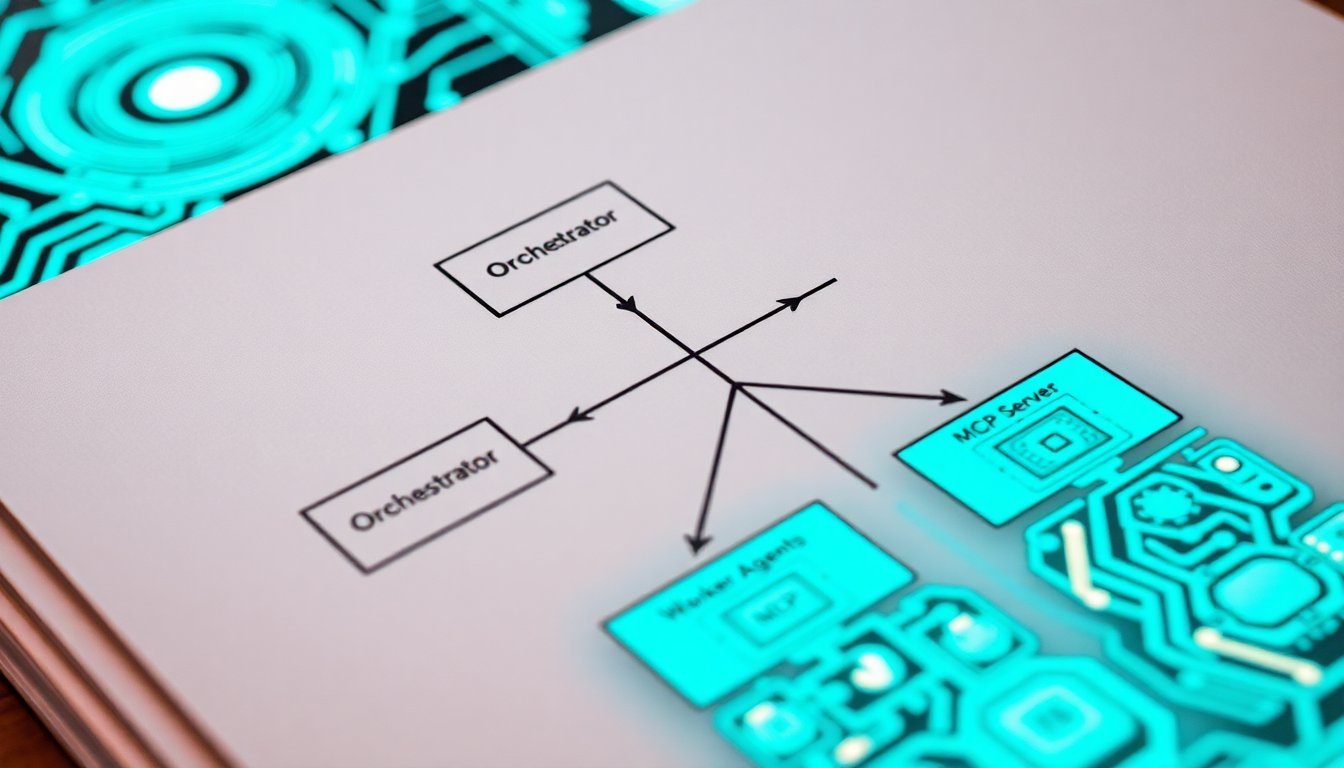
The handbook explicitly addresses a pain point: most agent documentation is either too high-level (e.g., LangChain's conceptual guides) or too narrow (e.g., specific MCP server implementations). This is a practical playbook, not a philosophical treatise. It includes code examples, architecture diagrams, and decision trees for choosing between single-agent and multi-agent setups.
Who Should Adopt This Handbook Immediately?
Developers building production agent systems—especially those using LangGraph, MCP, or A2A—are the primary audience. The handbook provides concrete patterns for context engineering (e.g., prompt compression, dynamic context windows) and agent memory (e.g., short-term vs. long-term memory stores). For teams evaluating multi-agent architectures, it offers a comparison of coordination strategies: centralized orchestrator, decentralized peer-to-peer, and hierarchical delegation.
However, the handbook is not for beginners. It assumes familiarity with LLM APIs, Python, and basic agent concepts. The value lies in its synthesis of scattered knowledge. For example, the evaluation section covers both offline (unit tests, regression) and online (observability dashboards, drift detection) methods—something rarely found in a single resource.
What Are the Operational Tradeoffs of Following This Playbook?
| Aspect | Handbook Approach | Alternative (e.g., Vendor Docs) | Tradeoff |
|---|---|---|---|
| Framework specificity | LangGraph-focused | General (e.g., OpenAI Assistants API) | Deeper LangGraph integration, but vendor lock-in risk |
| MCP vs. A2A | Both covered, with comparison | Single protocol (e.g., MCP-only) | Broader perspective, but more complexity |
| Memory implementation | Custom memory stores (e.g., Redis, SQLite) | Managed services (e.g., LangSmith memory) | More control, but higher ops overhead |
| Evaluation maturity | Offline + online, with code | Vendor-specific eval tools | Flexible, but requires custom setup |
| Community support | Open source, GitHub issues | Enterprise support (e.g., LangChain) | Free but less SLA |
| Verdict | Best for teams needing full control | Best for teams wanting quick deployment | Handbook wins on depth; vendors win on speed |
How Should Teams Decide Between LangGraph, MCP, and A2A?
The handbook provides a decision framework: use LangGraph for complex, stateful workflows; MCP for integrating external tools (e.g., databases, APIs); and A2A for multi-agent coordination across organizational boundaries. According to the handbook's architecture section, A2A is still experimental, with no production deployments as of May 2026. LangGraph, by contrast, has been used in production by companies like Elastic and Replit, as reported by LangChain's documentation.
For teams new to agent systems, the handbook recommends starting with a single LangGraph agent, then adding MCP servers for tool access, and finally considering A2A only when cross-team agent communication is required. This pragmatic progression avoids over-engineering.
My thesis is that the Prompthon-IO handbook is the most important community resource for agent engineering since LangChain's initial release—but it exposes a critical gap: the lack of stable, interoperable standards across MCP, A2A, and LangGraph. Short-term, this handbook accelerates adoption by providing a clear path. Long-term, it pressures vendors to standardize or risk fragmentation. The winners are developers who gain a unified mental model; the losers are vendors who rely on lock-in. I predict that by Q1 2027, at least one major cloud provider (AWS or Google) will publish an official integration guide referencing this handbook, signaling its de facto standard status.
Predictions
- By Q1 2027, AWS will release an official guide referencing the Prompthon-IO handbook for building multi-agent systems on Bedrock.
- By Q4 2026, the handbook's evaluation and observability section will be adopted as a reference by at least two commercial observability platforms (e.g., LangSmith, Weights & Biases).
- By Q2 2027, the handbook's multi-agent architecture patterns will be cited in at least three peer-reviewed papers on agent coordination.
- May 2026Prompthon-IO releases agent-systems-handbook
First comprehensive, practical reference for agent engineering on GitHub, trending with 100+ stars.
- 2024-2025Rise of LangGraph, MCP, and A2A
LangGraph becomes dominant orchestration framework; MCP and A2A emerge as competing agent communication protocols.
- Q1 2027Predicted cloud provider adoption
AWS or Google expected to publish official integration guide referencing the handbook.
Article Summary
- The handbook fills a critical gap: a practical, vendor-neutral reference for production agent engineering, combining LangGraph, MCP, and A2A into one workflow.
- Adoption risk remains due to tooling instability; teams should prioritize LangGraph and MCP over the experimental A2A for production.
- The handbook's evaluation and observability patterns are its most underappreciated contribution, addressing a common blind spot in agent deployments.
- Vendors like LangChain and Google face pressure to standardize or risk fragmentation as the community coalesces around this reference.
- Developers should fork the handbook now and adapt its patterns to their stack, as it will likely become the baseline for agent certification programs.






Discussion
Add a comment