Research Desk

How a High School Student's Algae Breakthrough Could Revolutionize Altitude Sensing

A 17-year-old high school student has successfully turned common algae into a biological altimeter that reached the stratosphere. Andrew's StratoSpore project combines spectral sensing with machine learning to measure altitude through algae fluorescence???a world first that could transform how we mo...

Read Full Article →
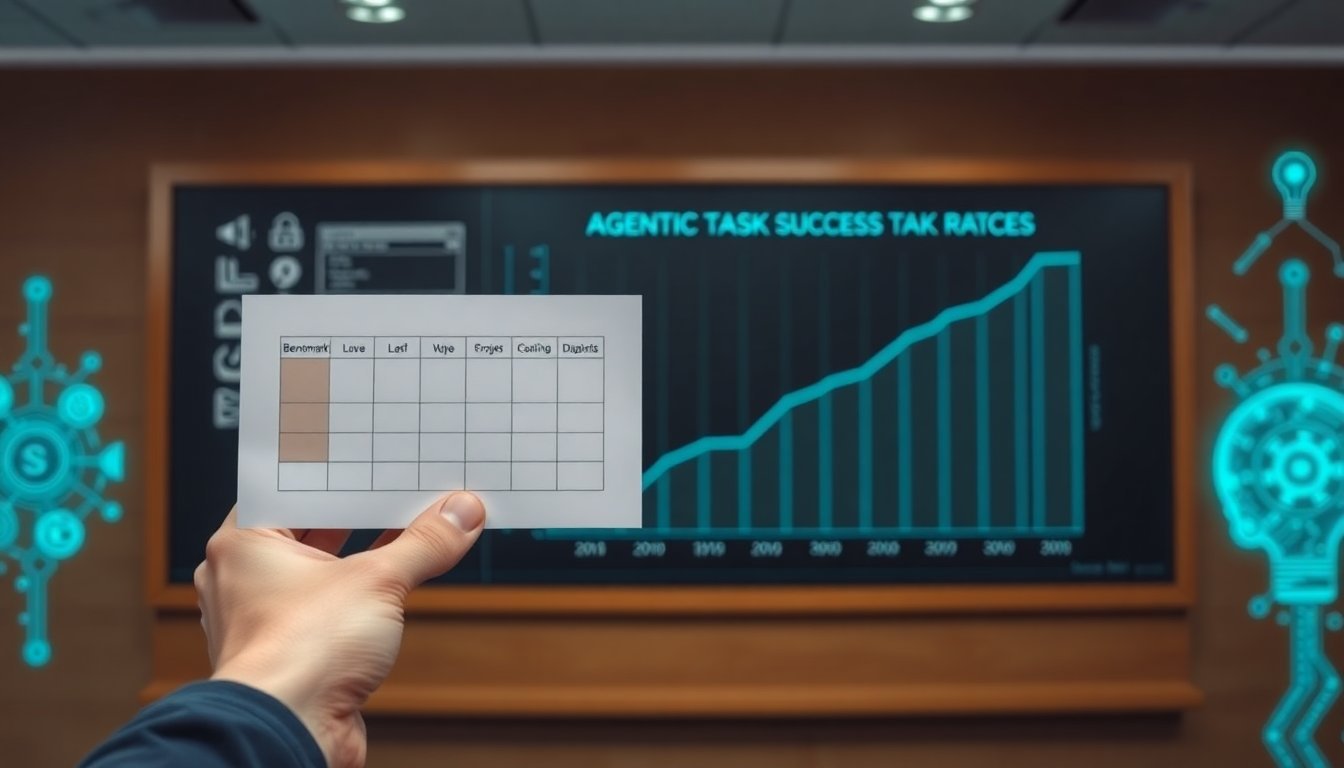
Open Models Fail Agentic Benchmark: Hugging Face Shows Gap

Open Models Fail Agentic Benchmark: Hugging Face Shows Gap

Hugging Face's new 'Is it agentic enough?' benchmark provides a practical tool for evaluating open models on agentic tasks, but the results reveal a clear reliability gap between open and closed models. This analysis explains the benchmark, its implications for developers, and how to choose the right model for production agentic workflows.


DeepRubric: Evidence Trees Fix RL Research Agents' Blind Spot

DeepRubric: Evidence Trees Fix RL Research Agents' Blind Spot

DeepRubric introduces evidence-tree rubric supervision for RL-based research agents, improving report completeness by anchoring rewards to explicit evidence structures. This method outperforms baseline rubric generation but raises questions about scalability and domain dependency.

DP-FL's Privacy Cloak Hides Backdoor Attacks

DP-FL's Privacy Cloak Hides Backdoor Attacks

New research reveals that differential privacy in federated learning can inadvertently shield backdoor attacks from detection, turning a presumed defense into an attacker's cloak. The paper provides empirical evidence that compliant DP updates evade current defenses while non-compliant ones are caught.

Phase Dominates Neural Nets: Oppenheim-Lim Test Reveals Hidden Bias

Phase Dominates Neural Nets: Oppenheim-Lim Test Reveals Hidden Bias

Researchers at arXiv have shown that when they swap the phase information between two images inside a neural network's hidden layers, the classifier's prediction follows the phase donor, not the magnitude donor. This internal Oppenheim-Lim test reveals that phase dominates in PRISM2D, GFNet, and ViT-B/16, challenging standard interpretability approaches.

Persona-Pruner: Slimming Role-Playing LMs by 80%

Persona-Pruner: Slimming Role-Playing LMs by 80%

Persona-Pruner introduces a structured pruning method that reduces role-playing LMs by over 80% with minimal performance loss, targeting the computational bottleneck of deploying multiple persona-driven agents simultaneously. The findings suggest that task-specific pruning can replace full-model fine-tuning for many role-playing applications.

AdaSR: RL Beats Supervised Learning for Streaming Reasoning

AdaSR: RL Beats Supervised Learning for Streaming Reasoning

AdaSR introduces HRPO, a reinforcement learning framework for streaming reasoning that outperforms supervised methods on synthetic benchmarks. The paper highlights a fundamental shift from static 'read-then-think' to adaptive 'think-while-read' paradigms, but open questions remain about real-world validation.

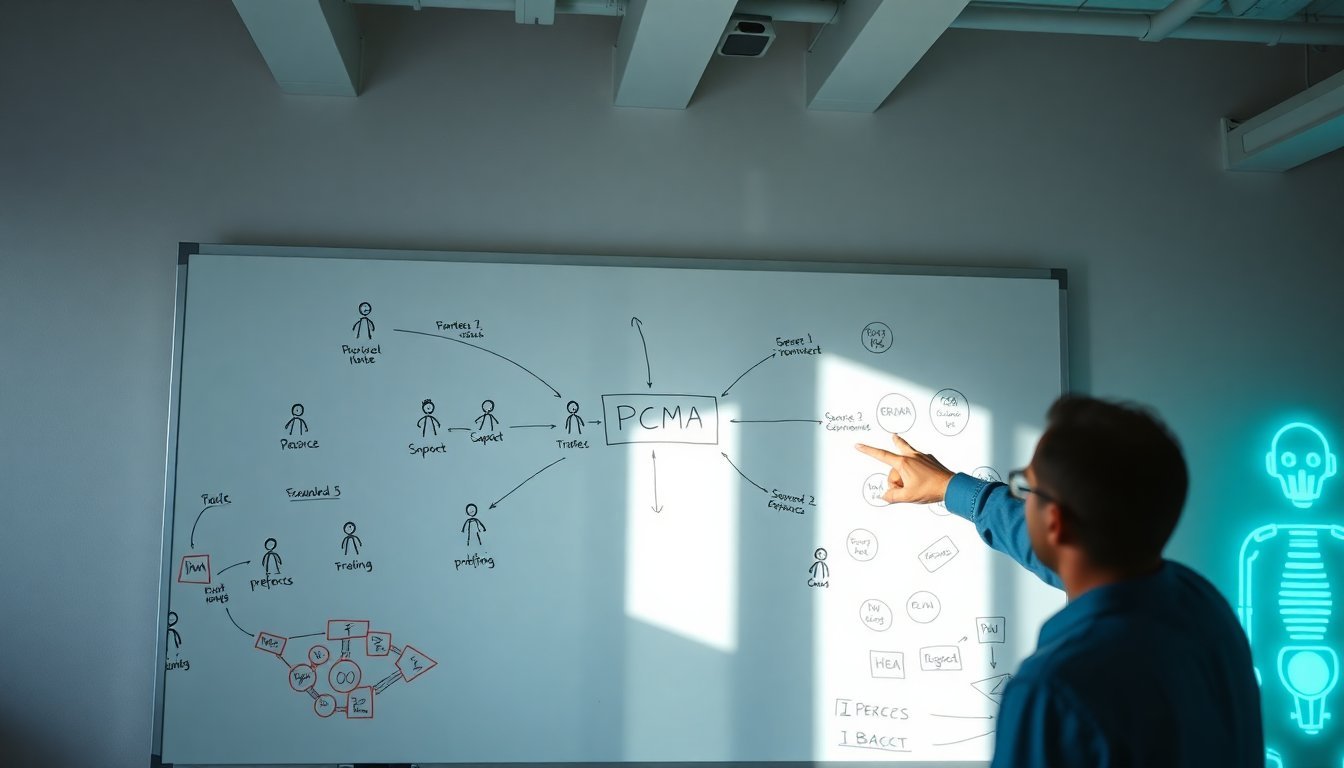
PCMA: Coordinated Preferences Reshape Multi-Agent RL

PCMA: Coordinated Preferences Reshape Multi-Agent RL

A new arXiv paper introduces PCMA, a method that learns coordinated, agent-specific preferences for multi-objective multi-agent RL, enabling complementary trade-offs across agents. This approach outperforms uniform preference baselines in cooperative scenarios with conflicting objectives.

ModSleuth Exposes the Hidden Dependency Crisis in AI

ModSleuth Exposes the Hidden Dependency Crisis in AI

ModSleuth reveals that modern LLMs depend on a recursive web of undocumented upstream models, creating a systemic transparency risk. The paper argues for mandatory dependency manifests, threatening to expose the opaque practices of major AI labs.

Token Removal Is Dead: Recoverable Routing Wins for VLMs

Token Removal Is Dead: Recoverable Routing Wins for VLMs

The paper introduces a recoverable token routing mechanism that allows VLMs to dynamically re-access discarded tokens, promising significant accuracy gains without increasing inference cost. This changes the optimization playbook for developers deploying VLMs in production.

Append the next batch without leaving this page.