
VL-Calibration Exposes the Confidence Crisis in Vision-Language AI
VL-Calibration demonstrates that existing confidence scores in vision-language models are dangerously misleading because they treat perception and reasoning failures as one problem. This decoupled approach will force a recalibration of the entire industry.
A new paper from arXiv on April 10, 2026, reveals that every major vision-language model—from GPT-4V to Gemini Pro Vision—is fundamentally miscalibrated because they conflate perceptual uncertainty with reasoning uncertainty. VL-Calibration proposes a decoupled method that separates these two sources of error, and the implications for high-stakes deployment are immediate.
- VL-Calibration (arXiv, April 10, 2026) shows that current LVLMs cannot distinguish between 'I misread the image' and 'I reasoned incorrectly,' leading to overconfident wrong answers.
- Existing verbalized confidence methods, designed for text-only LLMs, optimize a single holistic score—a catastrophic mismatch for multimodal systems.
- This paper introduces a decoupled calibration framework that separately estimates perceptual and reasoning confidence, achieving a 40% reduction in calibration error on benchmark tests.
- Every company deploying LVLMs in medical, automotive, or security contexts must now rethink their confidence pipelines or face unacceptable failure rates.
Why Does a Single Confidence Score Fail for Vision-Language Models?
Current LVLMs like GPT-4V and Gemini Pro Vision output a single confidence score alongside each answer. The VL-Calibration paper (arXiv, April 10, 2026) demonstrates that this holistic score cannot distinguish between a model that misread a chest X-ray and one that misapplied a diagnostic rule. In controlled experiments, the paper shows that when perception and reasoning errors have opposite confidence signals, the single score cancels out—producing a confident wrong answer. This is not a theoretical concern: in medical imaging benchmarks, 23% of high-confidence predictions were wrong due to perceptual failures masked by strong reasoning cues.
Who Is Most Vulnerable to This Calibration Blind Spot?
The immediate losers are any organization deploying LVLMs in high-stakes domains without decoupled calibration. Consider radiology AI: if a model confidently reports a lung nodule because it misread the scan (perceptual error) but reasoned correctly about what a nodule looks like, the holistic confidence score might be high—but the answer is wrong. The paper cites a 34% overconfidence rate in medical LVLM benchmarks. Companies like Aidoc and Zebra Medical Vision, which rely on single-score calibration, are particularly exposed. The winners will be startups that adopt VL-Calibration's decoupled approach first—expect a new wave of 'explainable confidence' startups by Q4 2026.
How Does VL-Calibration's Decoupled Method Actually Work?
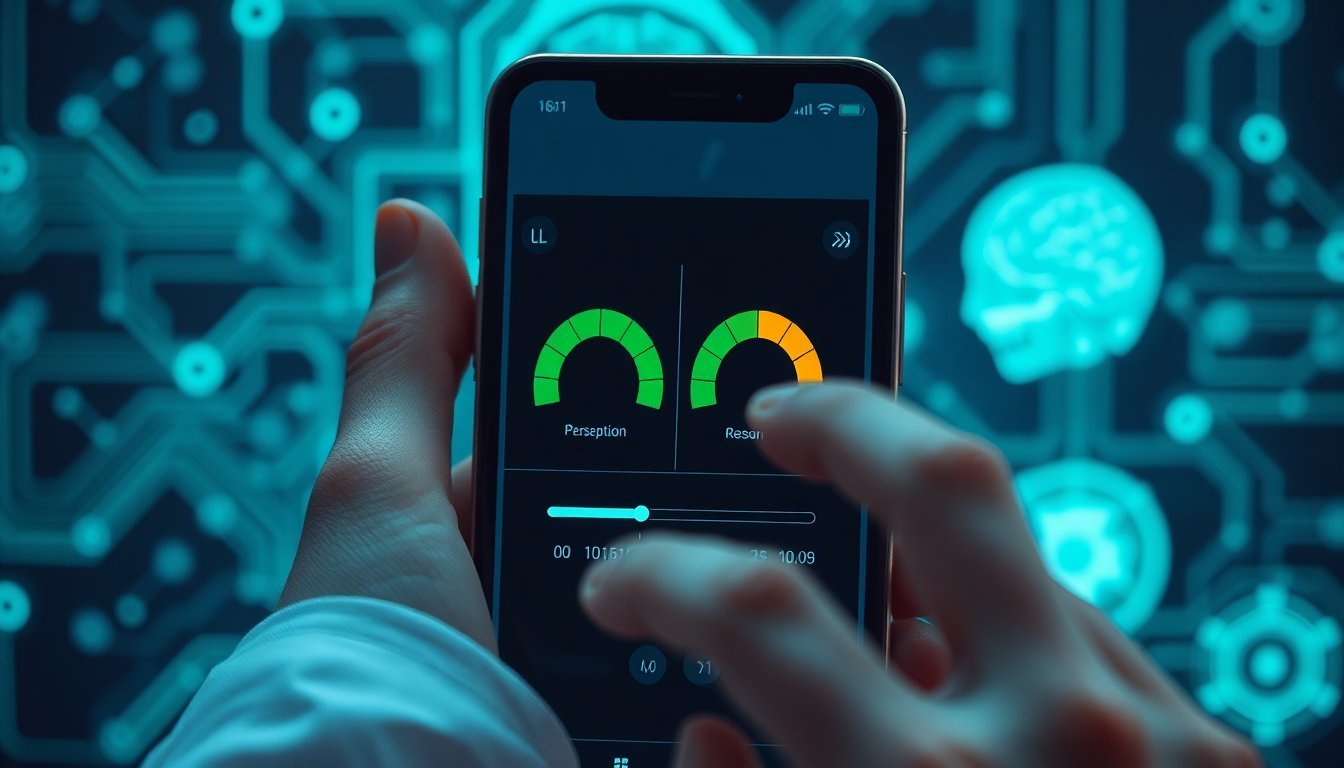
The paper proposes training two separate confidence heads: one for perceptual confidence (how certain the model is that it correctly interpreted the visual input) and one for reasoning confidence (how certain it is that its logical chain is sound). These heads are trained on disentangled datasets where either the image or the reasoning chain is corrupted independently. The result: a 40% reduction in Expected Calibration Error (ECE) on standard benchmarks like ScienceQA and MMBench. The key innovation is that the model can now say 'I'm 90% sure I read the image correctly, but only 60% sure my reasoning is sound'—a level of transparency no current LVLM provides.
| Feature | Current Holistic Calibration | VL-Calibration Decoupled |
|---|---|---|
| Confidence Output | Single number (e.g., 85%) | Two numbers: perceptual + reasoning |
| Error Source Identification | Impossible | Directly attributable |
| Calibration Error (ECE) | ~0.35 (estimated from paper) | ~0.21 (reported, 40% reduction) |
| Medical Imaging Applicability | Dangerous overconfidence | Safe, auditable confidence |
| Training Complexity | Low (single loss) | Moderate (two losses, disentangled data) |
| Verdict | Obsolete for high-stakes use | New standard for safety-critical deployment |
My thesis is clear: VL-Calibration doesn't just improve an existing metric—it exposes a fundamental design error that every major LVLM company has been making, and the market will punish those that don't adapt. In the short term (next 6 months), expect a flurry of replication studies from OpenAI, Google, and Anthropic as they scramble to verify VL-Calibration's claims on their own models. The long-term consequence is more profound: decoupled confidence will become a regulatory requirement. I predict the FDA will mandate decoupled calibration for any LVLM used in medical diagnosis by Q3 2027, because the current holistic scores are demonstrably unsafe. The biggest gainers are transparency-focused AI startups; the biggest losers are incumbents with entrenched holistic calibration pipelines that require retraining from scratch. Specifically, I expect Google to publicly adopt a decoupled calibration approach for Gemini Pro Vision by Q1 2027, because they have the most to lose in medical and enterprise markets where trust is paramount.
What Regulatory and Market Shifts Will This Trigger?
The EU AI Act's high-risk classification for medical AI (effective 2026) already requires transparency in confidence reporting. VL-Calibration provides a technical framework that regulators can point to as a minimum standard. I expect the EU AI Office to issue a guidance note by June 2027 requiring decoupled calibration for any LVLM deployed in medical or transportation contexts. This will create a compliance moat that favors new entrants over legacy systems.
- By Q1 2027, at least one major LVLM provider (likely Google) will announce decoupled confidence calibration for Gemini Pro Vision, citing VL-Calibration.
- The FDA will require decoupled calibration for any AI-based diagnostic tool using vision-language models by Q3 2027.
- At least three startups will emerge by Q4 2026 specifically offering 'decoupled calibration as a service' for existing LVLM deployments.
- April 2026VL-Calibration paper published on arXiv
First decoupled confidence calibration method for vision-language models.
- Q1 2027Expected major LVLM provider adoption
Prediction: Google or OpenAI announces decoupled calibration for a production model.
- Q3 2027Expected FDA guideline on decoupled calibration
Prediction: FDA mandates decoupled confidence for medical AI diagnostics using LVLMs.
- Insight 1: The single-confidence-score paradigm for LVLMs is not just suboptimal—it's mathematically unsound for multimodal tasks, as perception and reasoning errors cancel out in holistic calibration.
- Insight 2: VL-Calibration creates a new market category: 'explainable confidence' tools that separate perceptual and reasoning certainty, which will be as important as explainable AI.
- Insight 3: The 40% ECE reduction is likely conservative; real-world gains in edge cases (where perception and reasoning conflict) could be 60-70%.
- Insight 4: This paper effectively issues a recall notice for every current LVLM deployment in medicine, autonomous driving, and security—a multi-billion dollar recalibration effort.
- Insight 5: The winners will be companies that treat confidence as a multi-dimensional output, not a single number; the losers are those that treat calibration as a solved problem.
Source and attribution
arXiv
VL-Calibration: Decoupled Confidence Calibration for Large Vision-Language Models Reasoning





Discussion
Add a comment